Did Trump Deliver a Blunt Message to Europe at Davos?
Synopsis
In a striking address at the World Economic Forum, President Trump criticized NATO and European leaders for their reliance on the US for defense while failing to uphold their own responsibilities. His remarks about Ukraine and military spending raise critical questions about transatlantic alliances.
Key Takeaways
Trump criticized NATO for unfair treatment of the US.
US financial commitment to Ukraine is significant.
Many NATO countries have not met defense spending obligations.
The war in Ukraine is seen as a humanitarian disaster.
Trump believes the US bears a disproportionate burden in defense matters.
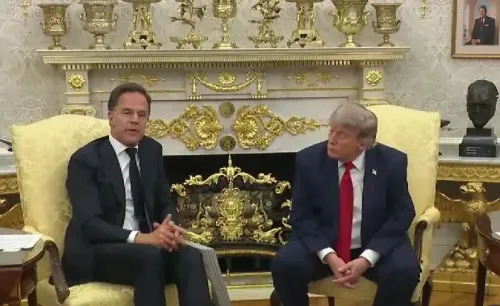
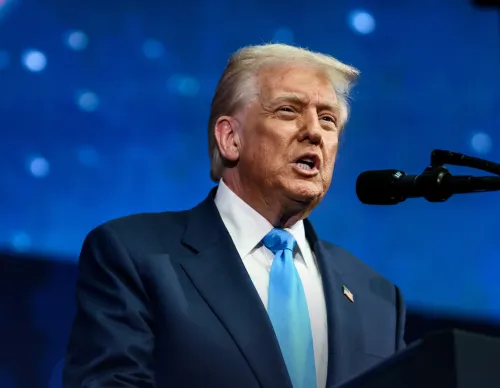
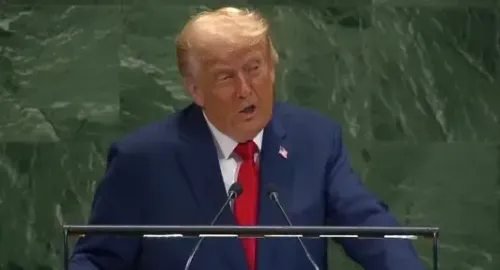
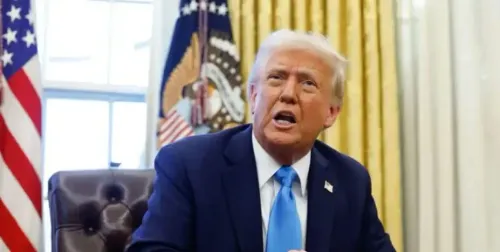
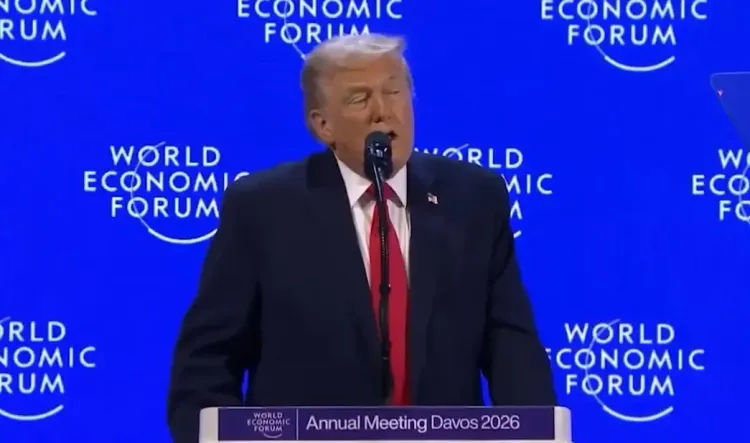
Davos/Washington, Jan 21 (NationPress) US President Donald Trump on Wednesday criticized America's long-standing allies, including European leaders and NATO member nations, for what he termed an excessive reliance on US military might and financial backing while neglecting their own security responsibilities. This comes as the US shoulders a significant portion of the burden from the ongoing war in Ukraine.
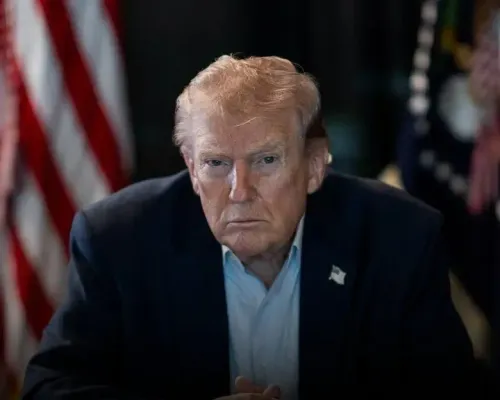
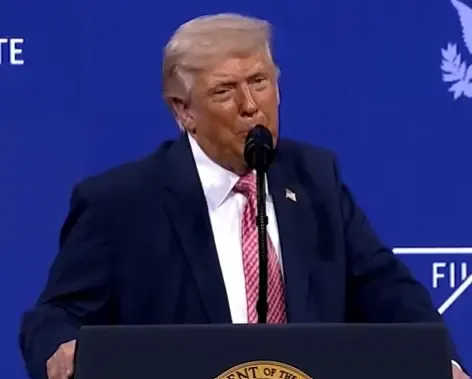
“The United States is treated very unfairly by NATO,” Trump stated during a session at the World Economic Forum (WEF) in Davos, Switzerland, contending that the US has consistently contributed more than its counterparts for the defense of Europe. “We give so much and we receive so little in return,” he added.
Trump claimed that NATO's current structure would not exist without his intervention, asserting, “You wouldn’t have NATO if I didn’t get involved,” and noted that he compelled alliance members to significantly boost their defense budgets after years of non-compliance.
He highlighted that many NATO countries have not met the previous requirement of allocating two percent of their GDP to defense. “They didn’t pay the two, and now they’re paying the five,” Trump remarked, insisting that he encouraged allies to commit to defense spending targets that were once deemed unattainable.
The President expressed skepticism about whether European allies would assist the US in the event of an attack. “We’ll be there for them 100 percent,” he stated. “I’m not sure that they’d be there for us.”
Regarding the conflict in Ukraine, Trump opined that it “should have never started,” attributing the escalation to leadership shortcomings during his previous term. He noted that the US has expended vast amounts of money without receiving adequate appreciation from European nations.
“Biden has allocated $350 billion to Ukraine and NATO, a staggering sum,” Trump remarked, emphasizing that the US is distanced from the conflict by “a big, beautiful ocean.”
“What does the United States gain from all this effort, all this expenditure, aside from death, devastation, and substantial funds going to those who do not value what we do?” he questioned.
Trump characterized the conflict as a humanitarian disaster, citing severe monthly casualties. “It’s a bloodbath,” he declared, noting that tens of thousands of soldiers have perished in consecutive months. “These are lives. These are young individuals.”
He conveyed that his main goal is to halt the fighting. “It’s the only reason I’m interested in doing it,” Trump said, adding that he believes both Russian President Vladimir Putin and Ukrainian President Volodymyr Zelensky are open to negotiations. “I believe I’m dealing with President Putin, and he wants to make a deal. I believe I’m dealing with President Zelensky, and I think he wants to make a deal.”
Trump argued that the war serves Europe far more than it does the United States. “I’m helping Europe. I’m helping NATO,” he asserted, questioning why the US continues to bear the primary burden.
He also accused European nations of economically and militarily exploiting the US for decades. “We’re not going to subsidize the whole world,” Trump warned, indicating that America would no longer accept one-sided agreements.
Recounting private discussions with European leaders, Trump stated that he utilized the threat of hefty tariffs to ensure compliance. “You’re going to do it fast,” he recounted telling one leader, warning of tariffs as high as 25 percent or even 100 percent on exports.
“This is also about national security,” Trump added, asserting that without US military protection, many nations would encounter threats they “wouldn’t believe.”
He reiterated that America has historically financed Europe’s security while receiving little in return. “We’ve never gotten anything except we pay for NATO,” he said, noting that this imbalance only shifted after he assumed office.
He cautioned that US patience is finite. “We’ll be there for them,” Trump said, “but I don’t know that they’d be there for us.”
Point of View
It’s vital to present an unbiased view of Trump's statements. His criticisms highlight significant concerns about NATO's funding and European defense commitments. The implications of his remarks could reshape transatlantic relations, emphasizing the need for a balanced approach to international security.
NationPress
28 Sept 2026
Frequently Asked Questions
What did Trump say about NATO at Davos?
Trump criticized NATO for unfair treatment of the US and emphasized that many member nations rely on American military and financial support without adequate contribution to their own defense.
How much has the US contributed to Ukraine?
Trump stated that the Biden administration has allocated approximately $350 billion to Ukraine and NATO.
What were Trump's thoughts on the war in Ukraine?
Trump described the war as a humanitarian catastrophe that 'should have never started' and blamed leadership failures for the escalation.
What is Trump's stance on European defense spending?
He criticized many NATO countries for failing to meet their defense spending commitments, claiming they are now being pressured to increase their contributions.
What did Trump say about US support for Europe?
Trump expressed skepticism about whether European nations would support the US in a crisis, asserting that the US has historically subsidized European defense.