Trump Rejects Political Violence at White House Correspondents' Dinner
Synopsis
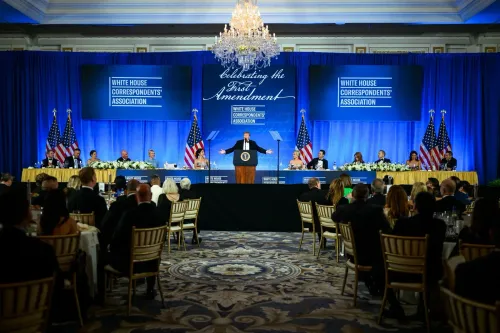
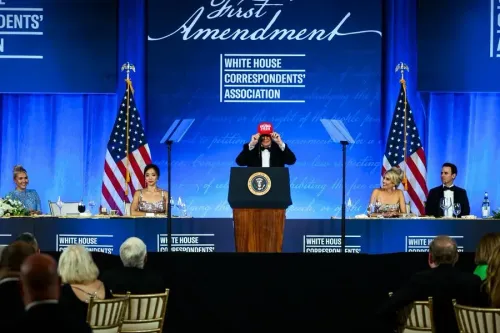
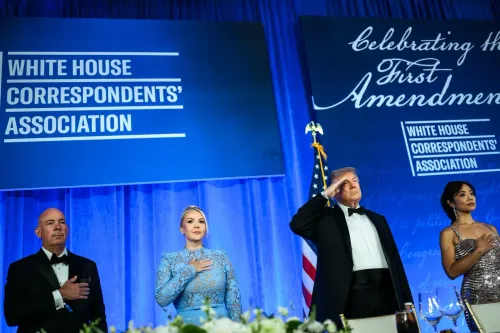
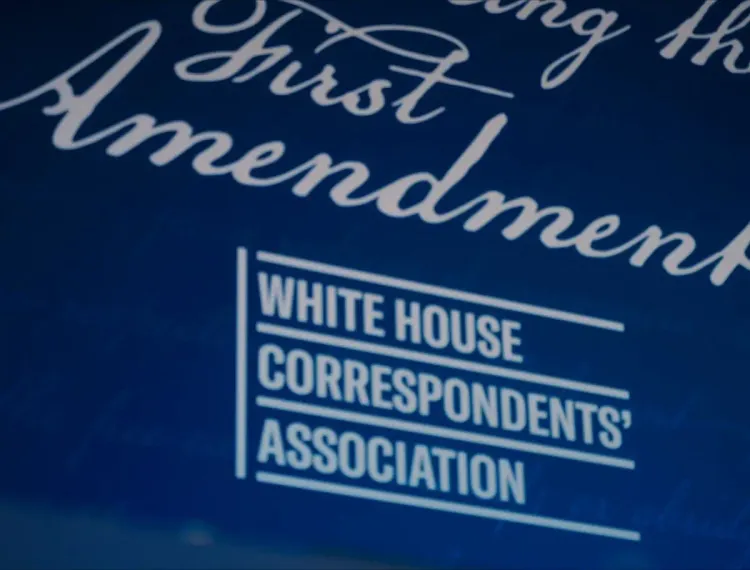
President Donald J. Trump addressed the White House Correspondents' Dinner on July 24, 2026, firmly rejecting political violence and affirming that Americans resolve differences through open debate and free speech, not force. The White House shared the remarks on July 26, 2026.
Key Takeaways
President Trump addressed the White House Correspondents' Dinner on July 24, 2026 , delivering remarks on political violence and free speech.
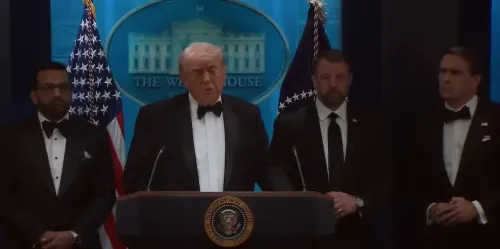
Trump stated: 'In America, we do not yield to political violence... we settle our differences not with bullets, but with open and vigorous debate.' The remarks were amplified by the official White House social media account on July 26, 2026 .
The Correspondents' Dinner has historically served as a platform for presidents to reaffirm institutional and democratic norms.
The statement follows a broader pattern of U.S. leaders issuing rejections of political violence, particularly since the January 6, 2021 Capitol events.
Subsequent presidential addresses will be watched to see if this framing becomes a sustained theme of the administration.
President Donald J. Trump used his address at the White House Correspondents' Dinner on July 24, 2026, to deliver a firm rejection of political violence, invoking the principles of free speech and democratic debate as the proper channels for resolving national disagreements. The remarks were shared by the official White House account on July 26, 2026.
Context
Speaking at the annual gathering of journalists and public officials, Trump declared, 'In America, we do not yield to political violence... in this country, we believe in freedom of speech. We settle our differences not with bullets, but with open and vigorous debate.' The statement was unambiguous in its framing: democratic discourse, not force, is the American standard for resolving conflict.
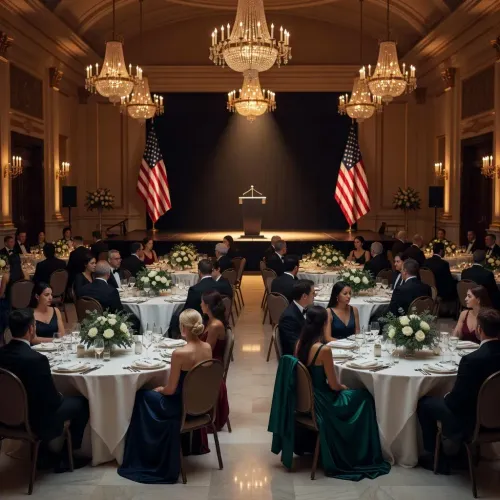
The White House Correspondents' Dinner has long served as a platform where presidents address the press corps in a setting that blends policy commentary with tradition. Trump's choice to anchor his remarks around political violence and free speech signals the weight he assigned to the moment.
Policy Backdrop
Statements rejecting political violence have featured prominently in American political discourse in recent years, particularly following the January 6, 2021 events at the U.S. Capitol, when multiple leaders across the political spectrum issued calls for peaceful resolution of disputes. Presidential reaffirmations of these norms have since become a recurring feature of major addresses.
Free speech protections under the First Amendment of the U.S. Constitution form the legal and cultural bedrock of Trump's argument. By invoking 'open and vigorous debate' as the alternative to violence, the statement draws a direct line between constitutional guarantees and civic responsibility.
Stakeholders and Impact
The remarks were delivered before an audience of journalists and public officials — two groups whose relationship with the executive branch has been a subject of sustained national debate. For the press corps in attendance, a presidential affirmation of free speech carries particular resonance, given ongoing tensions between media institutions and political figures.
For the broader American public, and for international observers including those in India, the statement reinforces a narrative of institutional resilience — the idea that democratic norms hold even in periods of heightened political polarisation. Such signals from Washington D.C. are closely watched by allied governments and civil society organisations worldwide.
What's Next
The White House's decision to amplify these remarks on social media two days after the dinner suggests an intent to extend the message beyond the room. Subsequent presidential speeches and press interactions will be watched for whether this framing — debate over violence, speech over force — becomes a sustained rhetorical theme of the administration.
As political rhetoric and security concerns continue to intersect in American public life, statements of this nature set a tone that other officials, candidates, and institutions are likely to respond to, affirm, or contest in the weeks ahead.
Point of View
Press-centric venue to stake out a position on political violence — a choice that is itself a message about the relationship between the executive and the media. By invoking free speech and vigorous debate as the antidote to violence, the statement aligns with a long-running American presidential tradition of norm reaffirmation at moments of perceived social tension. For an administration that has had a complex relationship with the press corps in attendance, choosing this forum to deliver such a message adds a layer of political calculation. Internationally, including in India, where democratic backsliding debates are live, such statements from Washington carry symbolic weight beyond their domestic audience.
NationPress
26 Jul 2026
Frequently Asked Questions
What did Trump say at the White House Correspondents' Dinner 2026?
President Trump declared that America does not yield to political violence and that differences should be settled through 'open and vigorous debate,' not bullets. He made these remarks at the White House Correspondents' Dinner on July 24, 2026.
When was the White House Correspondents' Dinner in 2026?
The White House Correspondents' Dinner in 2026 was held on July 24, 2026 , with President Trump delivering the presidential address.
What is the White House Correspondents' Dinner?
The White House Correspondents' Dinner is an annual gathering of journalists and public officials in the United States, traditionally featuring presidential remarks that mix policy commentary with humor and institutional reaffirmation.
Why did Trump speak about political violence?
Trump used the Correspondents' Dinner platform to reaffirm democratic norms, stating that free speech and open debate — not violence — are the American way of resolving political differences. The remarks reflect a broader pattern of U.S. leaders addressing this theme since the January 6, 2021 Capitol events.
What does Trump's free speech statement mean for press freedom?
By affirming free speech before an audience of journalists, Trump signalled support for open debate as a democratic cornerstone. The choice of venue — the Correspondents' Dinner — gave the statement added significance for the press community.