CM Bhagwant Mann Expands Aam Aadmi Clinics to 1,090 in Punjab
Synopsis
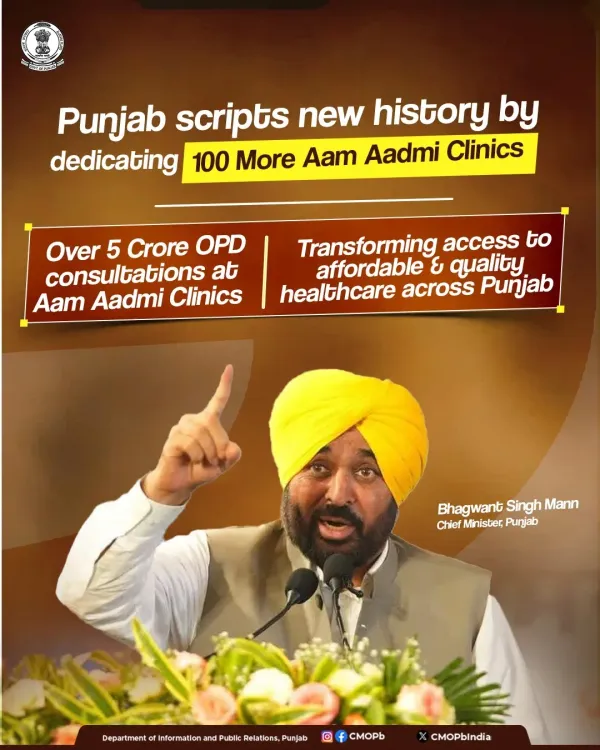
The Bhagwant Mann-led Punjab government added 100 more Aam Aadmi Clinics on July 26, 2026, raising the statewide total to 1,090. The network has logged over 5.90 crore OPD consultations and 3.43 crore free diagnostic tests, anchoring the government's Sehat Kranti health revolution.
Key Takeaways
100 new Aam Aadmi Clinics were dedicated to Punjab residents on July 26, 2026 , bringing the operational total to 1,090 .
The clinics have collectively recorded over 5.90 crore OPD consultations since launch.
More than 3.43 crore free diagnostic tests have been conducted across the network.
The expansion is part of the Sehat Kranti (health revolution) initiative of the Bhagwant Mann government.
The clinic network is complemented by the Mukh Mantri Sehat Yojna , which provides cashless hospitalisation coverage to eligible families.
The model is adapted from Delhi 's Mohalla Clinic framework, first launched in 2015 .
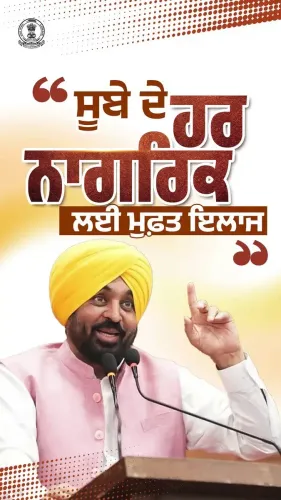
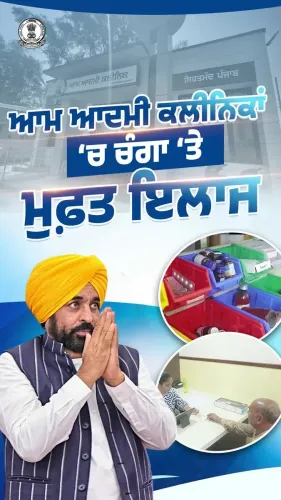
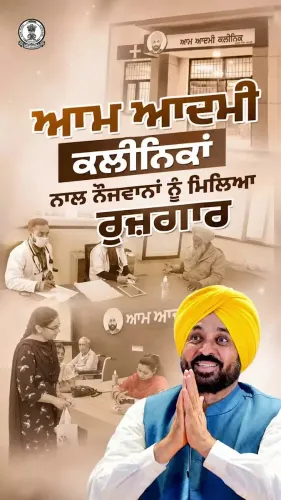
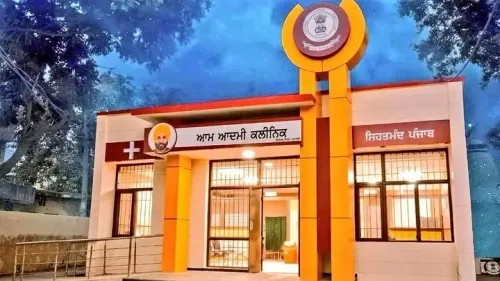
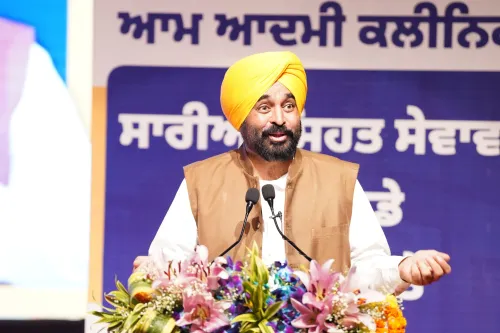
The Chief Minister's Office of Punjab announced on Sunday, July 26, 2026, that the Bhagwant Mann-led state government has dedicated 100 more Aam Aadmi Clinics to the people of Punjab, taking the total count of operational clinics across the state to 1,090.
Context
The latest expansion marks a fresh milestone under the government's ongoing Sehat Kranti (health revolution) drive. Since assuming office in March 2022, the Aam Aadmi Party government led by Chief Minister Bhagwant Mann has positioned the rollout of free primary healthcare centres as a central plank of its welfare agenda in Punjab.
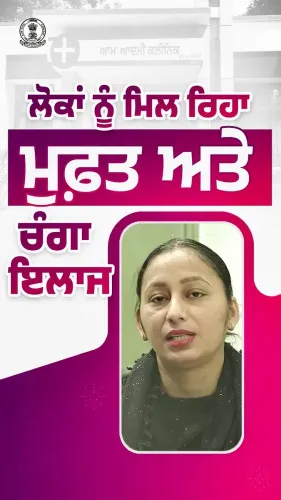
The clinics, which offer free OPD consultations and diagnostic tests, have collectively recorded over 5.90 crore OPD consultations and 3.43 crore free diagnostic tests since their launch, according to the official post.
Policy Backdrop
The Aam Aadmi Clinics are modelled on Delhi's Mohalla Clinic network, which the AAP government in the national capital began establishing in 2015. The Punjab variant replicates the core design — neighbourhood-level access, zero cost to the patient, and a standard basket of free diagnostics — adapted to the state's geography, which includes a large rural population.
The clinic network is complemented by the Mukh Mantri Sehat Yojna, a state health insurance scheme that provides cashless treatment coverage to eligible families for secondary and tertiary care. Together, the two programmes form the twin pillars of the AAP government's healthcare architecture in Punjab. The state has also announced major investments in upgrading hospital infrastructure alongside the primary care expansion.
Stakeholders and Impact
The primary beneficiaries are Punjab's residents, particularly those in rural and semi-urban areas who previously faced significant out-of-pocket expenditure for basic consultations and blood or imaging tests. Free diagnostics at the clinic level reduce the need to travel to district hospitals for routine tests, easing both cost and time burdens on patients.
The model also complements national programmes such as Ayushman Bharat, with the state layer focusing on primary care while central schemes address hospitalisation costs. Health workers and general practitioners staffing the clinics represent a growing cadre of frontline public-health providers in the state.
What's Next
With the network now at 1,090 clinics, attention will turn to the Punjab government's budget allocations for further infrastructure expansion and whether independent assessments of health outcomes — such as reductions in preventable hospitalisations or improvements in early diagnosis rates — are commissioned and made public.
The pace of clinic additions and their geographic spread across districts will be a key indicator of whether the Sehat Kranti programme deepens its reach into underserved pockets of the state in the months ahead.
Point of View
090 clinics signals sustained momentum ahead of any electoral cycle and reinforces AAP's brand identity around free public services. The cumulative figures of 5.90 crore consultations and 3.43 crore free tests, if independently verified, would represent one of the more significant expansions of state-funded primary care in north India in recent years. Politically, the Punjab government is differentiating itself from both its predecessors and the central government by keeping the focus on physical, walk-in infrastructure rather than insurance-only models. The durability of this approach will ultimately depend on quality benchmarks and staffing continuity, neither of which the government has yet addressed in public detail.
NationPress
26 Jul 2026
Frequently Asked Questions
How many Aam Aadmi Clinics are operational in Punjab now?
As of July 26, 2026 , 1,090 Aam Aadmi Clinics are operational across Punjab after the latest addition of 100 new clinics by the Bhagwant Mann government.
What services do Aam Aadmi Clinics offer in Punjab?
Aam Aadmi Clinics in Punjab offer free OPD consultations and free diagnostic tests to all patients, with no out-of-pocket cost at the point of service.
How many OPD consultations have Aam Aadmi Clinics recorded in Punjab?
The Aam Aadmi Clinics network in Punjab has recorded over 5.90 crore OPD consultations since its launch, according to the Chief Minister's Office.
What is the Mukh Mantri Sehat Yojna in Punjab?
The Mukh Mantri Sehat Yojna is a Punjab state health insurance scheme that provides cashless treatment coverage to eligible families for secondary and tertiary care, complementing the primary care offered at Aam Aadmi Clinics.
What is Sehat Kranti in Punjab?
Sehat Kranti , meaning 'health revolution,' is the umbrella initiative of the Bhagwant Mann -led Punjab government that encompasses the Aam Aadmi Clinics rollout, the Mukh Mantri Sehat Yojna, and investments in advanced healthcare infrastructure across the state.