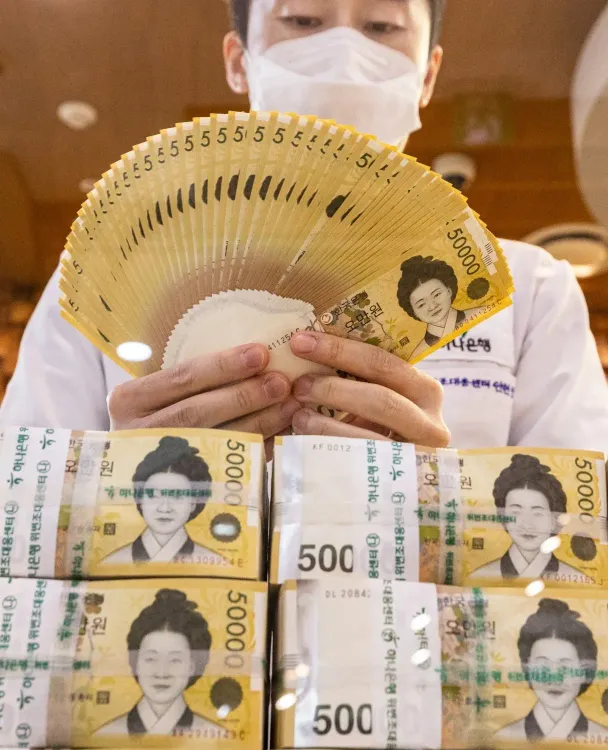
Korean won REER hits 17-year low in June 2025 amid dollar strength
Synopsis
The South Korean won's real effective exchange rate has sunk to its weakest point since the 2008–09 global financial crisis, with the June 2025 reading of 82.99 echoing the currency distress of the Asian financial crisis era. A simultaneous near-6% KOSPI crash driven by Middle East tensions underscores how external shocks are converging on one of Asia's most export-sensitive economies.
Key Takeaways
The South Korean won's REER fell to 82.99 in June 2025 , the lowest since March 2009 (79.31), per BIS data.
The won hit an intraday low of 1,555 per US dollar on 30 June — its weakest intraday level in over 17 years .
The June monthly average of 1,527.95 won per dollar was the weakest since February 1998 during the Asian financial crisis.
The KOSPI plunged 406.27 points (5.72%) to 6,690.62 on Friday amid Middle East tensions, triggering a temporary programme-trading suspension.
Foreign and institutional investors sold a net 5.2 trillion won ; retail investors bought 5.18 trillion won .
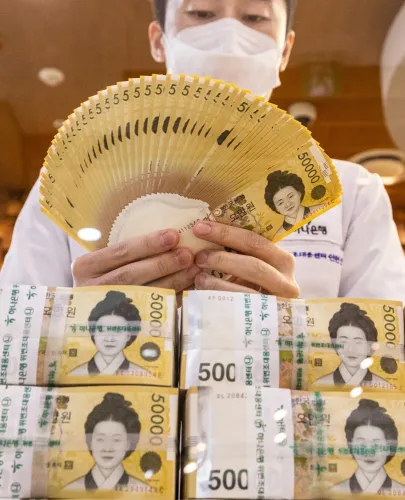
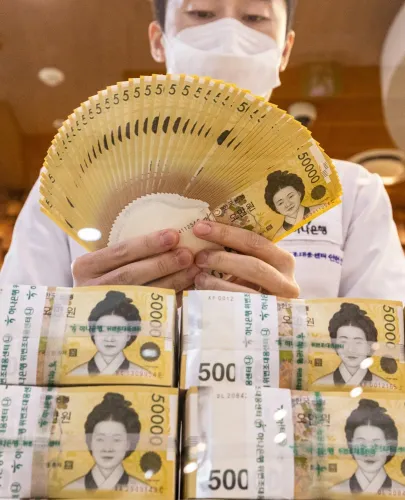
The South Korean won's real effective exchange rate (REER) slumped to its lowest level in more than 17 years in June 2025, according to data released by the Bank for International Settlements (BIS), as a broadly strong US dollar and heavy foreign outflows from South Korean equities kept the currency under sustained pressure.
How Low Did the REER Fall
The won's REER stood at 82.99 in June, slipping 1.75 points from the previous month. The reading marks the weakest level since March 2009, when the index touched 79.31 in the wake of the global financial crisis. The BIS's REER measures a currency's value against those of major trading partners after adjusting for inflation, making it a key gauge of international price competitiveness.
Won Under Pressure From Multiple Fronts
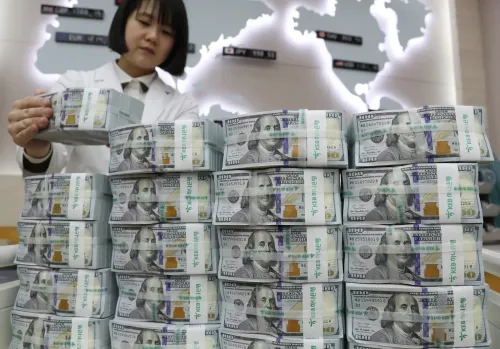
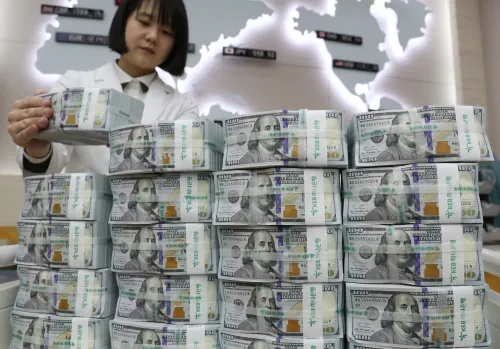
The decline in the REER mirrored sharp spot-market weakness. The won hit 1,555 per US dollar in intraday trading on 30 June — its weakest intraday level in more than 17 years. The monthly average for June came in at 1,527.95 won per dollar, the weakest monthly average since February 1998 during the Asian financial crisis.
The currency came under pressure from heavy foreign selling of South Korean stocks and strong dollar demand from domestic investors seeking overseas assets, compounding the depreciation trend.
KOSPI Plunges Nearly 6% on Middle East Tensions
Separately, Seoul stocks snapped a three-day winning streak on Friday, with the benchmark Korea Composite Stock Price Index (KOSPI) tumbling 406.27 points, or 5.72%, to close at 6,690.62 — having fallen as low as 6,650.41 during the session. The sharp sell-off was triggered by escalating tensions in the Middle East, which drained global risk appetite.
The scale of the decline prompted South Korea's bourse operator to suspend programme trading for five minutes in early trading. Trade volume was moderate at 395.1 million shares worth 30.9 trillion won (approximately US$21.1 billion). Losers outnumbered winners 582 to 301.
Foreigners and Institutions Net Sellers
Foreign and institutional investors were net sellers on the day, offloading a combined net 5.2 trillion won worth of shares. Retail investors moved in the opposite direction, absorbing 5.18 trillion won in stocks — a pattern that analysts have previously flagged as a sign of domestic investors 'buying the dip' even as overseas money exits.
What This Signals for South Korea's Economy
A weaker REER makes South Korean exports more price-competitive globally, which could offer some relief to manufacturers. However, it also raises import costs and can stoke inflationary pressure — a particular concern given global commodity prices. This is the second time in roughly 16 years that the won's REER has breached historically weak territory, the first being the depths of the 2008–09 global financial crisis. Analysts will be watching whether the Bank of Korea responds with intervention or policy signals in the weeks ahead.
Point of View
Yet South Korea's export engine is simultaneously being squeezed by slowing global demand and supply-chain reconfiguration. The KOSPI's near-6% single-session collapse, triggered by Middle East tensions, shows how quickly external shocks transmit into Korean asset markets. The Bank of Korea faces a familiar dilemma: intervene to defend the won and risk depleting reserves, or let depreciation run and absorb the inflationary consequences.
NationPress
26 Jul 2026
Frequently Asked Questions
What is the South Korean won's real effective exchange rate (REER) and why does it matter?
The REER measures the won's value against those of South Korea's major trading partners after adjusting for inflation, making it a gauge of international price competitiveness. A lower REER means South Korean exports become relatively cheaper for foreign buyers, but it also raises the cost of imports and can fuel domestic inflation.
How low did the Korean won's REER fall in June 2025?
The won's REER stood at 82.99 in June 2025, down 1.75 points from May. This is the lowest reading since March 2009, when it touched 79.31 in the aftermath of the global financial crisis, according to BIS data.
Why did the South Korean won weaken so sharply in June 2025?
The won came under pressure from heavy foreign selling of South Korean equities and strong dollar demand from domestic investors seeking overseas assets, set against a backdrop of a broadly strong US dollar. The currency hit an intraday low of 1,555 per dollar on 30 June — its weakest intraday level in over 17 years.
Why did the KOSPI fall nearly 6% on Friday?
The Korea Composite Stock Price Index (KOSPI) dropped 406.27 points, or 5.72%, to 6,690.62 as escalating Middle East tensions drained global risk appetite. The scale of the decline was significant enough to trigger a five-minute suspension of programme trading by the bourse operator.
How does the current won weakness compare to past currency crises in South Korea?
The June 2025 monthly average of 1,527.95 won per dollar is the weakest since February 1998, during the Asian financial crisis. The REER reading of 82.99 matches distress levels last seen in March 2009 during the global financial crisis, placing the current episode among the most severe currency depreciations South Korea has experienced in modern history.