Rajnath Singh at Kargil: India designs chips, Pakistan designs terror
Synopsis
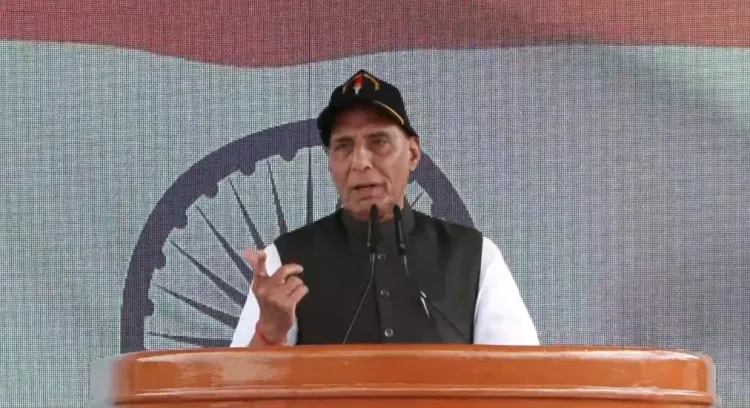
At the Kargil War Memorial on 26 July, Defence Minister Rajnath Singh delivered one of his sharpest rhetorical salvos yet — framing India and Pakistan as mirror opposites: one building chips and satellites, the other exporting terror and sleeper cells. His explicit ruling out of talks with Pakistan, except on PoK, signals that New Delhi's post-Operation Sindoor posture remains locked in.
Key Takeaways
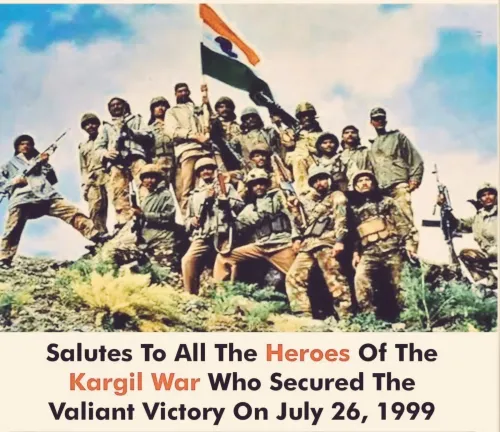
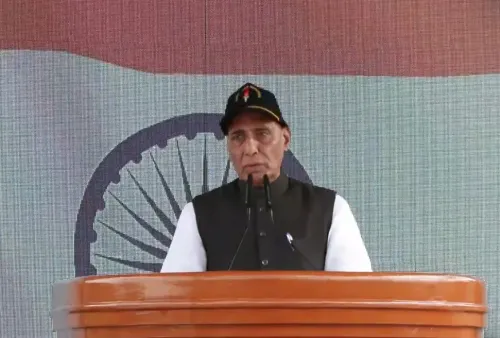
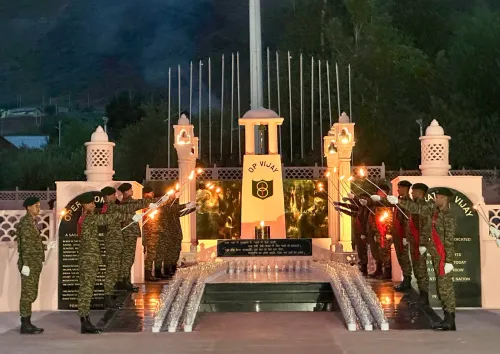
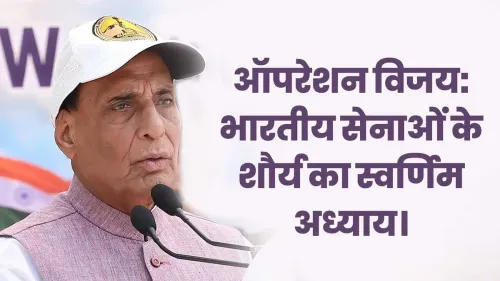
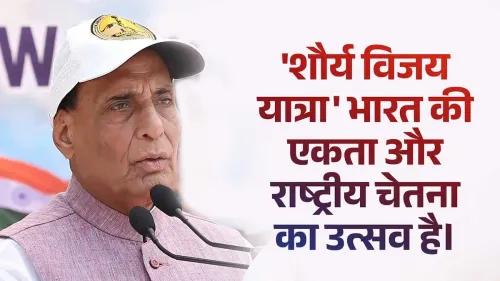
Rajnath Singh spoke at the Kargil War Memorial, Drass on 26 July , marking 27 years since the Kargil War.
He declared Pakistan has made terrorism 'a part of its government policy' and that its military works 'hand in hand' with terrorist organisations.
Singh contrasted India's advances in semiconductors, space, UPI, and start-ups with Pakistan's alleged export of terror networks and sleeper cells.
He invoked Operation Sindoor , warning that India can respond to any Pakistani misadventure 'with a severity far beyond their imagination.' Singh ruled out broad-based dialogue with Pakistan, stating any future talks would be confined solely to Pakistan-occupied Kashmir (PoK) .
Defence Minister Rajnath Singh on Sunday, 26 July drew a pointed contrast between India and Pakistan at the Kargil War Memorial in Drass, declaring that nearly 27 years after the Kargil War, the two nations have chosen fundamentally divergent paths — one toward technological progress, the other toward state-sponsored terrorism.
Key Developments at Kargil Vijay Diwas
Speaking at the commemoration of the Kargil War, Singh asserted that Pakistan's establishment has institutionalised terrorism as a pillar of state policy. He stated that the line between the Pakistani military and militant organisations has effectively been erased, and that the army there actively collaborates with terrorist groups rather than merely tolerating them.
'Pakistan has now made terrorism a part of its government policy. The distinction between the military and militants there has been erased. The Army there not only provides protection to terrorist organisations but also works hand in hand with them,' Singh said.
India vs Pakistan: The Contrast Singh Drew
The Defence Minister delivered a series of sharp rhetorical contrasts to underscore the divergence. 'Today, while India seeks new avenues for innovation, Pakistan seeks new routes for infiltration. India is designing chips, whereas Pakistan is busy designing terror. India is building a start-up ecosystem, while Pakistan is constructing a terror ecosystem. While India is manufacturing semiconductors, Pakistan is producing suicide bombers. India is gaining recognition for space missions, whereas Pakistan is conducting proxy missions. India is launching satellites into space, while Pakistan remains engaged in sending terrorists across the borders,' he said.
He continued: 'India is providing software to the world, while Pakistan is exporting sleeper cells. India is building data centres, whereas Pakistan is establishing centres of radicalisation. India is connecting the world through UPI, while Pakistan is linking terrorism with 'hawala' networks.'
Operation Sindoor and the Warning to Pakistan
Singh invoked Operation Sindoor as evidence that India will no longer distinguish between terrorists and the governments that shelter them. He said the Indian Armed Forces had delivered a lesson 'they will never forget for the rest of their lives,' and warned that India possesses the capability to respond to any Pakistani misadventure 'with a severity far beyond their imagination.'
'Operation Sindoor has made it clear what fate awaits those who dream of intimidating India through terrorism,' he stated, adding that the operation sent an unambiguous message: acts of terrorism against India would invite strong retaliation.
No Talks with Pakistan — Except on PoK
Reiterating the government's firm position, Singh ruled out any broad-based dialogue with Pakistan. He stated that if talks were ever to occur, they would be confined exclusively to the issue of Pakistan-occupied Kashmir (PoK), which he described as an integral part of India held under illegal occupation.
'There will be no talks with Pakistan. If talks do take place, they will focus solely on PoK, an integral part of India that Pakistan has illegally occupied,' Singh said. The statement reinforces the hardened diplomatic posture New Delhi has maintained since the Pahalgam attack and the subsequent Operation Sindoor. With Kargil Vijay Diwas serving as the backdrop, the message from Drass was unmistakably directed at both domestic and international audiences.
Point of View
Where infiltration attempts have continued despite Operation Sindoor. The categorical rejection of talks, while domestically popular, narrows diplomatic room at a moment when regional instability — including the Afghan factor — demands more, not less, back-channel engagement. The PoK-only precondition for talks is a maximalist opening position, not a roadmap.
NationPress
26 Jul 2026
Frequently Asked Questions
What did Rajnath Singh say about India and Pakistan at Kargil Vijay Diwas?
Defence Minister Rajnath Singh, speaking at the Kargil War Memorial in Drass on 26 July, said India and Pakistan have taken completely different paths in the 27 years since the Kargil War. He stated that India is focused on innovation — designing chips, launching satellites, and building digital infrastructure — while Pakistan has made terrorism an integral part of its state policy.
What is Operation Sindoor and why did Rajnath Singh invoke it?
Operation Sindoor was an Indian Armed Forces operation in which India struck at terrorist infrastructure and their state backers, sending a message that terrorism against India would invite decisive retaliation. Singh cited it at Drass to warn that India will no longer treat terrorists and the governments sheltering them as separate entities.
Did Rajnath Singh rule out talks with Pakistan?
Yes. Singh categorically ruled out any broad-based dialogue with Pakistan. He stated that if talks were ever to take place, they would focus solely on Pakistan-occupied Kashmir (PoK), which he described as an integral part of India under illegal Pakistani occupation.
Where and when did Rajnath Singh make these remarks?
Singh made these remarks at the Kargil War Memorial in Drass on Sunday, 26 July, during the official commemoration of Kargil Vijay Diwas, which marks India's victory in the 1999 Kargil War.
What specific comparisons did Rajnath Singh draw between India and Pakistan?
Singh said India is designing chips while Pakistan is designing terror; India is manufacturing semiconductors while Pakistan is producing suicide bombers; India is building data centres while Pakistan is establishing radicalisation centres; and India is connecting the world through UPI while Pakistan links terrorism to hawala networks.