Korean Won Sees Record Volatility Amid Middle East Tensions
Synopsis
The Korean won's volatility has surged to unprecedented levels since the Covid-19 pandemic, driven by Middle East tensions. This article delves into the implications for South Korea's economy and currency performance amidst these global uncertainties.
Key Takeaways
Current volatility of the Korean won has reached 13.2 won against the US dollar.
This marks the highest fluctuation level since March 2020 .
The won has fallen 2.81 percent against the US dollar this month.
Analysts attribute volatility to South Korea's reliance on energy imports.
Stocks closed nearly unchanged despite currency fluctuations.
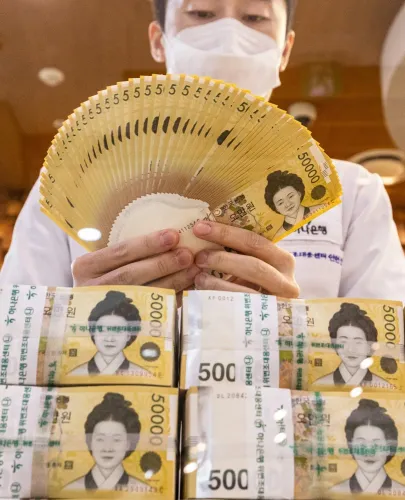
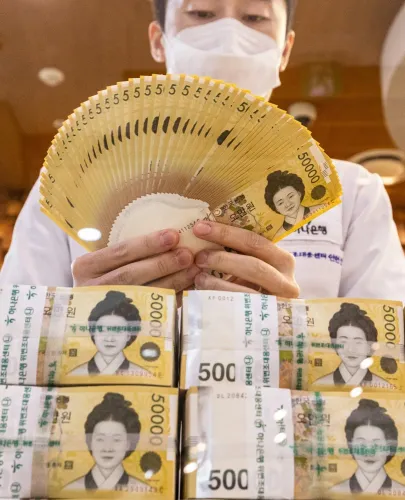
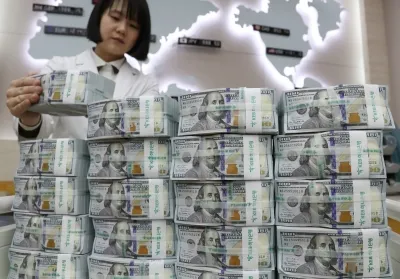
Seoul, March 8 (NationPress) The daily fluctuations of the Korean won against the US dollar have reached their highest point since the onset of the Covid-19 pandemic, driven by escalating tensions in the Middle East, data revealed on Sunday.
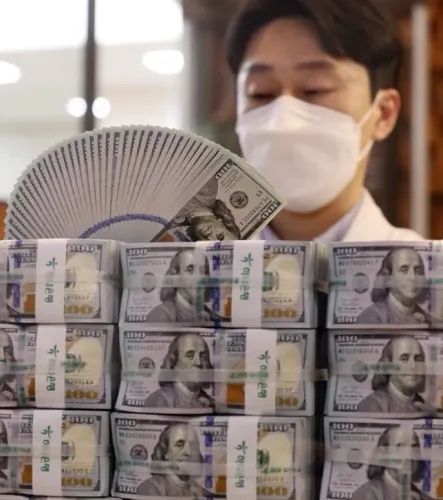
The won exhibited significant volatility following the US-Israel coordinated strikes on Iran on February 28, with the average daily change against the greenback reaching 13.2 won as of Friday, according to the Bank of Korea's economic statistics system, reported by Yonhap news agency.
This level of volatility is the highest since March 2020, when it peaked at 13.8 won, spurred by the turmoil in global financial markets during the COVID-19 crisis.
Furthermore, this volatility surpasses the 9.7 won noted in April 2025, during a period when U.S. President Donald Trump threatened substantial tariffs on foreign imports, referring to it as "Liberation Day."
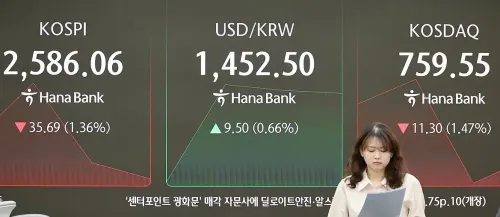
In addition, the Korean won has been among the least performing currencies, dropping 2.81 percent against the U.S. dollar this month alone, as per Yonhap Infomax, the financial data sector of Yonhap News Agency.
This decline has outpaced that of the euro (1.69 percent), the Australian dollar (1.24 percent), and the Japanese yen (1.21 percent).
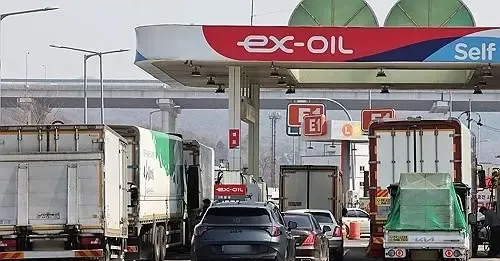
Analysts attribute the increased volatility to South Korea's substantial dependency on energy imports and its export-driven economy.
"Given South Korea's significant reliance on energy imports and its more open market, the Korean won is particularly vulnerable to associated risks, leading to heightened volatility," stated Park Hyung-joong, an economist at Woori Bank.
Meanwhile, South Korean stocks rebounded from earlier losses to close nearly stable on Friday, driven by a growing interest in automotive and defense sectors amid the ongoing crisis in the Middle East. The local currency did, however, fall against the U.S. dollar.
After starting 1.66 percent lower, the Korea Composite Stock Price Index (KOSPI) turned positive in the afternoon, finishing at 5,584.87, a slight increase of 0.02 percent or 0.97 points.
Point of View
The current volatility of the Korean won underscores the fragility of South Korea's economy in the face of global tensions. With significant reliance on energy imports, any geopolitical instability poses a direct threat to financial stability.
NationPress
29 Sept 2026
Frequently Asked Questions
What factors are contributing to the volatility of the Korean won?
The volatility is primarily attributed to South Korea's heavy reliance on energy imports and its export-driven economy, which makes the won sensitive to geopolitical risks.
How does current volatility compare to past levels?
The current volatility of 13.2 won is the highest since March 2020, surpassing levels recorded during previous economic uncertainties.
What is the impact of the US-Israeli actions on the Korean won?
The US-Israeli attacks on Iran have contributed to fluctuations in the Korean won, reflecting the currency's vulnerability to international conflict.
How has the stock market reacted to these changes?
South Korean stocks have shown resilience, closing nearly unchanged despite the volatility in the currency, driven by interest in the automotive and defense sectors.
What are the predictions for the Korean economy moving forward?
Given the current geopolitical climate, analysts remain cautious about the Korean economy's prospects, particularly concerning currency stability and market performance.