South Korean Won Dips Against US Dollar Amid Middle East Tensions

Synopsis
The South Korean won has fallen against the US dollar amid rising global oil prices driven by escalating tensions in the Middle East. The situation is compounded by Iran's actions affecting cargo traffic, raising concerns about supply disruptions.
Key Takeaways
Korean won drops against the US dollar .
Global oil prices are rising due to Middle East tensions.
Iran's actions disrupt traffic in the Strait of Hormuz .
IEA releases record oil stockpile to mitigate issues.
South Korea remains heavily reliant on energy imports .
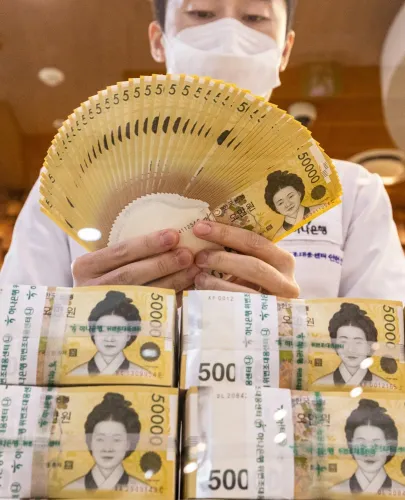
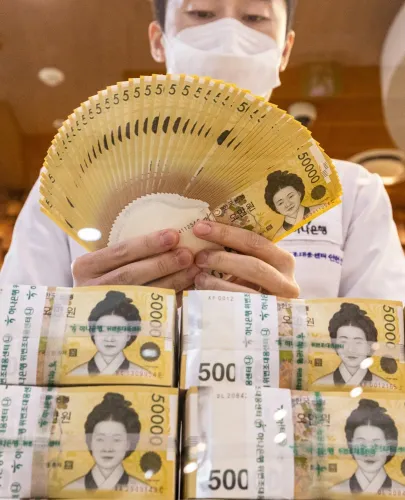
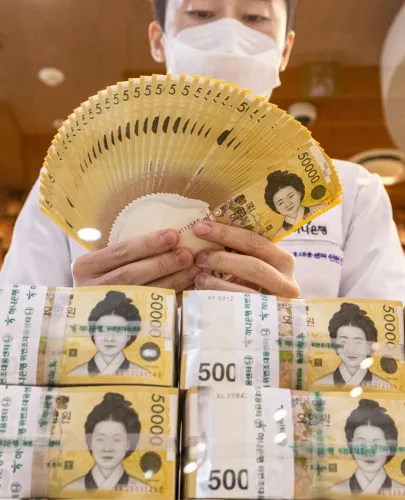
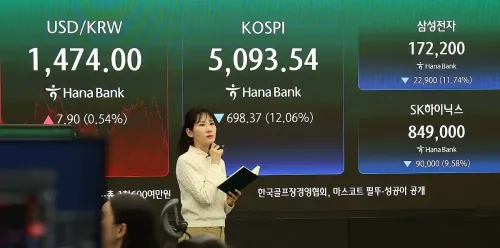
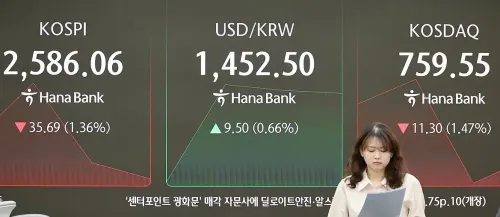
Seoul, March 12 (NationPress) The South Korean won experienced a decline against the US dollar on Thursday as rising global oil prices raised concerns about potential supply interruptions linked to escalating tensions in the Middle East.
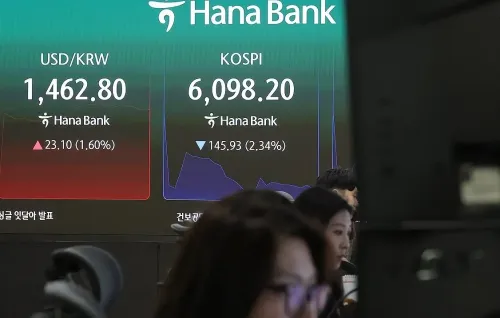
The won began trading at 1,480.1 per dollar, marking a drop of 13.6 won from the previous trading day, according to reports from Yonhap news agency.
After a brief recovery in the prior two sessions, bouncing back from a 17-year low, the won found itself weakened again as global oil prices surged following Iran's actions to effectively cease cargo traffic through the Strait of Hormuz. Iran has fired upon commercial vessels and targeted Dubai International Airport, intensifying efforts to obstruct traffic in the Persian Gulf, known for its rich oil reserves.
This spike in oil prices occurred even after the International Energy Agency (IEA) announced its largest-ever release of an oil stockpile totaling 400 million barrels to alleviate supply issues.
In addition, the United States disclosed plans to release 172 million barrels from its Strategic Petroleum Reserve starting next week.
Both the foreign exchange and stock markets have experienced significant volatility since last week, prompted by rising tensions due to the US-Israeli attacks on Iran.
As oil prices surge, the Korean won faces downward pressure, increasing the nation's demand for dollars to finance crude oil imports, given South Korea's heavy reliance on energy imports.
On Thursday, the benchmark Korea Composite Stock Price Index (KOSPI) opened at 5,567.65, which is a 0.75 percent decrease, following losses from Wall Street amid fears of a protracted conflict.
The South Korean stock market began the day slightly lower due to volatile oil prices linked to the ongoing U.S.-Iran conflict and shipping disruptions in key waterways in the Middle East.
As of 9:15 a.m., the KOSPI fell by 39.38 points, or 0.7 percent, settling at 5,570.57, following a 1.4 percent increase the day prior.
Point of View
The South Korean won's decline against the US dollar reflects the intricate relationship between global events and economic stability. As we navigate these challenges, the focus must remain on protecting national interests and ensuring economic resilience.
NationPress
9 Oct 2026
Frequently Asked Questions
What caused the South Korean won to fall?
The South Korean won fell against the US dollar due to rising global oil prices and concerns over supply disruptions linked to escalating tensions in the Middle East.
How have oil prices affected the Korean economy?
Higher oil prices increase demand for dollars in South Korea, which relies heavily on energy imports, thereby putting downward pressure on the won.
What actions is Iran taking that impact oil supply?
Iran has halted cargo traffic through the Strait of Hormuz and targeted commercial vessels, disrupting traffic in the oil-rich Persian Gulf.
What steps are being taken to stabilize oil prices?
The International Energy Agency is releasing a record oil stockpile of 400 million barrels, while the US plans to release 172 million barrels from its Strategic Petroleum Reserve.
What is the outlook for the Korean stock market?
The Korean stock market has shown volatility due to geopolitical tensions, with the KOSPI index experiencing fluctuations amid concerns of a prolonged conflict.