CM Bhajanlal Launches Bharat Taxi Cooperative in Jaipur
Synopsis
Chief Minister Bhajanlal Sharma launched Bharat Taxi in Jaipur on 26 July 2026, a cooperative ride-hailing service giving drivers ownership stakes. Over 100 vehicles were flagged off alongside MoUs with Jaipur Metro, RSRTC, RCDF, and the Municipal Corporation.
Key Takeaways
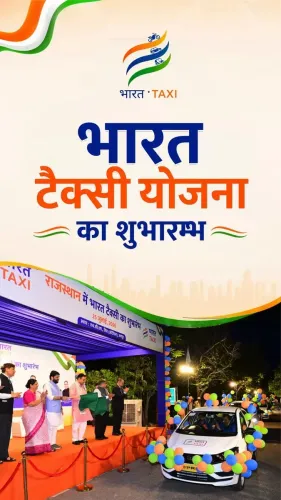
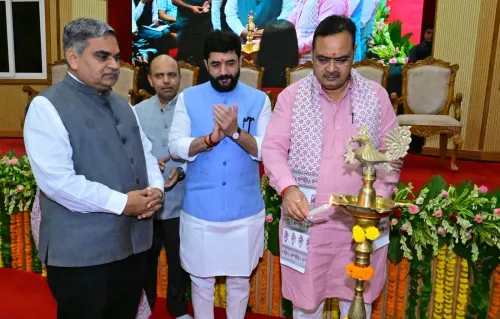
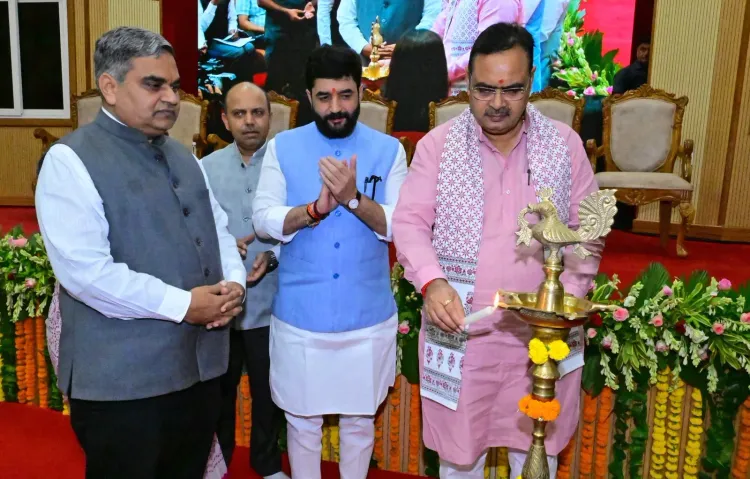
Bharat Taxi was officially launched at HCM RIPA, Jaipur on 26 July 2026 by CM Bhajanlal Sharma and Union Minister Murlidhar Mohol .
The cooperative model gives drivers an ownership stake via share certificates ; six top drivers received certificates at the event.
Sahakar Taxi Co-operative signed MoUs with RCDF , Nagar Nigam , Jaipur Metro , and RSRTC to integrate services with public transport.
A convoy of more than 100 cabs, bikes, and auto-rickshaws was flagged off after the ceremony.
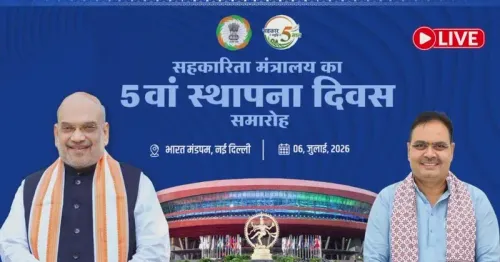
The initiative aligns with the central Ministry of Cooperation 's mandate, established in July 2021 , to expand cooperatives into urban services and transport.
Rajasthan positions the scheme as a tool for providing employment, ownership, and dignity to informal transport workers.
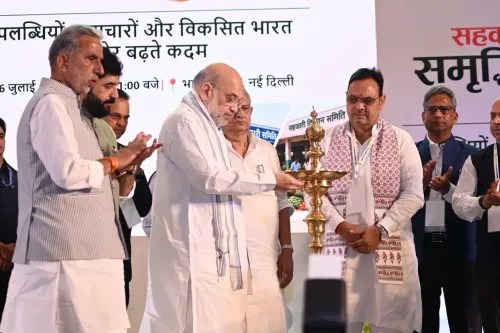
Chief Minister Bhajanlal Sharma on Sunday, 26 July 2026, addressed the launch event of Bharat Taxi at HCM RIPA (Harish Chandra Mathur Rajasthan Institute of Public Administration) in Jaipur, inaugurating a cooperative-model cab service that aims to give drivers both employment and an ownership stake in the platform.
What Was Launched
Bharat Taxi is a cooperative ride-hailing initiative operated by Sahakar Taxi Co-operative, designed to formalise the informal driver economy by converting drivers into shareholder-owners. At the event, six top-performing drivers — referred to as sarthis (charioteerss/drivers) — were presented with share certificates, symbolising their ownership stake in the cooperative.
Chief Minister Sharma said the initiative was 'a powerful medium to provide not just employment but also ownership and dignity to citizens' (nागरिकों को रोजगार देने के साथ ही, स्वामित्व और सम्मान प्रदान करने का सशक्त माध्यम). Following the ceremony, CM Sharma and Union Minister of State for Cooperation Murlidhar Mohol jointly flagged off a convoy of more than 100 cabs, bikes, and auto-rickshaws.
Context
The Ministry of Cooperation was established by the Government of India in July 2021 to expand the cooperative movement beyond its traditional strongholds in dairy and credit into sectors such as urban transport and services. Bharat Taxi sits squarely within this broader national agenda.
Rajasthan under CM Bhajanlal Sharma, who took office in December 2023, has positioned cooperative-sector expansion as a pillar of its employment generation strategy. The presence of Union Minister Mohol at the event signals active coordination between the state government and the central Cooperation Ministry.
Policy Backdrop and MoUs
A key feature of the launch was the exchange of Memoranda of Understanding (MoUs) between Sahakar Taxi Co-operative and four major state bodies: the Rajasthan Co-operative Dairy Federation (RCDF), Nagar Nigam (Municipal Corporation), Jaipur Metro, and the Rajasthan State Road Transport Corporation Limited (RSRTC).
These partnerships are intended to integrate Bharat Taxi's last-mile services with existing public transport infrastructure — buses, metro, and municipal networks — creating a more seamless urban mobility ecosystem. The inclusion of RCDF, a major dairy cooperative, also suggests potential synergies in logistics and cooperative governance frameworks.
Stakeholders and Impact
The primary beneficiaries are taxi, bike, and auto-rickshaw drivers in Rajasthan, who stand to gain formalised employment, social recognition, and a financial stake in the platform they work on — a model that distinguishes Bharat Taxi from conventional gig-economy aggregators where drivers have no ownership rights.
Urban commuters in Jaipur are expected to benefit from better-integrated, cooperative-backed mobility options. The MoUs with Jaipur Metro and RSRTC in particular point toward coordinated first-and-last-mile connectivity.
What's Next
The immediate focus will be on the operational rollout of Bharat Taxi services across Jaipur and, potentially, other districts of Rajasthan. Performance data on driver enrolment, ride volumes, and cooperative membership growth will be closely watched as indicators of whether the model can scale.
With the central government backing cooperative expansion nationally, Rajasthan's Bharat Taxi could serve as a template for other states looking to bring gig-economy workers into the formal cooperative fold.
Point of View
Not merely run it as a parallel scheme. Union Minister Mohol's presence underscores that Rajasthan is positioning itself as a flagship state for the Centre's post-2021 cooperative expansion agenda. Whether the model sustains driver interest and delivers on its ownership promise will depend on transparent governance of the cooperative and consistent state support.
NationPress
26 Jul 2026
Frequently Asked Questions
What is Bharat Taxi and how does it work?
Bharat Taxi is a cooperative ride-hailing service operated by Sahakar Taxi Co-operative in Rajasthan. Unlike conventional app-based aggregators, it gives drivers a formal ownership stake in the cooperative through share certificates, alongside regular employment.
Who launched Bharat Taxi in Jaipur?
Chief Minister Bhajanlal Sharma and Union Minister of State for Cooperation Murlidhar Mohol jointly launched Bharat Taxi at HCM RIPA in Jaipur on 26 July 2026.
Which organisations signed MoUs with Sahakar Taxi Co-operative?
Sahakar Taxi Co-operative signed MoUs with the Rajasthan Co-operative Dairy Federation (RCDF), Nagar Nigam (Municipal Corporation), Jaipur Metro, and the Rajasthan State Road Transport Corporation (RSRTC).
How many vehicles were flagged off at the Bharat Taxi launch?
More than 100 vehicles — including cabs, bikes, and auto-rickshaws — were flagged off by CM Bhajanlal Sharma and Union Minister Murlidhar Mohol at the conclusion of the launch event.
What is the significance of Bharat Taxi for drivers in Rajasthan?
Bharat Taxi converts informal drivers into shareholder-owners of the cooperative, providing them formal employment, social recognition, and a financial stake — addressing a key gap in the conventional gig-economy model where drivers have no ownership rights.