Trump says Iran military crippled after US strikes, vows no nuclear weapon
Synopsis
Trump told a conservative conference that US strikes have gutted Iran's Navy, Air Force, and missile arsenal — with drone capacity reportedly cut by 82% and rocket launchers by 90%. He also claimed a historic agreement bars Iran from ever going nuclear. But his own remarks revealed Iran still managed to launch drones near the Strait of Hormuz just a day earlier, complicating the picture of a fully neutralised adversary.
Key Takeaways
President Donald Trump on 27 June claimed US military action had left Iran with 'no Navy, no Air Force, no anti-aircraft capability, no radar, virtually no manufacturing.' Trump said Iran's drone capacity was cut by 82% , missile capacity by 80% , and rocket launchers by 90% .
He claimed a historic agreement had been signed ensuring Iran will never acquire a nuclear weapon.
Trump acknowledged Iran launched four drones near the Strait of Hormuz , of which three were intercepted and one struck a ship.
Trump revisited the killing of Iranian General Qassem Soleimani , calling it 'one of the biggest things ever to happen in the Middle East.' Independent verification of Trump's specific military-loss figures was not immediately available.
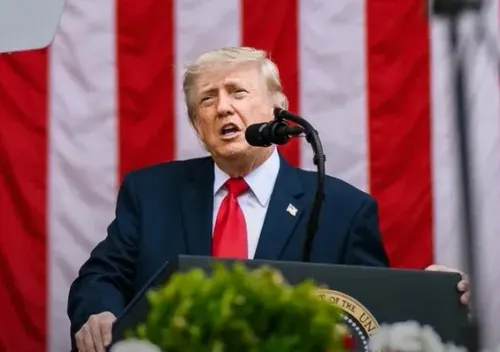
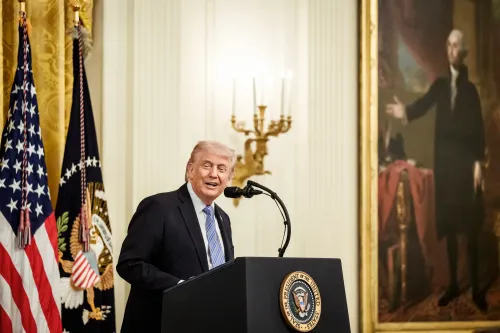
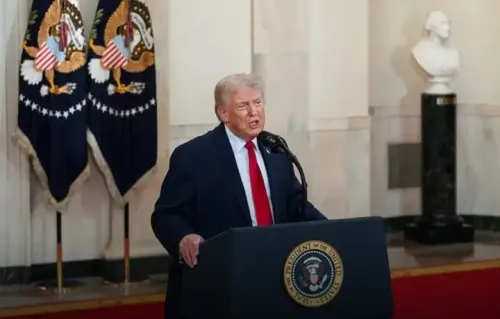
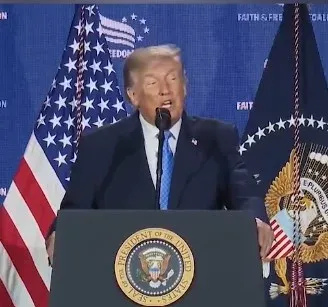
US President Donald Trump on 27 June defended recent American military action against Iran, declaring that Tehran's armed forces had been severely degraded and asserting that Iran would never be permitted to acquire a nuclear weapon. Trump made the remarks at the Faith & Freedom Coalition's Road to Majority conference in Washington.
Trump's Claims on Iran's Military Losses
Trump asserted that US strikes had inflicted sweeping damage on Iran's defence infrastructure. 'Iran today has no Navy, no Air Force, no anti-aircraft capability, no radar, virtually no manufacturing,' he said. He further claimed that Iran's drone capacity had been cut by 82 percent, its missile capacity by 80 percent, and its rocket launchers by 90 percent.
Trump also said Iran's leadership had suffered repeated losses. 'Their leadership has been killed a first time, and their leadership has been killed a second time. And nobody wants to be the leader of Iran anymore,' he said.
Historic Agreement and Nuclear Red Line
Trump claimed his administration had secured a landmark agreement barring Iran from ever developing a nuclear weapon — something he said no previous president had managed. 'Last week, we signed a historic agreement to accomplish what no president has ever been able to accomplish before — that Iran will never have a nuclear weapon,' he said. He framed the nuclear question in stark terms: 'You want to see problems? Let a crazy country have a nuclear weapon, you'll see problems like you've never seen before.'
This comes amid longstanding international efforts, including the now-defunct 2015 JCPOA, to constrain Iran's nuclear programme — a process that has repeatedly stalled over verification and sanctions disputes.
Iran's Residual Strike Capability
Despite his sweeping claims, Trump acknowledged that Iran retained a limited ability to strike. He referenced an incident near the Strait of Hormuz in which Iran reportedly launched four drones at a ship. 'They shot a drone yesterday at a big ship going into the Hormuz Strait. They shot four of them, we knocked down three of them,' he said, adding that one drone struck the vessel and caused damage. 'But you can't do that stuff,' Trump said.
Soleimani Killing Revisited
Trump also revisited the killing of Iranian General Qassem Soleimani during his first term, calling it 'one of the biggest things ever to happen in the Middle East.' He attributed to Soleimani the design of roadside bombs responsible for maiming American soldiers. 'When you see a young man or woman walking around without legs or without arms or a face that was obliterated, it happened from the roadside bomb that was created, the creation of General Soleimani, who I killed in my first term,' Trump said.
Broader Context and What Comes Next
The remarks were part of a wide-ranging address covering religion, immigration, election reform, the economy, and national security. Trump repeatedly framed his administration's actions as defending US interests and American values, stating: 'We're once again using it to defend America's interests and American values.'
Tehran has not publicly confirmed the scale of losses Trump described, and independent verification of his specific figures — including the percentage reductions in drone, missile, and rocket capacity — was not immediately available. Trump indicated Iran was now seeking a deal: 'They're dying to make a deal. They're giving us a lot.' Whether formal negotiations follow, and on what terms, will be closely watched by regional powers and US allies alike.
Point of View
Not a security briefing — demand independent verification before they are taken at face value. The Strait of Hormuz drone incident he himself described, where one of four Iranian drones successfully struck a ship, is a data point that cuts against the narrative of a fully neutralised adversary. The 'historic agreement' on Iran's nuclear programme echoes the language used to describe the original JCPOA, which Trump withdrew from in 2018 — raising legitimate questions about what this new arrangement actually commits both sides to, and who verifies compliance. The pattern is familiar: maximum-pressure rhetoric, selective disclosure of outcomes, and a domestic political audience primed to receive it uncritically.
NationPress
27 Jun 2026
Frequently Asked Questions
What did Trump say about Iran's military at the Faith & Freedom Coalition conference?
Trump claimed US military strikes had left Iran with no functioning Navy, Air Force, anti-aircraft capability, or radar. He said Iran's drone capacity had been cut by 82%, missile capacity by 80%, and rocket launchers by 90%, though these figures have not been independently verified.
What is the nuclear agreement Trump referred to?
Trump said his administration signed a 'historic agreement' ensuring Iran will never develop a nuclear weapon — something he claimed no previous president had achieved. Details of the agreement's terms and verification mechanism were not disclosed in his remarks.
Did Trump acknowledge Iran still has any military capability?
Yes. Trump said Iran 'can still shoot,' referencing an incident near the Strait of Hormuz where Iran launched four drones at a ship, three of which were intercepted and one of which caused damage.
Why did Trump bring up General Qassem Soleimani?
Trump revisited the killing of Iranian General Qassem Soleimani during his first term to underscore his administration's willingness to use military force. He attributed to Soleimani the design of roadside bombs responsible for maiming American soldiers and called the killing 'one of the biggest things ever to happen in the Middle East.'
Is Iran seeking negotiations with the US, according to Trump?
Trump said Iran is actively seeking a deal, stating 'They're dying to make a deal. They're giving us a lot.' Whether formal negotiations are underway and on what terms remains unclear pending official confirmation from either government.