Trump deploys Kushner, Witkoff on Russia-Ukraine peace mission
Synopsis
Trump has moved beyond diplomatic signalling — Kushner and Witkoff are reportedly carrying an actual peace proposal to Kyiv and Moscow, not just feelers. With Trump blaming the war's continuation on personal hatred between Putin and Zelensky, and claiming 32,000 battlefield deaths in four weeks, the White House is framing this as an urgent, dealmaker-driven endgame push.
Key Takeaways
President Donald Trump confirmed on 5 September that Jared Kushner and Steve Witkoff are carrying a formal peace proposal to end the Russia-Ukraine war .
Expected visits to both Kyiv and Moscow are planned; neither Russia nor Ukraine has publicly confirmed agreement to negotiate on the proposal's terms.
Trump attributed the conflict's persistence to 'serious hate' between President Putin and President Zelensky , framing it as a personality-driven impasse.
Trump claimed 32,000 people were killed in the previous four weeks and that monthly military losses average 25,000 — figures not independently verified.
Trump dismissed the likelihood of a Russian attack on NATO territory, even amid Germany's reported attribution of a drone incident to Russia.
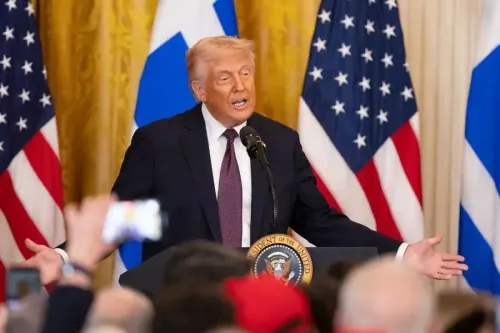
US President Donald Trump has dispatched his son-in-law Jared Kushner and senior diplomatic envoy Steve Witkoff to pursue a formal peace agreement ending the Russia-Ukraine war, confirming the mission on 5 September at the White House. Trump said the pair are carrying a concrete proposal — not merely exploratory outreach — with expected visits to both Kyiv and Moscow.
The Peace Proposal
When asked by reporters whether Kushner and Witkoff would table new proposals during their trip, Trump was unambiguous. 'No, they're bringing with them a proposal to end the war,' he said. The President did not disclose the terms of the proposal, nor did he indicate whether Russia or Ukraine had agreed to negotiate on its basis. He later described Washington as having 'an idea for peace' and vouched for the two envoys as experienced dealmakers.
'I sent Steve Witkoff and Jared Kushner, two great negotiators; they've done a great job,' Trump told reporters. 'And we sent them over to see whether or not we can get something done. And there may be a good chance that we'll do it.'
The Personality Problem, as Trump Sees It
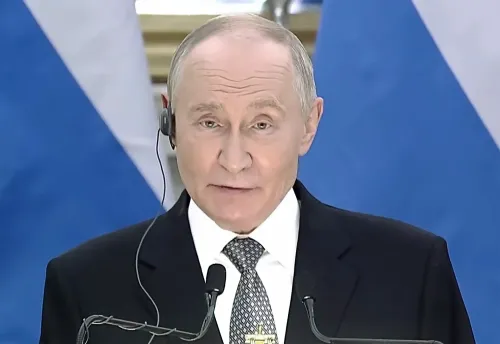
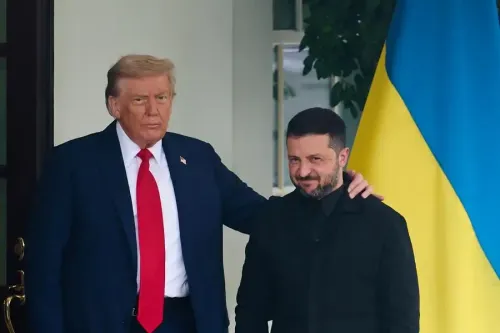
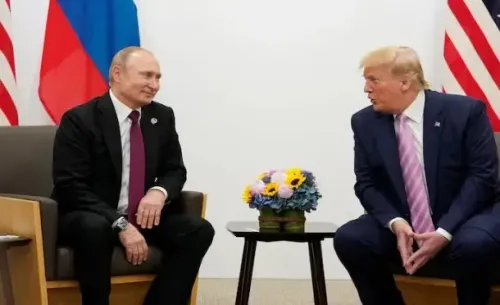
Trump argued that deep personal animosity between Russian President Vladimir Putin and Ukrainian President Volodymyr Zelensky has been a structural obstacle to any settlement. 'There's a personality problem in Russia/Ukraine. You have President Zelensky and President Putin; they truly hate each other,' he said. 'You know what hate is? They have serious hate, and it's getting in the way of them.'
This framing — centring the conflict on interpersonal hostility rather than territorial or security disputes — marks a notable departure from how most Western governments have characterised the war's roots and obstacles to resolution.
Casualty Claims and Urgency
Trump cited battlefield losses to press the case for urgency, claiming 32,000 people, mostly soldiers, had been killed in the previous four weeks alone, with monthly military losses averaging 25,000. These figures could not be independently verified, and the source of the estimates was not specified. 'It's got to get settled,' Trump said.
This is not the first time the Trump administration has framed the conflict's human cost as a driver of its peace push. Witkoff has previously engaged in shuttle diplomacy on the conflict, making him a familiar interlocutor for both sides.
NATO and the Russia Threat Question
Trump also pushed back against concerns that Russia could target NATO territory, including in the context of Germany reportedly attributing an explosive drone found at a German airport to Russia. 'I don't think that Putin will be — I speak to him. I know him very well. Putin's not looking to attack NATO territory,' Trump said. His remarks are likely to draw scrutiny from European allies who have taken a harder line on Russian escalation risks.
Who Kushner and Witkoff Are
Kushner served as a senior White House adviser during Trump's first term, playing a central role in the Abraham Accords — the normalisation agreements between Israel and several Arab states. Witkoff has been one of Trump's principal diplomatic envoys in the current term, with prior involvement in Middle East negotiations. Their deployment on the Russia-Ukraine file signals that Trump is treating this as a flagship diplomatic priority.
Point of View
Security guarantees, and sanctions architecture that any durable deal must resolve. Deploying Kushner, whose diplomatic credential is the Abraham Accords, and Witkoff, a real-estate-background envoy, signals a transactional approach that has unnerved European allies who prefer multilateral frameworks. The bigger risk is that a rushed deal — one that locks in Russian territorial gains without credible enforcement — could destabilise European security for a generation. Trump's confidence that Putin will not target NATO territory, offered without conditions or verification mechanisms, is also the kind of reassurance that tends not to age well.
NationPress
20 Oct 2026
Frequently Asked Questions
What peace proposal are Kushner and Witkoff carrying to Russia and Ukraine?
President Trump confirmed that Kushner and Witkoff are carrying a formal proposal to end the Russia-Ukraine war, not merely exploratory talking points. The specific terms of the proposal have not been disclosed, and neither Moscow nor Kyiv has publicly confirmed willingness to negotiate on its basis.
Why did Trump cite personal hostility between Putin and Zelensky?
Trump argued that deep personal animosity between Russian President Vladimir Putin and Ukrainian President Volodymyr Zelensky has been a key obstacle to a peace settlement. He described their mutual hostility as 'serious hate' that is 'getting in the way' of negotiations — a framing that differs from how most Western governments characterise the conflict's barriers.
How credible are Trump's casualty figures for the Russia-Ukraine war?
Trump claimed 32,000 people, mostly soldiers, were killed in the four weeks preceding his 5 September statement, with monthly losses averaging 25,000. These figures were not attributed to a specific source and could not be independently verified at the time of reporting.
Who are Jared Kushner and Steve Witkoff?
Kushner is Trump's son-in-law and served as a senior White House adviser during Trump's first term, where he was a key architect of the Abraham Accords. Witkoff is one of Trump's principal diplomatic envoys in the current term, with prior involvement in Middle East negotiations.
Did Trump say Russia would attack NATO territory?
Trump explicitly rejected the suggestion, saying he knows Putin well and that 'Putin's not looking to attack NATO territory.' His remarks came in the context of Germany reportedly blaming Russia for an explosive drone found at a German airport — an incident Trump did not characterise as an attack on the alliance.