Trump, Takaichi reaffirm Japan-US alliance at UN, push AI and chip ties
Synopsis
On the sidelines of the UN General Assembly in New York, Trump and Takaichi put the Japan-US alliance front and centre — and extended it well beyond defence into AI, semiconductors, and critical minerals. With Asia's security environment tightening and technology competition escalating, the two leaders are quietly redrawing what a 1960 security treaty means in 2026.
Key Takeaways
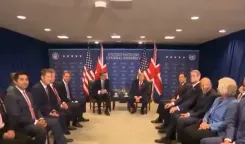
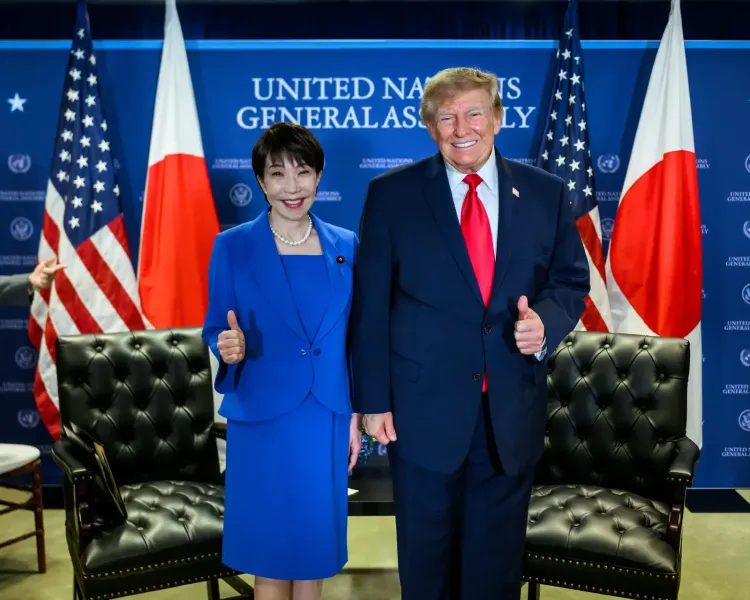
Donald Trump and Sanae Takaichi held a bilateral meeting at the UN headquarters, New York on 23 September 2026 .
Takaichi confirmed 10 of 18 cabinet ministers are new appointees, but key portfolios — foreign policy, defence, finance, and economy — remain unchanged.
Both leaders highlighted growing cooperation in AI, semiconductors, and critical minerals as core economic security priorities.
Takaichi explicitly cited a 'severely deteriorating' Asian security environment as the backdrop for deepening the alliance.
The Japan-US Treaty of Mutual Cooperation and Security , signed in 1960 , underpins the formal alliance, now expanding into technology and economic domains.
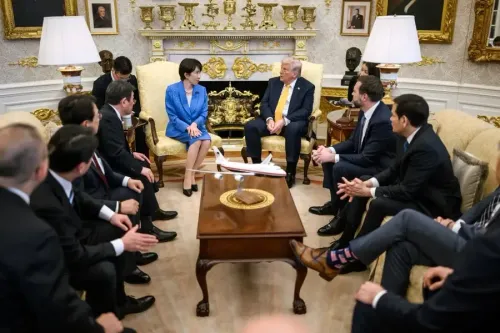
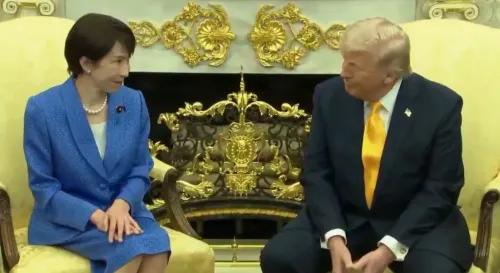
US President Donald Trump and Japanese Prime Minister Sanae Takaichi met at the United Nations headquarters in New York on 23 September 2026, using the high-profile bilateral to reinforce the durability of the Japan-US alliance and signal deepening cooperation on economic security, particularly in artificial intelligence, semiconductors, and critical minerals.
Trump's Praise and the Bilateral Tone
Trump opened the meeting with unqualified praise for the Japanese premier, describing her as a personal friend and predicting she would be remembered among Japan's most consequential leaders. 'She's done a great job. Her numbers, I watch her numbers all the time, and the industry in Japan is doing very well. The country is doing very well, very big improvement,' Trump said. He added: 'It's an honor to be with her. She's a friend of mine. We got to know each other very well over the last period of time, and she's going to be a great prime minister.'
Trump also addressed the senior Japanese officials accompanying Takaichi, calling them 'tough and smart.'
Takaichi's Message: Alliance Strength in a Tense Asia
Takaichi, speaking through an interpreter, framed the New York meeting as a deliberate signal to the broader international community about the partnership's resilience. 'I would like to seize this opportunity to demonstrate to the world how robust our alliance is through holding another round of meeting with Donald today here at this venue, UN headquarters,' she said. She specifically cited the 'increasingly severe security environment, including Asian security environment in recent years,' and thanked Trump for what she called his 'very, very powerful commitment to the Japan-US alliance.'
Cabinet Reshuffle and Policy Continuity
Takaichi briefed Trump on a recent cabinet reshuffle in Tokyo, noting that 10 of her 18 ministers were new appointees. Crucially, she stressed that senior officials overseeing foreign policy, finance, economic affairs, and defence had all remained in post — a deliberate signal of continuity in the bilateral working relationship with Washington. 'It is fair to say that we can expect this person-to-person counterpart relationship being a driver to promote policy coordination,' she said.
Economic Security: AI, Chips, and Critical Minerals
The two leaders highlighted economic security as a fast-expanding dimension of the alliance. Takaichi pointed specifically to bilateral advances in AI, semiconductor cooperation, and critical minerals — sectors now central to the industrial and strategic policies of both nations. 'Thanks to Donald's leadership and also my own leadership, our bilateral economic security cooperation in areas such as AI, semiconductor and critical minerals has been steadily advancing,' she said. Private discussions reportedly covered a broad agenda before reporters were asked to leave the room.
Historical and Strategic Context
The United States and Japan have been bound by the Treaty of Mutual Cooperation and Security since 1960. Washington has consistently described the alliance as foundational to its security architecture in Asia and to stability across the Indo-Pacific. The two countries also coordinate extensively in multilateral forums including the United Nations, the G7, the G20, and the Asia-Pacific Economic Cooperation (APEC) forum — a partnership spanning security, trade, technology, and regional governance. The UN General Assembly sidelines have increasingly served as a venue for high-visibility bilaterals, and this meeting follows that pattern of using New York as a stage for alliance messaging.
With regional security pressures mounting and technology competition intensifying, Tokyo and Washington appear to be broadening the alliance well beyond its original defence-treaty foundations into the economic and technological domains.
Point of View
Designed as much for Beijing and Pyongyang as for domestic audiences. Takaichi's emphasis on cabinet continuity in foreign and defence portfolios is a pointed message that Japan's strategic direction will not wobble with political reshuffles. The real substance lies in the economic security agenda — AI, semiconductors, and critical minerals are now as central to the alliance as Article 5 deterrence, reflecting a structural shift in how democracies are contesting strategic competition with China. Whether the warm optics translate into concrete joint investment or supply-chain commitments is the question the communiqués will not fully answer.
NationPress
23 Sept 2026
Frequently Asked Questions
What did Trump and Takaichi discuss at the UN meeting on 23 September 2026?
Trump and Takaichi used their bilateral at the UN headquarters in New York to reaffirm the Japan-US alliance and discuss deepening cooperation on economic security, including artificial intelligence, semiconductors, and critical minerals. They also touched on cabinet continuity in Japan and the broader Indo-Pacific security environment.
Who is Sanae Takaichi and why is she significant?
Sanae Takaichi is the Prime Minister of Japan. She has placed economic security — particularly in AI, semiconductors, and critical minerals — at the centre of her government's agenda, and has pursued a close working relationship with Washington as Asia's security environment grows more complex.
What is the Japan-US Treaty of Mutual Cooperation and Security?
The Treaty of Mutual Cooperation and Security is a defence agreement signed between the United States and Japan in 1960. It commits the US to Japan's defence and has served as the bedrock of Washington's security architecture in Asia; it is now being supplemented by economic and technology cooperation agreements.
Why did Takaichi highlight cabinet continuity during the meeting?
Takaichi noted that while 10 of her 18 ministers are new, officials overseeing foreign policy, finance, defence, and economic affairs have remained in post. She argued this ensures uninterrupted working-level relationships with US counterparts and sustained policy coordination between Tokyo and Washington.
What are the key areas of Japan-US economic security cooperation?
According to both leaders, the priority areas are artificial intelligence, semiconductors, and critical minerals — all sectors that have become central to strategic and industrial competition globally. Takaichi said this cooperation has been 'steadily advancing' under the leadership of both governments.