Trump and Takaichi Foster Alliance Through Diplomatic Warmth Amid Global Tensions
Synopsis
In a pivotal meeting, President Trump and Prime Minister Takaichi showcased their alliance's significance amidst global tensions, focusing on energy, trade, and the urgent need for cooperation on security issues like Iran. Their discussions indicate a deepening partnership between the US and Japan.
Key Takeaways
The meeting highlighted the strategic importance of the US-Japan alliance.
Cooperation on energy and trade was a focal point of discussions.
Takaichi expressed strong opposition to Iran’s nuclear ambitions.
The leaders shared personal anecdotes and praised each other publicly.
The event included symbolic gestures, reinforcing their friendship.
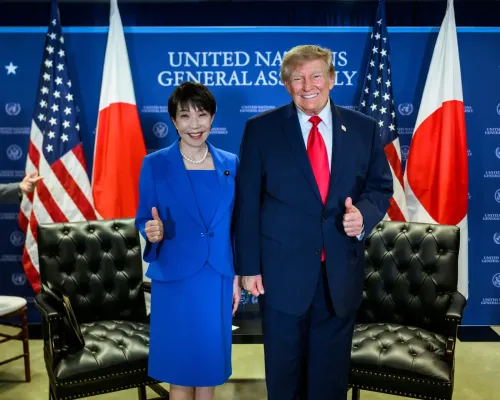
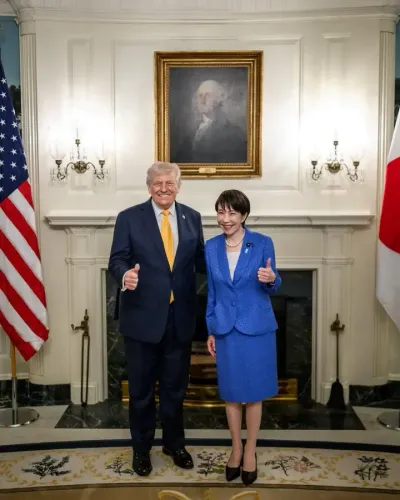
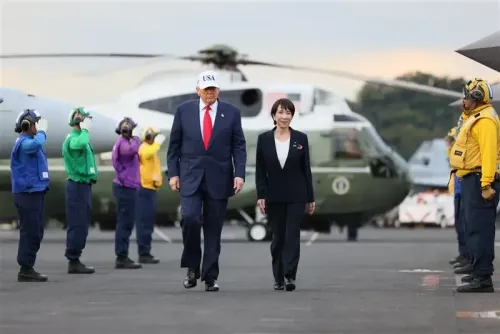
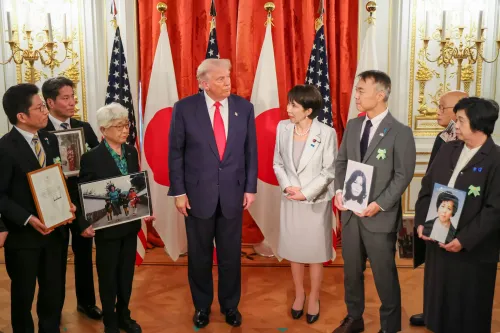
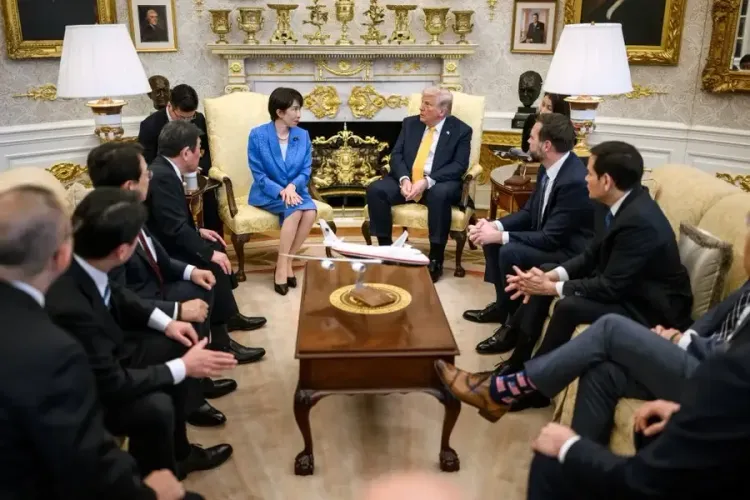
Washington, March 20 (NationPress) - During a significant day of discussions at the White House, US President Donald Trump and Japan's Prime Minister Sanae Takaichi showcased a carefully orchestrated display of warmth and mutual respect, emphasizing the importance of the US-Japan alliance against the backdrop of ongoing conflicts in the Middle East. This bilateral visit aimed to highlight the strategic significance of their partnership.
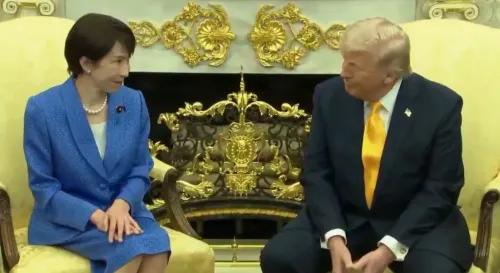
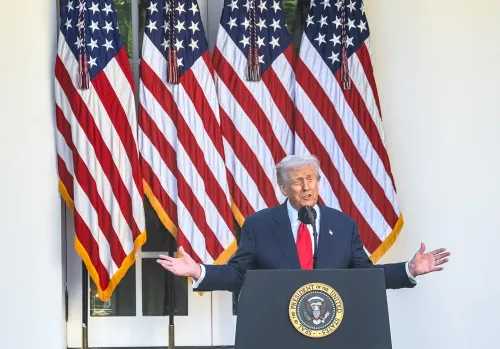
Beginning in the prestigious Oval Office on Thursday morning and transitioning to the elegant State Dining Room later that evening, the meeting seamlessly combined ceremonial elements with pressing security issues. Trump praised Takaichi as “a great friend and partner” and lauded her recent electoral success, while Takaichi expressed heartfelt support, asserting her belief that “only you, Donald, can bring about peace globally.”
The format of the visit was intentionally crafted. Initially, Trump and Takaichi addressed reporters in the Oval Office during a bilateral session. Following friendly exchanges, the conversation shifted to critical topics including Iran, the Strait of Hormuz, and China, along with the expectations Washington has for its allies. Later in the evening, they reconvened at a formal White House dinner, where the atmosphere transformed into one of symbolism, alliance rituals, and political rapport.
During both appearances, Trump framed Japan as one of America’s closest allies. He noted that the two nations had established a “historic trade deal” the previous year, enhancing collaboration in areas such as energy, semiconductors, shipbuilding, and pharmaceuticals. He also welcomed Japan's increasing commitment to its defense and its acquisition of American military equipment.
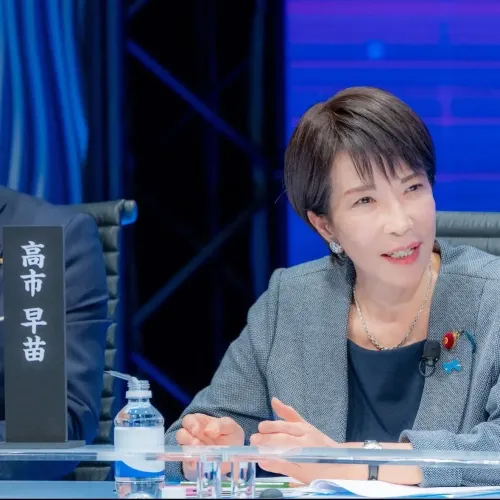
Takaichi characterized the visit as both strategic and personal. In the Oval Office, she acknowledged the world’s “very severe security environment” and cautioned about the potential adverse effects of Middle Eastern conflicts on the global economy. She came to Washington equipped with “specific proposals to stabilize the global energy market” and to discuss partnerships on energy, rare-earth minerals, and economic security.
Regarding Iran, Takaichi's stance was unequivocal. “The development of nuclear weapons by Iran must never be permitted,” she stated, condemning Iran’s regional actions and the “effective closure of the Strait of Hormuz.”
Subsequently, during a briefing for the Japanese press accompanying her, Takaichi revealed that she and Trump had agreed on enhancing US energy production. She mentioned Japan's interest in a collaborative effort to stockpile crude oil sourced from the US and highlighted advanced discussions on critical minerals, including marine resources and rare earth mud near Minamitorishima.
She described their discussions as extensive and concrete, noting their agreement to broaden security cooperation, “including the joint development and production of missiles,” while reaffirming collaboration on matters concerning China, North Korea, and promoting a “Free and Open Indo-Pacific.”
The public narrative of the visit was one of closeness and camaraderie. During the White House dinner, Takaichi congratulated the United States on its 250th anniversary, announcing Japan's gift of an additional 250 cherry trees. She also wished Barron Trump a happy birthday, humorously describing him as “a very tall, good-looking gentleman,” prompting laughter when she remarked on his striking resemblance to his father. Trump reciprocated by calling Takaichi “a spectacular woman” and expressed his honor in hosting her.
Takaichi asserted, “A stronger Japan and a stronger America, a more prosperous Japan and a more prosperous America, I am confident that Donald and I are the best buddies to achieve this shared vision.”
As the dinner progressed, the focus shifted back to alliance symbolism. Trump referred to the cherry blossoms as a “living symbol” of friendship between “two of the world’s most exceptional nations.” Takaichi concluded with a memorable quote from the late Shinzo Abe: “Japan is back.”
The US-Japan alliance remains a cornerstone of Washington’s security framework in East Asia, bolstered by the American military presence in Japan and a long history of defense collaboration. Recently, this partnership has expanded beyond security, encompassing trade, semiconductors, advanced technology, energy resilience, and supply chain strategy.
For the broader Indo-Pacific region, including India, the visit holds implications that extend beyond bilateral relations. It illustrates Washington and Tokyo’s efforts to align more closely on energy, maritime security, and critical technologies amidst rising uncertainties in both the Middle East and Asia.
Point of View
Reflecting a united front in addressing global security concerns. The collaborative efforts in energy, trade, and defense not only strengthen bilateral ties but also enhance stability in the broader Indo-Pacific region.
NationPress
24 Sept 2026
Frequently Asked Questions
What were the main topics discussed during Trump's meeting with Takaichi?
The main topics included cooperation on energy, trade deals, security issues concerning Iran, and the strengthening of their military partnership.
Why is the US-Japan alliance significant?
The US-Japan alliance is crucial for maintaining security in East Asia, supporting military presence, and fostering economic cooperation in areas like technology and energy.
What was Takaichi's stance on Iran?
Takaichi stated that Iran's development of nuclear weapons must never be allowed and condemned its regional actions, emphasizing Japan's commitment to global security.
How did the meeting reflect personal rapport between the leaders?
The leaders expressed mutual respect and personal support, with Takaichi praising Trump as key to achieving world peace, highlighting their strong personal rapport.
What gifts did Japan present to the US during the visit?
Japan gifted an additional 250 cherry trees to the US, celebrating the 250th anniversary of the United States.