Japan's PM Takaichi Considers Engaging Iran for National Interests

Synopsis
Japanese Prime Minister Sanae Takaichi is contemplating discussions with Iranian leaders based on Japan's national interests amid ongoing Middle Eastern tensions. Her comments align Japan with U.S. efforts for regional stability, highlighting the importance of energy security.
Key Takeaways
Takaichi's openness to dialogue with Iran reflects Japan's national interests.
Stability in the Middle East is vital for Japan’s energy security.
Japan aligns with U.S. foreign policy for regional stability.
Trump acknowledged Takaichi's leadership and electoral victory.
The geopolitical landscape remains precarious, impacting global economics.
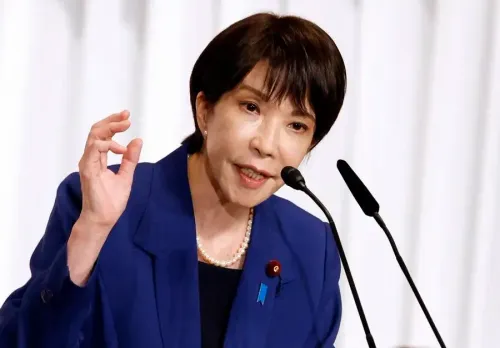
Tokyo, March 30 (NationPress) Prime Minister Sanae Takaichi of Japan expressed on Monday her willingness to engage in discussions with Iranian officials at a suitable time, contingent upon what aligns with Japan's national interests, amidst ongoing tensions in the Middle East, as reported by local media.
"I will determine the right moment for dialogues based on a comprehensive evaluation of national interests," Takaichi remarked during a session of the House of Representatives Budget Committee, according to Kyodo News.
The stability of the Middle East holds significant importance for Japan, a country that depends on the region for over 90% of its crude oil imports, as highlighted by Xinhua news agency.
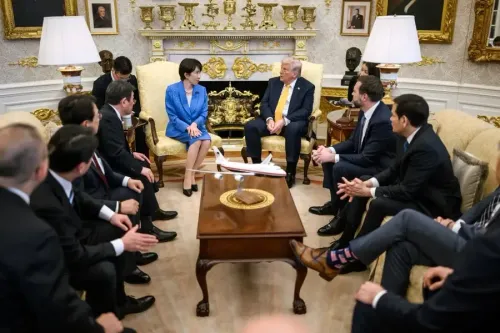
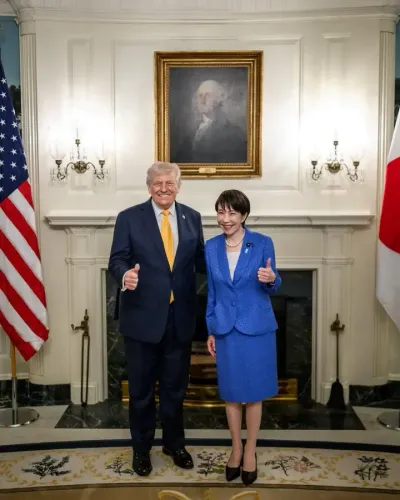
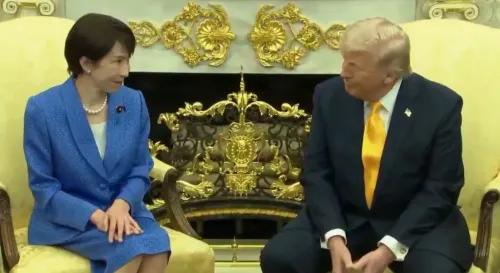
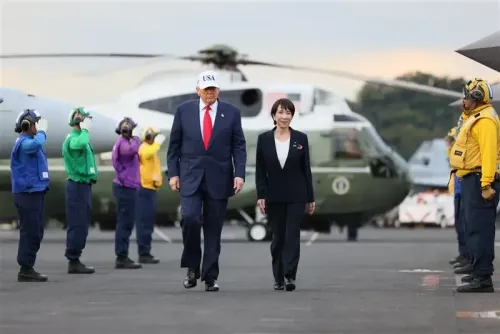
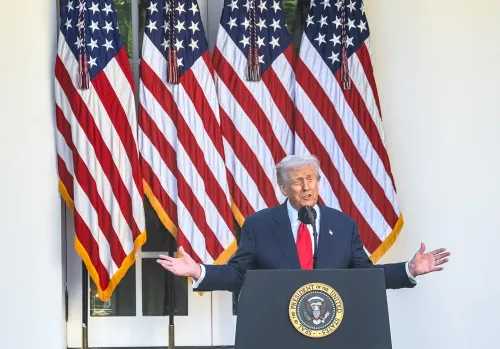
On March 19, Takaichi conveyed to President Donald Trump her belief that he is uniquely positioned to foster peace in a world grappling with serious security challenges. This statement was made during their meeting at the White House, against a backdrop of escalating tensions in the Middle East and rising concerns regarding the global economy. Takaichi emphasized Japan's alignment with Washington's efforts for regional stability while also highlighting the threats to energy supplies and maritime navigation.
Trump commended Takaichi for her leadership and electoral success, noting her remarkable victory in a record-setting manner. He stated, "We have a very popular, powerful woman and she's a great woman," reinforcing the strong relations shared by both nations.
During their discussion, Takaichi reiterated to Trump that she believed, "it is only you, Donald, who can achieve peace across the world," showcasing her firm public support as they deliberated on issues related to Iran, energy security, and the unrest in the Middle East.
She remarked that current conditions in the Middle East and across the globe reflect a highly precarious security situation, cautioning that the global economy is on the brink of significant repercussions due to these developments.
Takaichi pointed out that the existing geopolitical landscape—especially in the Middle East—has resulted in a dangerous security atmosphere.
Point of View
Prime Minister Takaichi's willingness to engage with Iran underscores Japan's strategic focus on maintaining stability in the Middle East, which is vital for its energy supply. This move also reflects Japan's alignment with U.S. foreign policy in the region, aiming to navigate complex geopolitical tensions.
NationPress
7 Oct 2026
Frequently Asked Questions
What did Japan's Prime Minister Sanae Takaichi say about Iran?
Takaichi expressed her willingness to hold talks with Iranian leadership if it aligns with Japan's national interests, amidst ongoing tensions in the Middle East.
Why is stability in the Middle East important to Japan?
Japan relies on the Middle East for over 90% of its crude oil imports, making regional stability crucial for its energy security.
What did Takaichi discuss with President Trump?
Takaichi conveyed to Trump her belief that he can foster global peace and discussed issues related to Iran and energy security.
How did Trump respond to Takaichi's leadership?
Trump praised Takaichi for her electoral success and highlighted the strong relationship between Japan and the United States.
What is the current geopolitical situation in the Middle East?
Takaichi noted that the region is experiencing a precarious security environment, which poses risks to both security and the global economy.