Will the US Take Control of Venezuela During the Transition?
Synopsis
In a significant announcement, President Trump declared that the US will temporarily oversee Venezuela's governance post-Maduro's arrest. This move aims to stabilize the nation and revamp its vital oil sector. How will this impact Venezuelans and global oil markets?
Key Takeaways
US to oversee Venezuela temporarily following Maduro's arrest.
Focus on rebuilding oil infrastructure as essential for recovery.
Major US oil firms expected to invest billions.
Trump emphasizes the need for a stable transition.
Concerns about long-term US presence dismissed as non-costly.
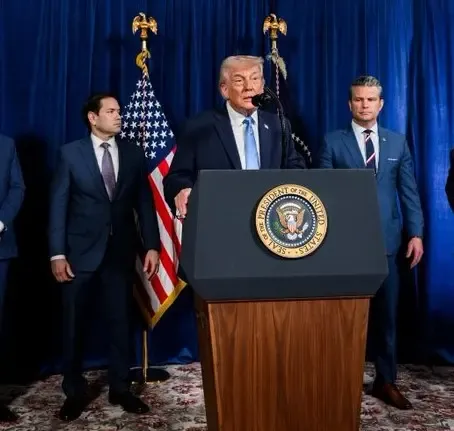
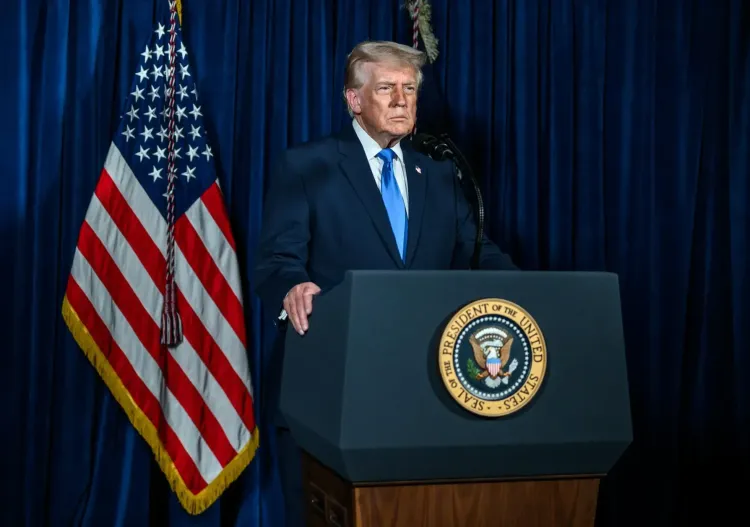
Washington, Jan 4 (NationPress) US President Donald Trump announced that the United States will take temporary control of Venezuela following the arrest of Nicolas Maduro. He emphasized that it is crucial for Washington to manage the transition to avoid instability and to rebuild the nation’s oil infrastructure.
When asked directly who would govern Venezuela, Trump stated, “We will be managing it with a group,” revealing that US officials are already being appointed for this task.
He noted that the United States would remain in charge “until a secure, appropriate, and careful transition can occur,” cautioning that leaving prematurely could lead to past mistakes being repeated. “If we just walked away, it has no chance of recovering,” he remarked during a news conference at Mar-a-Lago.
The president particularly highlighted the significance of Venezuela’s oil industry, calling it essential for both recovery and stability. “The oil sector in Venezuela has been a disaster,” Trump declared, indicating that major US oil companies are prepared to invest billions to restore the infrastructure.
“We will rebuild the oil infrastructure,” he asserted. “The costs will be covered by the oil companies themselves.”
Trump indicated that the United States would maintain an ongoing presence related to energy operations. “We will have a presence in Venezuela concerning oil,” he stated, adding that the wealth generated would benefit Venezuelans and reimburse the United States.
When questioned about the potential deployment of US troops, Trump responded, “We aren’t hesitant about boots on the ground,” mentioning that American personnel are already engaged in the operation.
He assured that the administration would prevent individuals associated with the Maduro regime from remaining in power. “We know who they are. We are monitoring them,” Trump stated.
Trump also responded to inquiries about collaborating with Venezuela’s current vice president, noting that Secretary of State Marco Rubio had communicated with her. “She’s essentially willing to do what we believe is necessary,” Trump explained.
Defending this approach as aligned with his “America First” policy, Trump remarked, “We want to surround ourselves with good neighbors,” reiterating that Venezuela’s energy resources are crucial for global stability.
Regarding foreign involvement, Trump confirmed that the United States plans to sell oil internationally. “We are in the oil business,” he stated. “We will be exporting significant quantities of oil to various countries.”
Trump dismissed worries about long-term administration, insisting that it would not be a financial burden on US taxpayers. “It won’t cost us anything,” he claimed, citing the revenues from oil.
The United States has long enforced sanctions on Venezuela’s oil industry, accusing its leadership of corruption and mismanagement that have led to economic collapse and widespread migration.
Point of View
It's important to recognize the weight of President Trump's declaration regarding Venezuela. This move signifies a pivotal moment in US foreign policy and highlights the complexities of international governance. The focus on stabilizing a nation through oversight raises critical questions about sovereignty and the ethical implications of intervention. Our coverage will remain committed to providing a balanced perspective on these unfolding events.
NationPress
20 Sept 2026
Frequently Asked Questions
What led to the US taking control of Venezuela?
The US decision to take control follows the arrest of Nicolas Maduro, with President Trump emphasizing the need for oversight to ensure stability and rebuild the nation's oil infrastructure.
How long will the US govern Venezuela?
President Trump stated that the US will remain in charge until a safe and proper transition can occur.
Will US troops be sent to Venezuela?
Trump mentioned that they are not hesitant about boots on the ground and that American personnel are already involved in the operation.
What role will oil companies play in rebuilding Venezuela?
Trump indicated that major US oil companies would invest billions in repairing Venezuela's oil infrastructure, which would be funded directly by the companies.
What are the implications of this US involvement?
This involvement could significantly affect Venezuela's governance and oil sector, with potential implications for global oil markets.