Will the U.S. Govern Venezuela After Maduro’s Arrest?
Synopsis
In a bold statement, President Donald Trump announced that the United States would take control of Venezuela following Nicolas Maduro's arrest. This unprecedented move aims to stabilize the nation and revive its oil sector, ensuring a lasting American presence in the region. What does this mean for the future of Venezuela and U.S. foreign policy?
Key Takeaways
U.S. will temporarily govern Venezuela after Maduro's arrest.
Focus on rebuilding the oil sector is a priority.
American military presence may continue in Venezuela.
Operation aims to prevent Maduro regime's influence .
Geopolitical relations with China and Russia remain crucial.
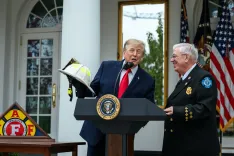
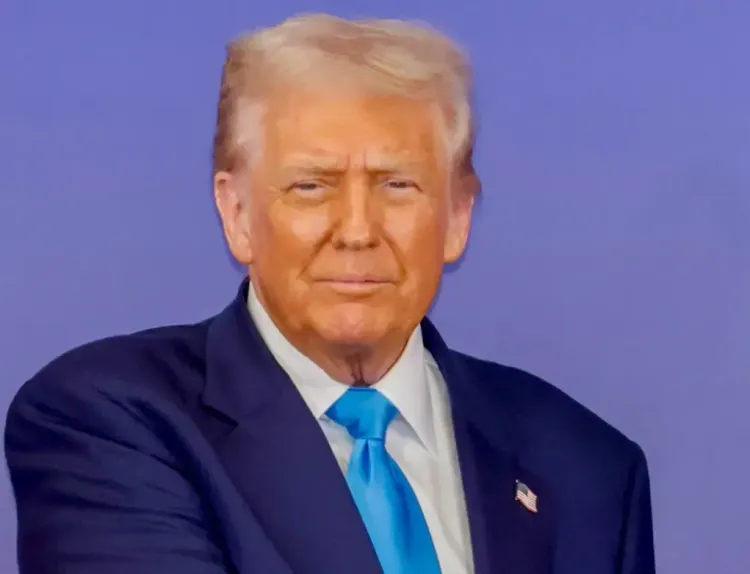
Washington, Jan 3 (NationPress) President Donald Trump stated that the United States will take charge of Venezuela temporarily after the arrest of its leader, Nicolas Maduro. He emphasized that Washington would manage a transition while revitalizing the nation's oil sector and ensuring a persistent American involvement linked to energy interests.
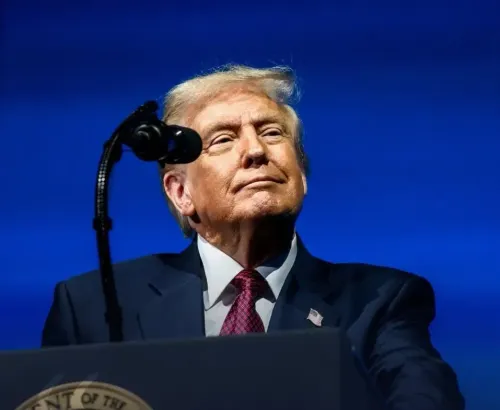
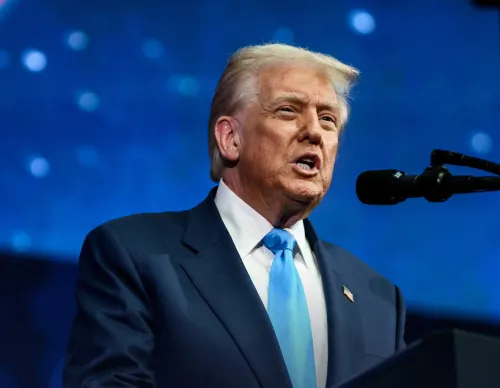
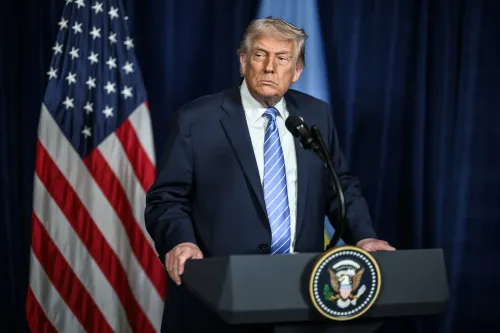
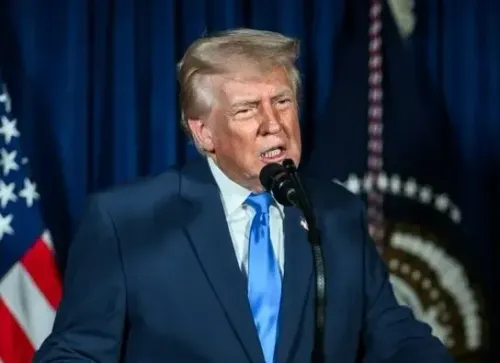
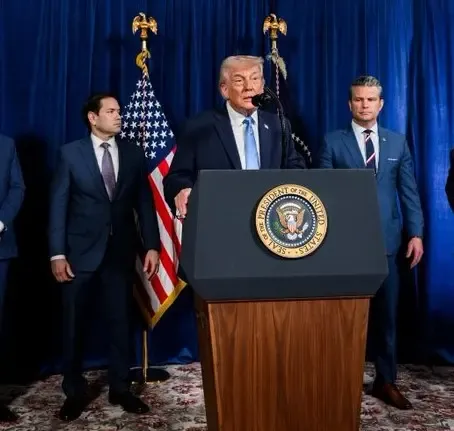
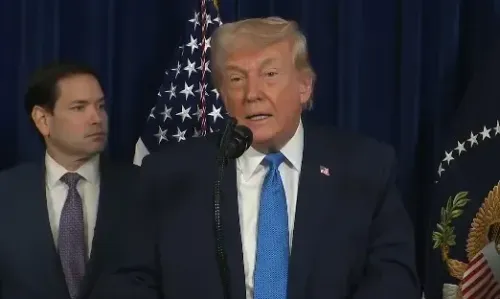
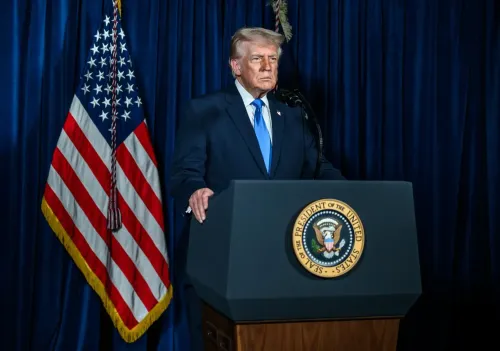
During a news conference held at Mar-a-Lago, Trump outlined what he termed an extraordinary U.S. operation and its expected outcomes.
When questioned about who would lead Venezuela, he responded, “We’re going to be running it with a group,” mentioning that the administration was already “designating various people” to oversee the transition.
Regarding the potential deployment of U.S. troops, Trump remarked, “We’re not afraid of boots on the ground,” indicating that American forces had been involved during the operation.
He asserted that Washington stands ready to intervene again if deemed necessary, stating the United States is “ready to go again if we have to.”
The president noted that the United States would maintain a continuous presence related to Venezuela’s oil sector.
“We’re going to have a continued presence as it pertains to oil,” Trump articulated, claiming that reconstructing the energy framework is vital for stabilizing the country and financing its recovery.
He mentioned that the operation aims to prevent any remnants of the Maduro regime from holding power.
When asked if he was worried about “bad elements” remaining, he responded, “We know who they are. We’re on them,” adding that their conduct had already altered.
Inquiries regarding congressional notifications were redirected to Secretary of State Marco Rubio, who stated that the mission details could not be shared beforehand.
“This was not the kind of mission that you can do congressional notification on,” Rubio pointed out, cautioning that prior notice “endangers the mission.”
Trump was also questioned about the broader geopolitical ramifications, including the implications for relations with China and Russia.
He asserted that the United States would market Venezuelan oil on the global stage and dismissed concerns that the operation would restrict future energy exports.
Responding to critiques that former U.S. interventions lacked clear post-operation plans, Trump insisted, “Not with me,” referencing past operations he considered successful. He expressed a desire for a swift transition but acknowledged that restoring what he termed “rotted” infrastructure would require time.
When pressed on why managing a South American nation aligns with his “America First” doctrine, Trump explained that regional stability is a U.S. priority. “We want to surround ourselves with good neighbors,” he stated, noting the significance of protecting Venezuela’s energy resources.
Trump was also interrogated about whether this strategy sends a message to Cuba. He characterized Cuba as “a failing nation” and indicated that the United States aims to assist its citizens, while Rubio cautioned that officials in Havana “would be concerned at least a little bit.”
Towards the conclusion of the dialogue, Trump was asked about Russian President Vladimir Putin. “I’m not thrilled with Putin,” he remarked. “He’s killing too many people,” adding that he seeks to halt the conflict and loss of life.
Venezuela is currently embroiled in an extended political and economic crisis characterized by international sanctions, conflicting leadership claims, and a significant drop in oil production, leading millions of Venezuelans to flee the country and attracting sustained U.S. interest in the region.
Point of View
President Trump's announcement signals a significant shift in U.S. foreign policy towards Venezuela, highlighting the ongoing struggle for power and resources in the region. While the intention to stabilize Venezuela is commendable, the complexities of international relations and the potential for further conflict cannot be overlooked. The Nation stands for a balanced approach, advocating for humanitarian considerations in U.S. actions abroad.
NationPress
16 Oct 2026
Frequently Asked Questions
What is Trump's plan for Venezuela after Maduro's arrest?
Trump stated that the U.S. will oversee a transition in Venezuela, focusing on rebuilding the oil sector and maintaining a strong American presence in the region.
Will U.S. troops be deployed in Venezuela?
Trump indicated that the U.S. is not afraid of deploying troops on the ground and that American forces have already been involved in operations.
What are the implications for U.S. relations with Russia and China?
Trump asserted that the U.S. would continue to sell Venezuelan oil on the global market, suggesting that the operation would not hinder future energy exports.
How has the Venezuelan crisis affected its citizens?
Venezuela's prolonged political and economic crisis has led to a mass exodus of its citizens, driven by sanctions and a dramatic decline in oil production.
What is the significance of U.S. involvement in Venezuela?
The U.S. aims to stabilize the region and protect its energy interests, reflecting a strategic approach to foreign policy in Latin America.