Trump Urges Nations: Close Borders Before It Is Too Late
Synopsis
The White House posted a sharp quote from President Donald J. Trump on October 18, 2026, urging governments worldwide to 'close your borders and take control, before it is too late' — reviving his signature border-security urgency with a sweeping global address.
Key Takeaways
The White House posted a direct quote from President Donald J.
Trump on October 18, 2026 , demanding nations close their borders immediately.
The statement — 'Close your Borders and take control, before it is too late!' — is broadly addressed, not limited to any single country.
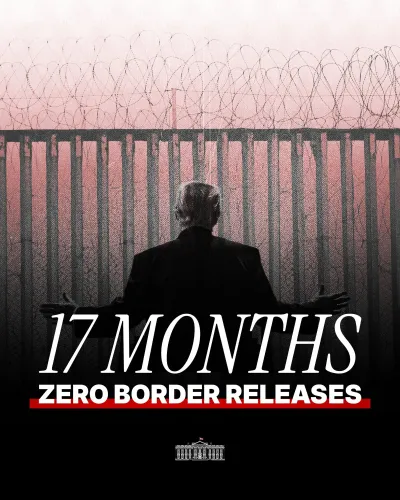
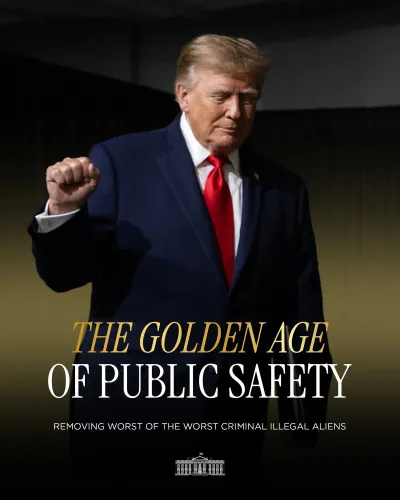
Trump made border enforcement central to his presidency from January 2017 , including executive orders for a US-Mexico border wall and expanded immigration enforcement.
The language mirrors Trump's long-standing rhetorical pattern of framing border management as an existential national emergency rather than a policy debate.
The post arrives amid ongoing border-security pressures across multiple continents, amplifying its potential international resonance.
Analysts and governments will watch closely for follow-up executive action or bilateral pressure consistent with the statement's urgency.
With three words that have defined a political era — 'Close your Borders' — President Donald J. Trump fired off a stark warning to governments worldwide, demanding immediate control over national frontiers before, in his words, 'it is too late.' The message, posted by The White House on Sunday, October 18, 2026, carries the blunt, urgent cadence that has become a Trump signature on immigration and national sovereignty.
The Message and What It Signals
The post quotes President Trump directly: 'Close your Borders and take control, before it is too late!' — framing border management not as a policy preference but as an emergency imperative. The exclamation, the capitalisation of 'Borders,' and the phrase 'before it is too late' all signal a tone of escalating urgency rather than measured diplomatic counsel. This is not a briefing note. It is a rallying call.
The language is broadly addressed — 'your Borders' does not specify a single country — making the statement a sweeping geopolitical exhortation aimed at any government Trump believes is failing to secure its frontiers. Whether the target is a neighbour managing a migratory surge, an ally navigating refugee flows, or the United States itself, the framing leaves the audience deliberately wide.
Trump's Border Doctrine: A Decades-Long Thread
This statement did not emerge in a vacuum. Trump made immigration enforcement and physical border barriers the centrepiece of his political identity long before he entered the White House. In January 2017, within days of his first inauguration, he signed executive orders directing construction of a border wall along the US-Mexico frontier and dramatically expanding immigration enforcement priorities. The language he used then — urgency, sovereignty, control — maps almost exactly onto the words posted today.
Throughout his first term, Trump repeatedly linked uncontrolled borders to crime, terrorism, and what he described as an erosion of national identity. Those arguments resonated with a significant portion of the American electorate and influenced immigration debates far beyond Washington DC. Several governments in Europe and South Asia, grappling with their own migratory pressures, found their domestic debates reshaped by the Trump-era framing of borders as existential rather than administrative.
Why This Post Lands Differently in October 2026
The timing matters. Border security and immigration remain live political flashpoints across the democratic world — from the US-Mexico corridor to the Mediterranean to the India-Bangladesh frontier. A statement from The White House amplifying Trump's voice on this issue is not background noise; it is a signal about the administration's current posture and the rhetorical energy it is prepared to project globally.
For governments watching from New Delhi to Brussels, the message asks a pointed question: is your border policy robust enough to survive the scrutiny this White House is prepared to apply? For border communities and migrants — the human beings on either side of every fence and river — the stakes of that question are entirely concrete.
The next test will be whether this rhetorical escalation is followed by specific executive action, legislative push, or bilateral pressure on partner governments. In Trump's political playbook, words like these rarely arrive without a policy sequel.
Point of View
The administration signals that this posture retains presidential-level priority — not merely campaign-trail energy. For countries like India, which faces its own border-security debates along multiple frontiers, the global resonance of this framing is not abstract: it reinforces a worldwide shift toward sovereigntist, security-first immigration politics. The critical question is whether the rhetoric accelerates into concrete bilateral or multilateral pressure in the months ahead.
NationPress
18 Oct 2026
Frequently Asked Questions
What did Trump say about closing borders in October 2026?
On October 18, 2026, President Donald J. Trump, quoted by The White House on X, said: 'Close your Borders and take control, before it is too late!' — urging governments worldwide to immediately secure their national frontiers.
Which country was Trump referring to when he said close your borders?
Trump's statement was broadly worded and not addressed to any single country. The phrase 'your Borders' appears to be a sweeping exhortation to any government he believes is failing to control its frontier, rather than a message directed at one specific nation.
What is Trump's history on border security policy?
Trump made border security the centrepiece of his political agenda. In January 2017, he signed executive orders directing construction of a US-Mexico border wall and expanding immigration enforcement, framing uncontrolled borders as a threat to national security and sovereignty.
Why does Trump's border statement matter for India?
India faces active border-security debates along several frontiers. Trump's global framing of borders as an existential emergency — amplified through the official White House account — reinforces a worldwide trend toward sovereigntist immigration politics that shapes diplomatic conversations India participates in.
What could follow Trump's 'close your borders' statement?
In Trump's political playbook, statements of this urgency have historically preceded executive action, legislative proposals, or bilateral diplomatic pressure. Analysts will watch for specific policy moves — executive orders, international negotiations, or sanctions — in the coming weeks.