CM Vijay Reviews Chennai Flood Relief at Ripon Building Command Centre
Synopsis
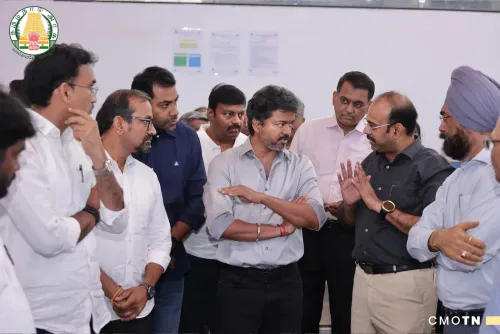
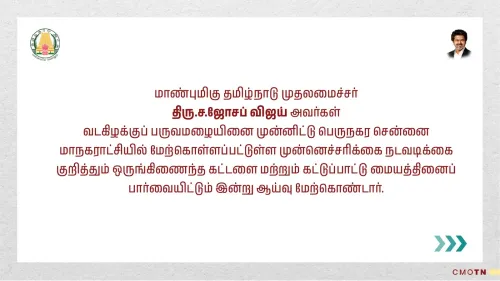
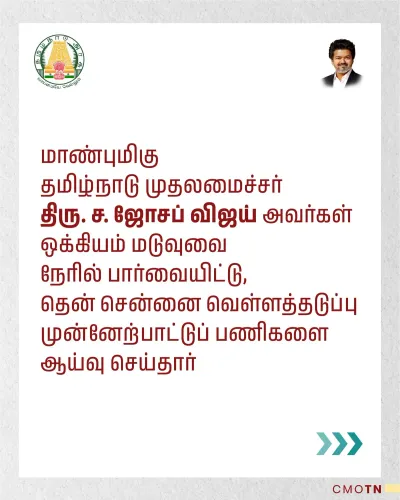
Chief Minister C. Joseph Vijay visited the Integrated Command and Control Centre at Chennai's Ripon Building on 18 October 2026, reviewing relief operations after heavy rainfall and directing officials to prevent public harm from monsoon flooding.
Key Takeaways
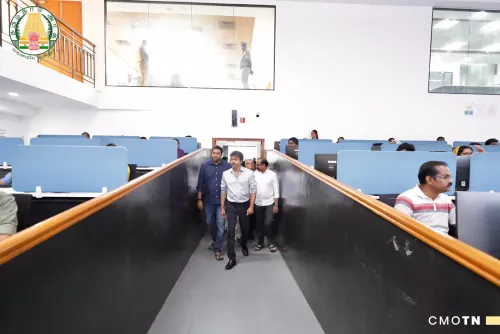
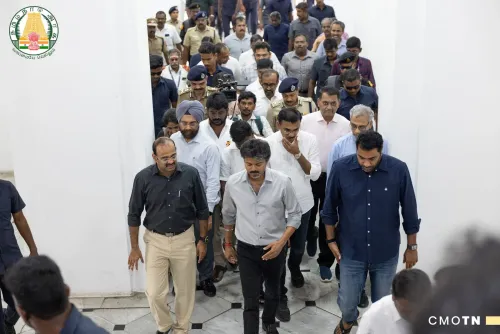
Joseph Vijay personally visited the Integrated Command and Control Centre at the Ripon Building, Chennai on 18 October 2026 .
The visit reviewed relief operations conducted by the Greater Chennai Corporation following heavy rainfall across corporation limits.
The Chief Minister chaired a review meeting and issued direct instructions to officials to prevent rain-related harm to the public.
The ICCC at Ripon Building serves as Chennai's real-time monsoon coordination hub, a system strengthened after the devastating 2015 northeast monsoon floods .
The northeast monsoon season typically runs through October and November, leaving several weeks of active risk for Chennai residents.
With northeast monsoon clouds already stacking over Tamil Nadu, Chief Minister C. Joseph Vijay stepped inside the nerve centre of Chennai's flood-response machinery on Sunday, 18 October 2026 — and ordered officials to act before the water reaches anyone's doorstep.
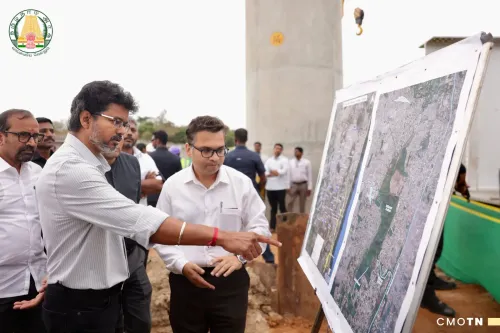
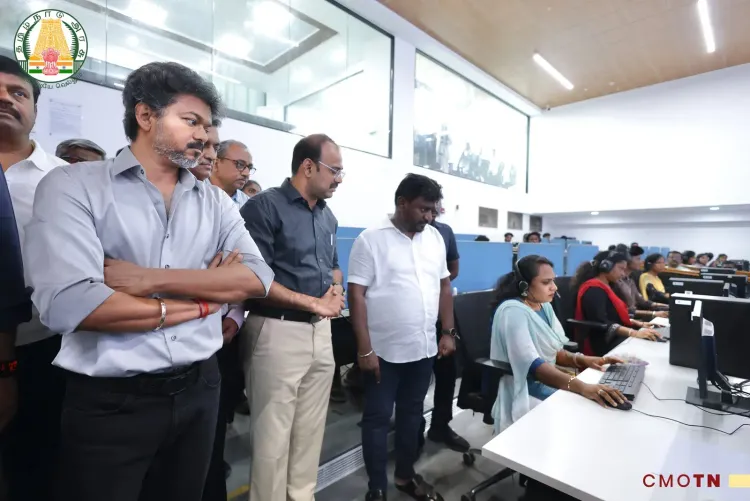
The Chief Minister's Office confirmed that CM Vijay personally visited the Integrated Command and Control Centre (ICCC) housed inside the iconic Ripon Building — headquarters of the Greater Chennai Corporation (GCC) — to take stock of relief operations triggered by heavy rainfall across corporation limits. The visit was followed by a structured review meeting at which the Chief Minister issued direct instructions to officials: ensure no resident suffers avoidable harm because of the rains.
What CM Vijay saw at the Ripon Building command centre
The ICCC at Ripon Building serves as Chennai's real-time disaster coordination hub, feeding officials a live picture of waterlogging hotspots, rescue deployments, and drainage pressure points across the city. On Sunday evening the Chief Minister used that dashboard to assess how GCC teams had responded to the day's downpour — and where gaps remained.
The Tamil Nadu government post noted that relief operations already under way were reviewed in detail, with the subsequent meeting serving as a course-correction exercise ahead of what could be several more weeks of active monsoon. Officials were instructed to take 'appropriate measures to prevent rain-related adverse impacts on the public' — language that, in past monsoon cycles, has translated into pre-emptive pumping, drainage clearance, and personnel deployment at flood-prone low-lying areas.
Chennai's long shadow: the 2015 floods and what changed
Chennai's relationship with heavy rain was permanently reframed by the catastrophic northeast monsoon floods of 2015, which inundated large swathes of the city and exposed critical failures in inter-agency coordination. In the years since, successive administrations have invested in technology-enabled command infrastructure — precisely the kind of integrated centre the Chief Minister walked into on Sunday.
The ICCC model allows multiple departments — the corporation, the state disaster response force, electricity and water utilities — to coordinate from a single point rather than operate in silos. The Ripon Building, a colonial-era structure that has been Chennai's civic nerve centre for well over a century, now doubles as a modern emergency operations hub during monsoon season.
Why a CM's in-person visit signals urgency
Cabinet-level visits to command centres mid-storm are not routine bureaucratic checkboxes. They send a clear signal down the administrative chain — accelerate response, document shortfalls, and expect accountability. By conducting the review himself rather than receiving a written brief, CM Vijay compressed the feedback loop between ground-level relief teams and the top of the government.
Chennai residents and civic watchdogs will now be watching whether Sunday's instructions produce visible outcomes: faster drain-clearing, visible rescue presence in low-lying neighbourhoods, and transparent updates as the monsoon progresses through October and into November.
The command centre reviewed. The orders issued. Now the monsoon — and the administration — will be tested in real time.
Point of View
Whose flood-response architecture was comprehensively rebuilt after the 2015 Chennai floods, this visit also demonstrates institutional continuity: the command-centre model is being actively used, not merely showcased. The instruction to 'prevent adverse impacts' — framed around public welfare rather than administrative metrics — positions the government ahead of the storm politically, shifting the burden onto officials to deliver. Analysts will watch whether this translates into measurable drainage and rescue outcomes over the coming monsoon weeks.
NationPress
18 Oct 2026
Frequently Asked Questions
Why did CM Vijay visit the Ripon Building on 18 October 2026?
CM C. Joseph Vijay visited the Integrated Command and Control Centre at Ripon Building, headquarters of the Greater Chennai Corporation, to personally review flood-relief operations following heavy rainfall across Chennai and to instruct officials on protecting residents from further monsoon damage.
What is the Integrated Command and Control Centre at Ripon Building?
It is Chennai's centralised real-time disaster coordination hub, housed in the Greater Chennai Corporation's historic Ripon Building headquarters. The centre allows multiple agencies — civic, disaster response, and utilities — to monitor waterlogging, deploy rescue teams, and coordinate relief from a single location during the monsoon season.
What instructions did CM Vijay give officials at the flood review meeting?
The Chief Minister instructed officials to take appropriate measures to prevent rain-related adverse impacts on the public, following a detailed review of relief operations already under way across Greater Chennai Corporation areas.
How has Chennai improved its flood response since the 2015 floods?
Following the catastrophic northeast monsoon floods of 2015, successive Tamil Nadu governments invested in technology-enabled command infrastructure including the ICCC at Ripon Building, enabling real-time monitoring and inter-agency coordination to reduce the impact of urban flooding.
When does Chennai's northeast monsoon season peak?
The northeast monsoon typically impacts Tamil Nadu — and Chennai in particular — through October and November, making it the most active flood-risk period for the city each year.