Trump: US Carries Forward Light of Western Civilisation
Synopsis
President Donald J. Trump declared on 25 June 2026 that the United States is entering the 'Golden Age of America' and is the primary carrier of Western civilisation's torch. The White House amplified the remarks on its official channel, echoing civilisational rhetoric Trump has used since his 2017 Warsaw address.
Key Takeaways
Trump declared the United States is 'carrying forward the light of Western civilization' in remarks shared by The White House on 25 June 2026 .
Trump described the current moment as 'the very beginning of the Golden Age of America,' a phrase he has used as a domestic and foreign policy rallying call.
The rhetoric echoes his landmark July 2017 Warsaw speech , which similarly framed the US as a defender of Western values and institutions.
The statement is directed at both domestic audiences seeking national renewal and Western allies assessing America's global posture.
Analysts will watch for concrete policy actions — on defence, trade, or diplomacy — that translate the civilisational declaration into measurable commitments.
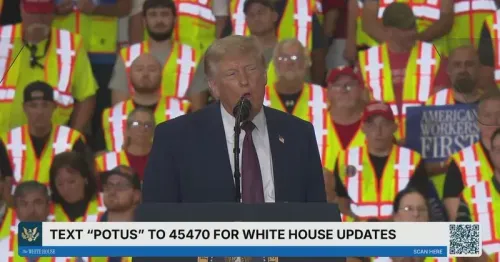
President Donald J. Trump declared on Wednesday, 25 June 2026 that the United States is entering what he called the 'Golden Age of America,' framing the nation as the primary custodian of Western civilisation. The remarks were shared by The White House on its official communications channel, amplifying a statement the President made in a public address.
Context
The White House quoted President Trump as saying: 'We are the ones who are carrying forward the light of Western civilization, because this is the very beginning of the Golden Age of America.' The statement positions the United States as a civilisational standard-bearer at a moment when the administration has been actively differentiating its foreign policy posture from multilateral frameworks.
The 'Golden Age' framing is not new to Trump's political vocabulary. It has featured prominently in his public addresses as a rhetorical anchor for domestic renewal and assertive national leadership, signalling a break from what the administration characterises as an era of American retreat.
Policy Backdrop
Presidential rhetoric linking national identity to civilisational continuity has appeared across multiple administrations, typically during periods of political transition or when leaders seek to build public support for assertive domestic or international policies. Trump used similar language as far back as July 2017, when he delivered a landmark speech in Warsaw, Poland, framing the United States as a defender of Western values and institutions against external threats.
That Warsaw address is widely regarded as a defining moment in Trump's first-term foreign policy articulation. The June 2026 remarks appear to revisit and extend that civilisational framing into his second term, suggesting a consistent ideological throughline in how his administration defines America's global role.
Stakeholders and Impact
The statement carries weight for both domestic and international audiences. For the American public, the 'Golden Age' narrative is intended to project confidence and national purpose. For Western allies — particularly in Europe — such rhetoric can be read as either a reassurance of American leadership or a signal of unilateralist intent, depending on the policy context that follows.
Critics of civilisational rhetoric argue that such framing can marginalise non-Western perspectives and complicate multilateral diplomacy. Supporters contend it provides a clear moral and strategic framework for American foreign and domestic policy decision-making.
What's Next
The key question is whether this rhetorical posture translates into concrete policy action — on trade, defence alliances, immigration, or cultural diplomacy. Analysts will watch subsequent major addresses and legislative or executive initiatives from the Trump administration for signs that the 'Golden Age' declaration is backed by specific programmatic commitments. The statement sets a high bar of civilisational ambition that will invite scrutiny of every major policy move that follows.
Point of View
Designed to anchor his second-term presidency in a grand historical narrative rather than transactional policy wins. By invoking the continuity of Western civilisation, the administration signals that its domestic agenda — from immigration to cultural policy — is part of a larger ideological project, not merely electoral positioning. This framing creates a high rhetorical baseline that allies and rivals alike will use to measure every subsequent foreign policy decision. For India, which cultivates a strategic partnership with Washington while maintaining its own civilisational identity, such rhetoric from the White House is worth monitoring as it shapes the ideological climate of US engagement with the world.
NationPress
25 Jun 2026
Frequently Asked Questions
What did Trump say about Western civilisation in June 2026?
President Trump declared that the United States is 'carrying forward the light of Western civilization' and that the country is at 'the very beginning of the Golden Age of America,' according to a statement shared by The White House on 25 June 2026.
What is Trump's 'Golden Age of America'?
The 'Golden Age of America' is a phrase President Trump has used to describe a period of national renewal and assertive leadership under his administration, framing the United States as entering a new era of domestic strength and global influence.
Has Trump used civilisational rhetoric before?
Yes. In July 2017, President Trump delivered a major speech in Warsaw, Poland, where he framed the United States as a defender of Western civilisation against threats to its values and institutions, establishing a consistent rhetorical pattern that has continued into his second term.
What does Trump's Western civilisation statement mean for US foreign policy?
The statement signals that the Trump administration views American leadership through a civilisational lens, which could inform its approach to alliances, immigration, cultural diplomacy, and multilateral institutions. Concrete policy implications will become clearer through subsequent executive actions and addresses.
How does Trump's civilisational rhetoric affect India-US relations?
India maintains a strategic partnership with the United States while asserting its own distinct civilisational identity. Washington's civilisational framing under Trump sets an ideological tone for US global engagement, which Indian policymakers will factor into bilateral diplomacy and multilateral coordination.