Trump vows to rebuild US shipbuilding as national security priority
Synopsis
Trump's Pennsylvania summit wasn't just a defence speech — it was a direct acknowledgement that America has fallen dangerously behind in naval shipbuilding. With a South Korean firm now owning the Philadelphia shipyard and General Dynamics committing $2.5 billion, the revival plan is as much about allied dependency as it is about domestic renewal.
Key Takeaways
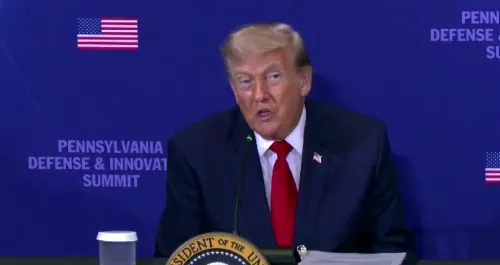
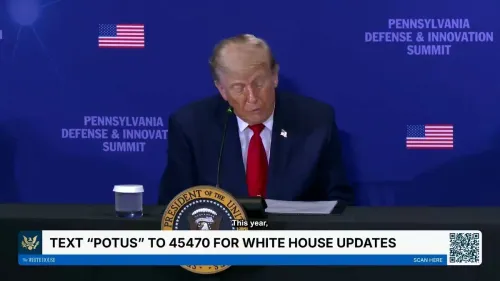
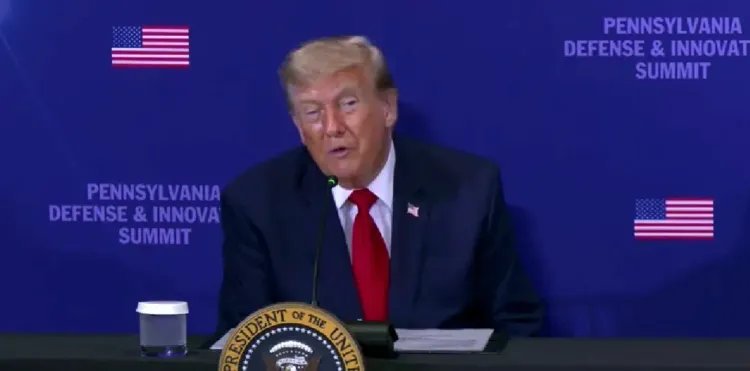
President Trump declared US shipbuilding a national security priority at the Pennsylvania Defense and Innovation Summit on Wednesday, 16 July .
Two multi-mission national security vessels will be built at the Philadelphia shipyard , owned by Hanwha Defense USA of South Korea.
General Dynamics announced a $2.5 billion investment in Rhoads Industries , expected to create 1,500 jobs in Pennsylvania.
Trump signalled openness to purchasing ships built overseas while domestic capacity is rebuilt.
Hanwha Defense USA CEO Michael Coulter said the company plans to bring its Korean output of roughly one ship per week to Philadelphia.
US President Donald Trump on Wednesday unveiled an ambitious plan to revive American shipbuilding at the Pennsylvania Defense and Innovation Summit, declaring the restoration of the country's naval industrial base a national security imperative after what he described as decades of neglect and decline.
Key Announcements
Trump announced that his administration would build two multi-mission national security vessels at the historic Philadelphia shipyard, now owned by South Korea's Hanwha Defense USA. He also signalled Washington's readiness to purchase ships constructed overseas while simultaneously rebuilding domestic production capacity.
'We need a lot of ships for our Navy, a lot of ships,' Trump said. 'Despite the fact we have the greatest Navy in the world, our ships are getting older, and we really got out of that business.'
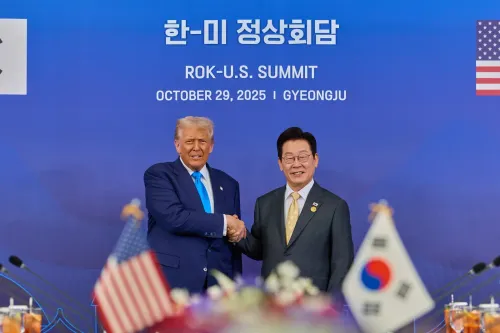
He pointed to South Korean and other foreign partners as potential collaborators, saying, 'We're going to probably look at some of these companies that are coming in from South Korea and other places, and they're working with us on ships, and we're going to also buy some ships that are made outside of the area.'
Hanwha and General Dynamics Step Up
Hanwha Defense USA CEO Michael Coulter said the company intends to replicate its Korean shipyard's output — roughly one ship per week — at the Philadelphia facility. 'Ships win battles, shipyards win wars,' Coulter said. 'It is going to be the home to make American shipbuilding great again.'
Separately, General Dynamics announced a $2.5 billion investment in Rhoads Industries to expand production supporting US Navy submarine programmes, with the project expected to generate approximately 1,500 jobs in Pennsylvania. Company President Danny Deep said the investment would strengthen supply chains across the state and bolster production of Virginia-class and Columbia-class submarines.
How America Lost Its Shipbuilding Edge
Trump argued that the US squandered its once-dominant position in naval construction when shipyards were sold off for waterfront real estate development. 'You know, we used to make a ship a day, and now we're a laggard in that department,' he said. 'A lot of our shipyards were sold for real estate projects on the water.'
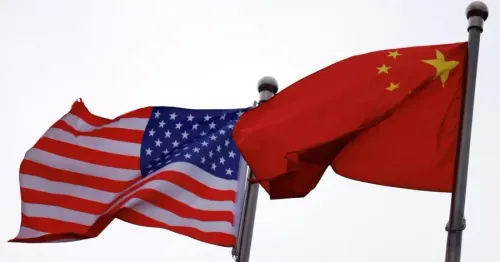
This comes amid growing concern in Washington over the widening gap between US and Chinese naval shipbuilding capacity. China's shipbuilding output is estimated to be many times that of the United States, a disparity that defence analysts have flagged as a long-term strategic vulnerability.
Broader Defence Industrial Push
Trump also criticised cost overruns and engineering decisions in previous naval programmes, calling for future warships to prioritise reliability and faster production over complexity. 'We have the best quality in the world, but we need a little more speed,' he said.
The shipbuilding initiative forms part of the administration's wider effort to rebuild the US defence industrial base through expanded manufacturing, public-private investment, and closer cooperation with allied defence firms. Summit officials said modernising shipyards and increasing naval production capacity would be essential to maintaining America's maritime advantage in the years ahead.
Point of View
But 1,500 jobs and two vessels do not close a gap with China that has been widening for two decades. The harder question, unaddressed at the summit, is whether public-private investment alone can rebuild an industrial workforce and supply chain that was systematically dismantled when shipyards became condominiums.
NationPress
16 Jul 2026
Frequently Asked Questions
What did Trump announce about US shipbuilding?
President Trump announced a plan to revive American shipbuilding at the Pennsylvania Defense and Innovation Summit on 16 July, ordering two multi-mission national security vessels at the Philadelphia shipyard and signalling openness to buying ships built overseas while domestic capacity is rebuilt.
What is General Dynamics investing in US shipbuilding?
General Dynamics announced a $2.5 billion investment in Rhoads Industries to expand production supporting US Navy submarine programmes, including Virginia-class and Columbia-class submarines. The project is expected to create approximately 1,500 jobs in Pennsylvania.
Who owns the Philadelphia shipyard and what are their plans?
South Korea's Hanwha Defense USA owns the Philadelphia shipyard. CEO Michael Coulter said the company plans to bring its Korean production rate — roughly one ship per week — to Philadelphia, transforming it into a major centre for American naval construction.
Why does Trump say the US fell behind in shipbuilding?
Trump argued that American shipyards were sold off for waterfront real estate development over the decades, gutting the country's naval industrial base. 'We used to make a ship a day, and now we're a laggard in that department,' he said.
How does this fit into the broader US defence strategy?
The shipbuilding initiative is part of the administration's wider effort to rebuild the US defence industrial base through expanded manufacturing, public-private investment, and closer cooperation with allied defence companies, with officials citing it as essential to maintaining America's maritime advantage.