Trump Welcomes Xi Jinping for Official State Visit at White House
Synopsis
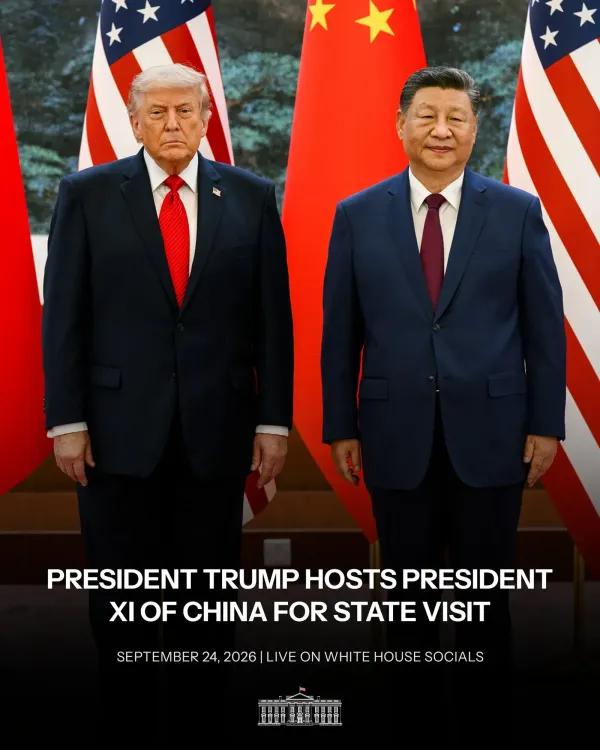
President Trump hosted Chinese President Xi Jinping and Madame Peng Liyuan at the White House on September 24, 2026, for an official state visit — the highest US diplomatic honour — with trade, technology, and Indo-Pacific security expected to dominate the bilateral agenda.
Key Takeaways
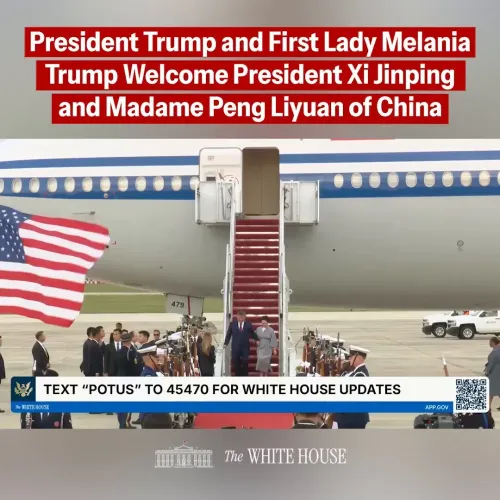
President Xi Jinping and Madame Peng Liyuan arrived at the White House on September 24, 2026 for an official state visit hosted by President Trump .
A state visit is the United States' most formal diplomatic reception, involving full arrival ceremonies and bilateral meetings.
Trump previously hosted Xi at Mar-a-Lago in April 2017 , and the two countries signed the Phase One trade agreement in January 2020 .
Xi Jinping has governed China as General Secretary of the Communist Party since 2012 .
Trade imbalances, semiconductor export controls, and Indo-Pacific security are the expected centrepieces of the bilateral agenda.
Any joint statement or economic announcement from the summit will be closely monitored by global markets and governments, including India .
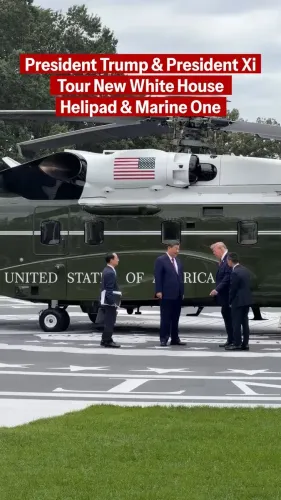
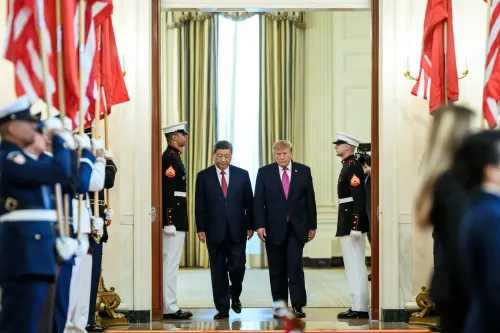
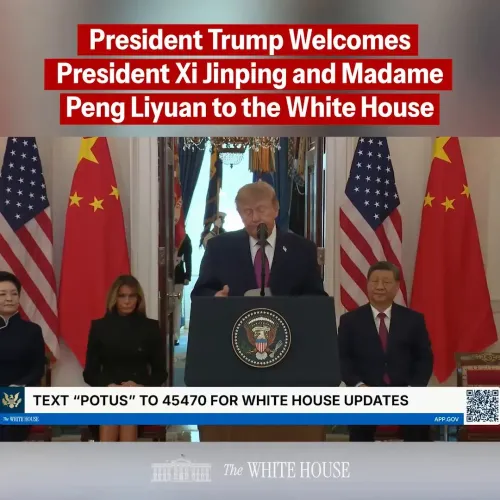
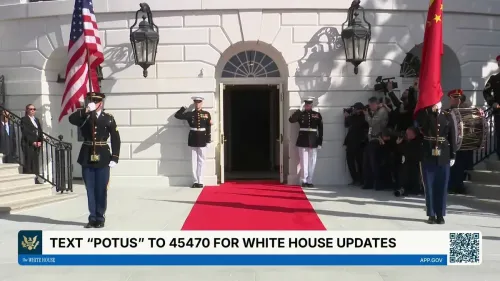
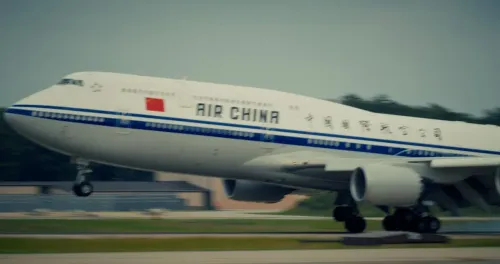
Two of the world's most consequential leaders are face to face again. President Donald J. Trump welcomed President Xi Jinping of China and Madame Peng Liyuan to the White House on Thursday, September 24, 2026, for an official state visit — the highest-grade diplomatic format the United States extends to a foreign head of state.
A State Visit at the Centre of the World's Most Watched Rivalry
A state visit is not a routine drop-in. The full ceremonial weight — arrival honours, bilateral meetings, formal dinners — signals that both sides have decided the relationship is worth investing in publicly, whatever the friction points behind closed doors. Peng Liyuan, a celebrated Chinese folk singer and a prominent fixture on Xi's international tours, joined her husband for the occasion, adding a layer of soft-power visibility to the delegation.
The White House announced live coverage across its social media channels, suggesting the administration intends the images from this visit — two leaders and their spouses on the North Portico — to travel wide and fast.
From Mar-a-Lago to Pennsylvania Avenue: Trump and Xi's Diplomatic History
This is not the first time these two men have sized each other up at close range. Trump hosted Xi at Mar-a-Lago in April 2017, setting the tone for a relationship that lurched between engagement and escalation across his first term. By January 2020, the two countries had signed the Phase One trade agreement, a partial truce in a tariff war that had rattled global supply chains. That agreement's legacy — what it achieved, what it left unresolved — forms much of the unfinished business any new meeting inherits.
Xi Jinping has led the People's Republic of China as General Secretary of the Communist Party since 2012, consolidating authority at home while steering Beijing through an era of intensifying strategic competition with Washington over trade balances, semiconductor controls, and regional security in the Indo-Pacific.
What the Meeting Room Will Hold
US-China state visits have historically served as the diplomatic format of last resort and first resort simultaneously — used to stabilise a relationship precisely because it is too large and too dangerous to let drift. Technology export controls, trade imbalances, and the security architecture of the Asia-Pacific are the recurring files on any bilateral agenda. Any joint statement or economic announcement that emerges from today's sessions will be parsed by markets, capitals, and chanceries from New Delhi to Brussels within minutes of release.
For India, a US-China summit at this level is never background noise — it is a variable that reshapes the diplomatic geometry of the entire Indo-Pacific, and New Delhi will be watching every readout carefully.
The world's two largest economies are in the same room. What they agree to — or conspicuously fail to — will define the strategic weather for months to come.
Point of View
Even as structural competition over technology and the Indo-Pacific intensifies. For Trump, the pageantry of a White House state visit reinforces his preferred image as a dealmaker who can command the world's most consequential bilateral. For Xi, the trip is a calibrated signal of engagement to global investors and partners who worry about decoupling. India, which has navigated its own fraught boundary with China while deepening ties with the US, will scrutinise any joint language on trade or regional security for shifts in the balance it has carefully cultivated.
NationPress
25 Sept 2026
Frequently Asked Questions
Why is Xi Jinping visiting the White House in 2026?
Xi Jinping is in Washington for an official state visit hosted by President Trump, the highest diplomatic format the United States offers, aimed at addressing the full range of US-China issues including trade, technology, and regional security.
Who is Peng Liyuan and why is she part of the visit?
Peng Liyuan is the wife of Xi Jinping and a well-known Chinese folk singer. She regularly accompanies Xi on state visits as part of the official delegation, playing a prominent soft-power role.
What is the history between Trump and Xi Jinping?
Trump first hosted Xi at Mar-a-Lago in April 2017. Their administrations conducted a prolonged trade war before signing the Phase One trade agreement in January 2020, making their diplomatic relationship one of the most closely watched in recent decades.
What issues are likely to be discussed at the Trump-Xi summit?
Trade imbalances, US semiconductor export controls targeting China, and Indo-Pacific regional security are the most widely expected agenda items, along with any economic announcements that may follow the bilateral meetings.
How does the US-China state visit affect India?
A US-China summit directly shapes the diplomatic geometry of the Indo-Pacific, a region where India holds key strategic interests. Any joint statement on trade or regional security could influence New Delhi's own balancing act between Washington and Beijing.