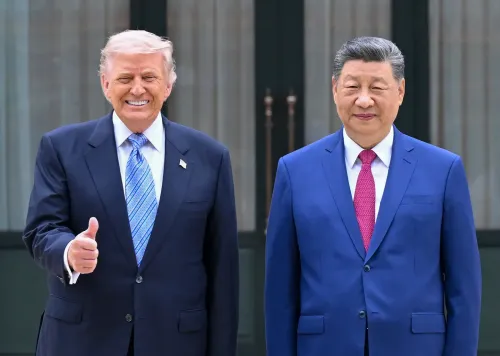
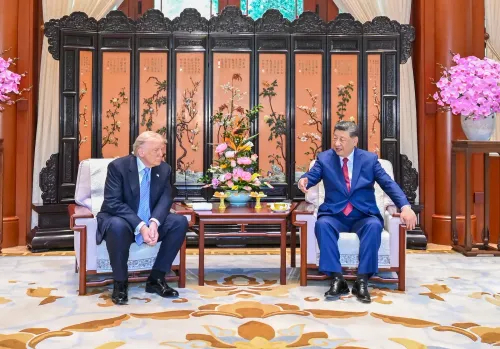
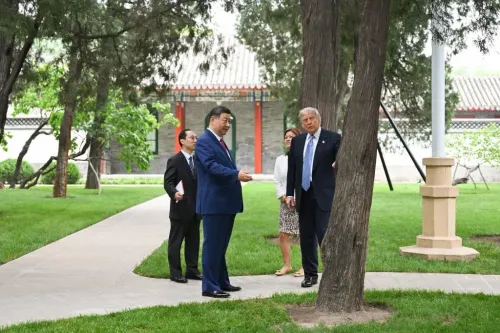
Trump Welcomes Xi Jinping to US Ahead of White House State Visit
Synopsis
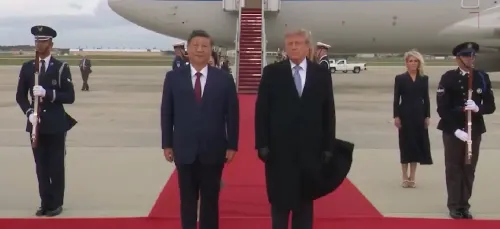
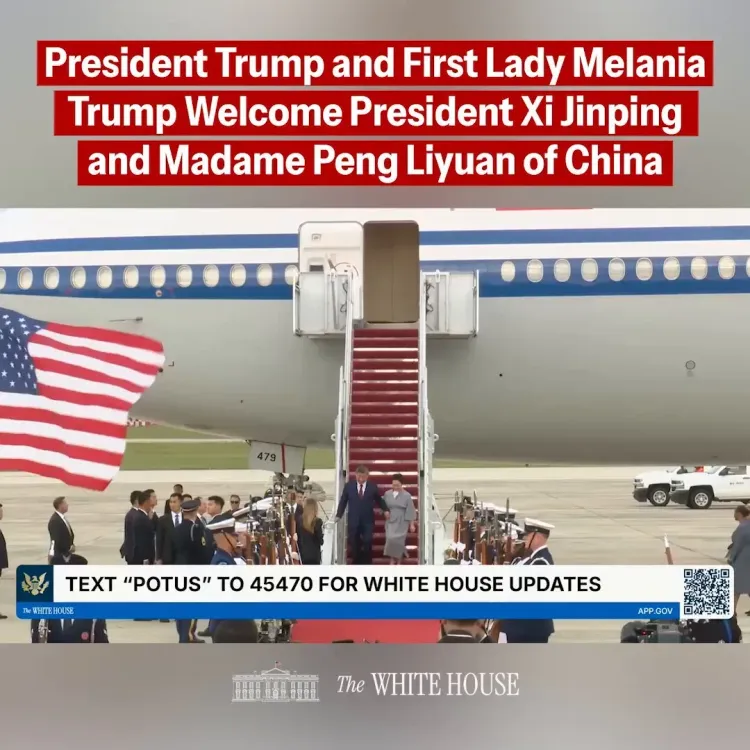
President Trump and First Lady Melania Trump welcomed President Xi Jinping and Madame Peng Liyuan to the United States on September 23, 2026, ahead of a formal state visit at the White House the following day — the highest-level US-China diplomatic engagement in years.
Key Takeaways
Trump and First Lady Melania Trump formally welcomed President Xi Jinping and Madame Peng Liyuan to the United States on September 23, 2026 .
A full state visit at the White House is scheduled for September 24, 2026 — the highest tier of diplomatic protocol.
Trump and Xi's bilateral history includes a landmark summit at Mar-a-Lago in April 2017 and the launch of sweeping US tariffs on Chinese goods in 2018 .
Xi Jinping has led China as President and Communist Party General Secretary since 2013 , making him the constant counterpart in every major US-China negotiation.
Analysts are watching for joint statements on tariffs, export controls, and supply-chain policy following the summit.
Outcomes from this visit may shape the agenda at upcoming multilateral forums including APEC and the G20 .
Two of the world's most consequential leaders stood on the same soil Wednesday evening as President Donald J. Trump and First Lady Melania Trump formally welcomed President Xi Jinping and Madame Peng Liyuan to the United States, setting the stage for a full state visit at the White House on Thursday, September 24, 2026.
The Arrival That Sets the Diplomatic Tone
The White House confirmed the welcome in an official post, noting that the arrival precedes 'their state visit tomorrow at the White House.' State visits carry the highest ceremonial weight in diplomatic protocol — a deliberate signal from Washington that this engagement is being treated with full bilateral gravity. The pairing of both first ladies in the announcement underscores the ceremonial breadth of the occasion, not merely a working-level summit.
Trump and Xi: A Relationship Built on High-Stakes Bargaining
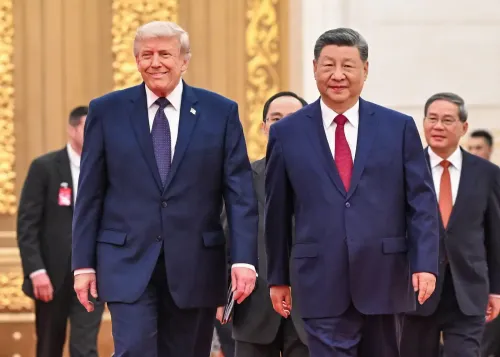
Trump and Xi have a documented history of direct leader-level engagement. Their first bilateral summit took place at Mar-a-Lago in April 2017, establishing a pattern of personal diplomacy even as structural tensions between Washington and Beijing deepened. By 2018, the United States had imposed sweeping tariffs on Chinese goods, opening a trade confrontation that reshaped global supply chains and defined much of the geopolitical decade that followed.
Xi Jinping has served as President of the People's Republic of China and General Secretary of the Communist Party since 2013, making him the central figure in every major US-China negotiation across two American administrations. Peng Liyuan, a celebrated folk singer and prominent public figure in China, regularly accompanies Xi on high-profile international visits, lending the occasion additional visibility in Chinese domestic media.
What a State Visit at the White House Actually Signals
High-level US-China summits have occurred periodically since the normalisation of relations in 1979, oscillating between cooperative windows and periods of sharp strategic rivalry. A formal state visit — as opposed to a sideline meeting at a multilateral forum — implies that both governments judged the moment ripe for structured, bilateral dialogue. Analysts will be watching closely for any joint statements, working-group announcements, or signals on tariffs, export controls, and supply-chain architecture that emerge from Thursday's meetings.
Subsequent multilateral forums, including APEC and the G20, will serve as the next checkpoints to gauge whether any understandings reached at the White House translate into durable policy movement. For India and the broader Indo-Pacific, the texture of whatever emerges from this summit carries direct strategic weight.
When the two most powerful leaders on the planet sit across from each other at the White House, the world does not just watch — it recalibrates.
Point of View
It fits a pattern of personal-diplomacy-first statecraft that defined his first term. For India, which has carefully navigated its own tensions with Beijing while deepening ties with Washington, the warmth or friction visible in any joint statement will carry immediate strategic implications for the Indo-Pacific balance. The visit is as much about what is not said publicly — on Taiwan, on the South China Sea, on technology export controls — as what makes it into any communiqué.
NationPress
24 Sept 2026
Frequently Asked Questions
When is Xi Jinping's state visit to the White House in 2026?
President Xi Jinping's state visit to the White House is scheduled for September 24, 2026 , the day after his arrival welcome in the United States.
What is the significance of a US-China state visit?
A state visit is the highest level of diplomatic protocol, signalling that both governments consider the bilateral relationship important enough for full ceremonial and substantive engagement, distinct from sideline meetings at multilateral summits.
What is the history between Trump and Xi Jinping?
Trump and Xi held their first bilateral summit at Mar-a-Lago in April 2017 . By 2018 , the US had imposed broad tariffs on Chinese goods, launching a trade confrontation that reshaped global supply chains.
What issues are expected to be discussed at the Trump-Xi White House summit?
Key areas of focus are expected to include tariffs, export controls, and supply-chain policy, though specific outcomes of the September 2026 meeting have not yet been officially announced.