Trump's $6 billion science push: AI, quantum and nuclear space in focus
Synopsis
At a White House summit billed as the dawn of a new scientific golden age, the Trump administration committed more than $6 billion across AI, quantum computing, nuclear space exploration and biomedical research — drawing pledges from Nvidia, OpenAI, Google and Anthropic. The centrepiece Genesis Mission alone attracted $2.4 billion in industry support, with a nuclear-powered Mars spacecraft targeted for 2028.
Key Takeaways
The Trump administration announced more than $6 billion in science and technology initiatives at the White House Science: A New Golden Age Summit on 9 October 2026 . $2.4 billion in industry commitments — led by Nvidia ($1 billion) , AMD ($500 million) and OpenAI ($200 million) — will support the Genesis Mission to use superintelligence for scientific discovery.
The Department of Energy launched a $215 million quantum computing competition to develop fault-tolerant systems.
NASA and the Department of Energy plan Space Reactor-1 , a nuclear-powered spacecraft targeting a Mars mission in 2028 , and Lunar Reactor-1 , a proposed Moon-based nuclear fission reactor.
A $1.8 billion biomedical initiative involving the National Institutes of Health , the Department of Energy and Biohub will develop virtual cell and biological system models.
More than 14 universities across 10 states and a $1 billion Georgia-led consortium will expand scientific computing infrastructure and workforce training.
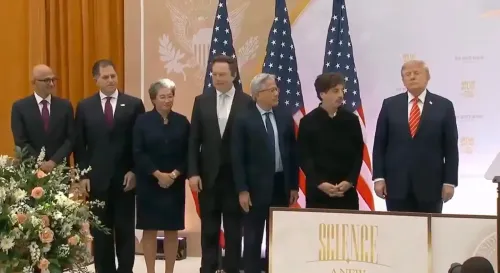
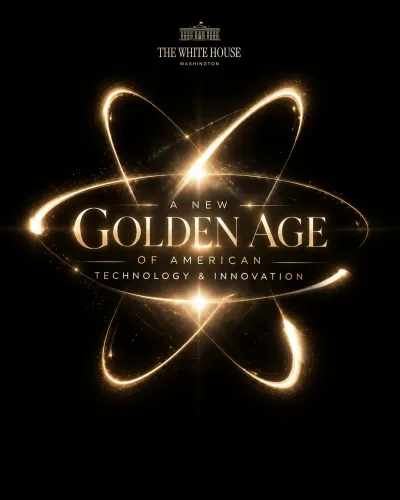
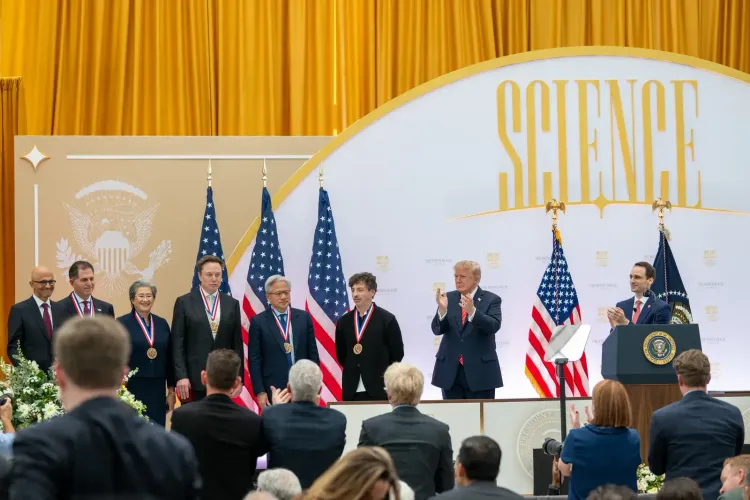
The Trump administration on 9 October 2026 unveiled more than $6 billion in science and technology initiatives at the White House's Science: A New Golden Age Summit, drawing in federal agencies, technology companies, universities and philanthropies to accelerate research in artificial intelligence (AI), quantum computing, nuclear-powered space exploration and biomedical science. President Donald Trump outlined an ambitious programme that the White House described as the most consequential federal science commitment since the post-World War II restructuring of American research.
The Genesis Mission and Industry Commitments
Central to the package is the Genesis Mission, which aims to deploy superintelligence to accelerate scientific discoveries across energy, healthcare, space and other fields. A White House fact sheet confirmed $2.4 billion in computing resources and technology support from 11 industry partners for the mission. Nvidia made the single largest pledge at $1 billion, followed by AMD at $500 million and OpenAI at $200 million. Anthropic and Google each committed $150 million, with Amazon Web Services, Micron and several infrastructure firms also participating. These contributions will support more than 15 federal agencies working on scientific challenges.
Computing Infrastructure and University Partnerships
A separate $1 billion investment involving universities, industry and the state of Georgia will expand scientific computing infrastructure and workforce training. More than 14 universities across 10 states will join a regional computing consortium, while five universities in North and South Carolina will establish a dedicated research computing hub. The National Science Foundation and the Department of Energy have additionally committed more than $100 million for advanced scientific instruments and autonomous laboratories. A new $100 million Genesis Mission Fellowship will support accelerated doctoral programmes combining AI with scientific and engineering disciplines.
Quantum Computing and Nuclear Space Exploration
In quantum computing, the Department of Energy launched a $215 million competition aimed at developing fault-tolerant quantum computers capable of solving scientifically relevant problems. On the space frontier, NASA and the Department of Energy announced plans for nuclear-powered spacecraft and lunar energy systems. The projects include Space Reactor-1, a nuclear-powered spacecraft intended for a Mars mission in 2028, and Lunar Reactor-1, a proposed nuclear fission reactor on the Moon.
Biomedical Push and X-Labs Consortium
Biomedical research received a $1.8 billion injection, with the National Institutes of Health, the Department of Energy and Biohub launching an initiative to develop virtual models of cells and biological systems. The programme targets improved predictions of how diseases develop and how biological systems respond to treatments. A new X-Labs Consortium will receive more than $310 million in industry and philanthropic commitments to support multidisciplinary research teams. Additional programmes will extend opportunities to gifted school students, early-career researchers and scientists outside conventional research institutions.
What Officials Said
White House science adviser Michael Kratsios described the moment in sweeping terms. 'Today marks the most transformative day for the American scientific enterprise since the reshaping of the Federal research ecosystem following World War II,' he said. Kratsios added: 'The efforts announced today will channel billions of dollars across our science ecosystem to realize the new scientific opportunities that now exist.' The White House noted the announcements build on earlier federal commitments, including a $5 billion outlay supporting the Genesis Mission and a $1.5 billion National Science Foundation initiative for independent research laboratories. With rivals including China accelerating their own AI and quantum programmes, the administration framed the summit as a defining moment for maintaining American technological leadership into the next decade.
Point of View
But the more revealing detail is the architecture: the administration is essentially outsourcing a significant portion of federal science ambition to Big Tech balance sheets. When Nvidia, OpenAI, Anthropic and Google collectively pledge nearly $1.5 billion, the question of who sets the research agenda — government or industry — becomes acute. The Genesis Mission's framing around 'superintelligence' is aspirational language, not a defined technical benchmark, and prior large-ticket US science initiatives have frequently underdelivered on timelines. The 2028 Mars nuclear spacecraft target, in particular, warrants scrutiny: no comparable programme has moved from announcement to launch in under three years. Whether this summit marks a genuine inflection point in American science policy or a well-staged commitments ceremony will depend entirely on execution — and on whether the federal agencies receiving these resources have the regulatory and human capacity to absorb and deploy them effectively.
NationPress
9 Oct 2026
Frequently Asked Questions
What is the Genesis Mission announced at the White House science summit?
The Genesis Mission is a US federal initiative that aims to harness superintelligence to accelerate scientific discoveries across energy, healthcare, space and other fields. It attracted $2.4 billion in computing resources and technology support from 11 industry partners, including Nvidia, AMD, OpenAI, Anthropic and Google.
Which companies pledged money to the Trump science initiative?
Nvidia led with a $1 billion commitment, followed by AMD at $500 million, OpenAI at $200 million, and Anthropic and Google at $150 million each. Amazon Web Services, Micron and several technology infrastructure companies also participated among 11 industry partners in total.
What is Space Reactor-1 and when is it planned to launch?
Space Reactor-1 is a proposed nuclear-powered spacecraft intended for a Mars mission in 2028, announced jointly by NASA and the Department of Energy. A companion project, Lunar Reactor-1, is a proposed nuclear fission reactor to be deployed on the Moon.
How much is being invested in biomedical research under this plan?
A $1.8 billion initiative involving the National Institutes of Health, the Department of Energy and Biohub will develop virtual models of cells and biological systems. The programme is designed to improve predictions of how diseases develop and how biological systems respond to potential treatments.
How does this announcement compare to previous US science investments?
White House science adviser Michael Kratsios described it as 'the most transformative day for the American scientific enterprise since the reshaping of the Federal research ecosystem following World War II.' The new commitments build on earlier federal investments, including a $5 billion outlay supporting the Genesis Mission and a $1.5 billion National Science Foundation initiative for independent research laboratories.