Trump's Ireland unification remarks spark British backlash
Synopsis
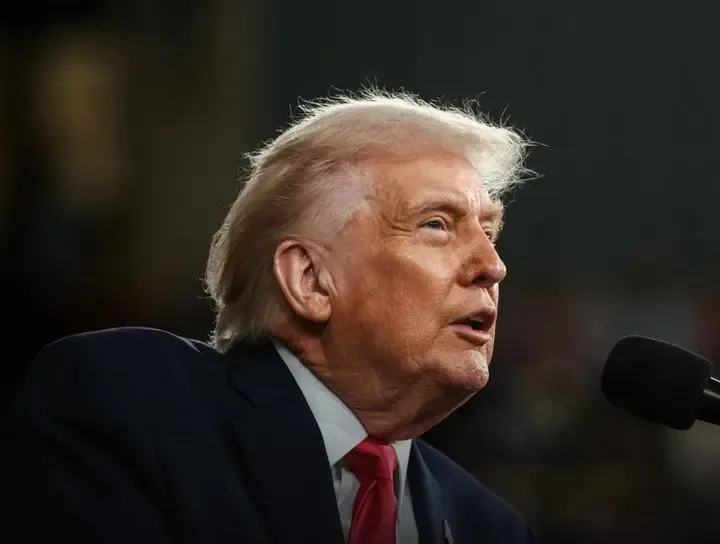
During a state visit to Ireland, Trump voiced support for Irish unification — a remark that united his allies and opponents in Britain against him. Both Kemi Badenoch and Nigel Farage publicly contradicted the US president, while a former White House envoy scrambled to insist it was not a policy shift. The episode underlines how Trump's freewheeling diplomacy continues to unsettle even America's closest partners.
Key Takeaways
Donald Trump said on Saturday, 13 September he would 'love to see' a unified Ireland during a two-day visit to Ireland .
Conservative Party leader Kemi Badenoch called the remark 'shooting from the hip' and reaffirmed Northern Ireland's place in the United Kingdom .
Reform UK leader Nigel Farage also publicly disagreed with Trump, calling Northern Ireland 'a proud and integral part of the United Kingdom.' UK Communities Secretary Angela Rayner played down the remarks, reaffirming Britain's commitment to the Good Friday Agreement .
Former Trump envoy to Northern Ireland Mick Mulvaney said the comments 'do not represent a shift in US foreign policy.' Trump ended his visit at his Doonbeg golf resort in County Clare , announcing a tariff cut on Irish whiskey .
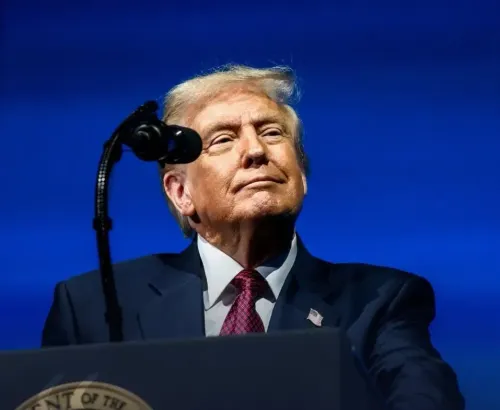
US President Donald Trump sparked a sharp diplomatic dispute on Saturday, 13 September 2026 after saying he would 'love to see' the unification of Ireland and Northern Ireland during a two-day state visit to Ireland — remarks that drew swift and pointed pushback from senior British politicians across party lines.
What Trump Said
Speaking during his visit to Ireland, Trump expressed open support for Irish unification — a position that cuts directly against the constitutional status of Northern Ireland as part of the United Kingdom. Trump concluded the visit on Sunday at his Doonbeg golf resort in County Clare, where he presented the Irish Open trophy to golfer Shane Lowry and announced he would lift tariffs on Irish whiskey. 'On behalf of the United States of America I'm going to take the tariffs off Irish whiskey,' he told the crowd.
British Political Reaction
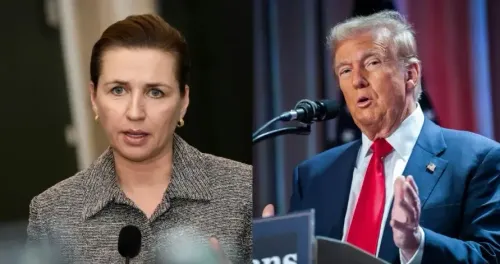
Conservative Party leader Kemi Badenoch, posting on X on Saturday, compared the remark to Trump's earlier statements on absorbing Greenland and Canada. 'President Trump is shooting from the hip as usual, just like he did with Greenland and Canada becoming the 51st state,' she wrote, adding that 'Northern Ireland is part of the United Kingdom.'
Reform UK leader Nigel Farage also posted on X the same day, distancing himself from Trump despite being a longstanding ally. 'I disagree with President Trump,' Farage said. 'Northern Ireland is a proud and integral part of the United Kingdom.'
Government Plays Down the Remarks
UK Communities Secretary Angela Rayner adopted a more measured tone. 'Donald Trump is Donald Trump, and the president will say and speak his mind as he sees it,' she told Sky News. Rayner affirmed that the British government remained committed to the Good Friday Agreement and would 'continue on that path.'
Former US Envoy Urges Caution
Former Republican Congressman Mick Mulvaney, who served as Trump's special envoy to Northern Ireland during his first term, urged against over-interpreting the comments. 'This does not represent a shift in US foreign policy,' he said, cautioning observers not to read too much into the president's off-the-cuff remarks.
What Happens Next
The episode adds fresh turbulence to an already complex US-UK relationship, coming against the backdrop of ongoing trade tensions and Brexit-era sensitivities around the Irish border. While Mulvaney's framing suggests the White House is unlikely to formalise any policy shift, the remarks have reignited debate over Northern Ireland's constitutional future at a sensitive moment. British officials are expected to seek clarification through diplomatic channels.
Point of View
Canada, now Northern Ireland — that embarrass allies and force frantic clarifications from his own former officials. What is notable here is that Nigel Farage, Trump's most prominent British admirer, felt compelled to publicly contradict him, which speaks to how politically untenable the remark was in the UK context. The deeper issue is structural: every Trump visit to a territory with contested sovereignty produces a diplomatic brush fire. Britain will absorb this one, but the cumulative effect of such incidents is an erosion of predictability in the transatlantic relationship at a moment when it can least afford it.
NationPress
14 Sept 2026
Frequently Asked Questions
What did Donald Trump say about Irish unification?
Trump said during a two-day visit to Ireland that he would 'love to see' the unification of Ireland and Britain's Northern Ireland. The remarks were made on Saturday, 13 September 2026, and were not accompanied by any formal policy announcement.
How did British politicians respond to Trump's remarks?
Senior figures across the British political spectrum pushed back sharply. Conservative Party leader Kemi Badenoch compared the comment to Trump's claims about Greenland and Canada, while Reform UK leader Nigel Farage — a Trump ally — also publicly disagreed. UK Communities Secretary Angela Rayner took a softer tone, reaffirming commitment to the Good Friday Agreement.
Does Trump's comment signal a change in US policy on Northern Ireland?
No, according to former Trump special envoy to Northern Ireland Mick Mulvaney. He stated clearly that the remarks 'do not represent a shift in US foreign policy' and cautioned against over-interpreting the president's comments.
What else happened during Trump's Ireland visit?
Trump ended his visit at his Doonbeg golf resort in County Clare, where he presented the Irish Open trophy to golfer Shane Lowry and announced that tariffs on Irish whiskey would be removed. The tariff announcement was welcomed by the crowd.
Why is the Northern Ireland question politically sensitive?
Northern Ireland's status as part of the United Kingdom is enshrined in the Good Friday Agreement of 1998, which ended decades of conflict. Any suggestion of unification with the Republic of Ireland touches on deep constitutional and historical tensions, making Trump's casual endorsement particularly jarring for British officials.