Trump TPS rollback splits Republicans: Mullin defends, DeWine calls it 'a mistake'
Synopsis
A single Sunday television programme exposed a live Republican fracture: the administration's Homeland Security chief and an Ohio governor clashed head-on over Trump's TPS termination for 350,000+ Haitians and Syrians. With a Supreme Court ruling already clearing the way and deportation flights anticipated, the real question is whether the DeWine wing of the party can slow a policy that is already in motion.
Key Takeaways
President Trump has moved to terminate Temporary Protected Status (TPS) for more than 350,000 immigrants from Haiti and Syria .
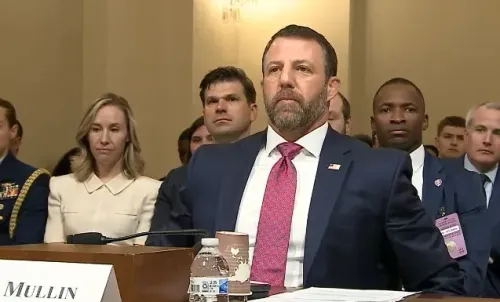
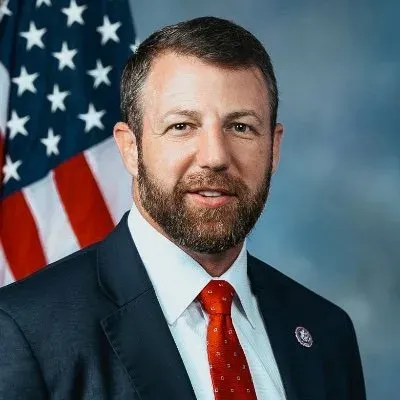
Homeland Security Secretary Markwayne Mullin defended the rollback on CNN's State of the Union on 28 June , offering departing migrants a plane ticket plus $2,100 in resettlement assistance.
Ohio Governor Mike DeWine broke with the administration on the same broadcast, calling the move ‘a mistake’ on safety and economic grounds.
The Supreme Court has already ruled that the administration may proceed with TPS terminations while legal challenges continue.
TPS is a US Congress -created humanitarian programme dating to 1990 , subject to periodic DHS review.
Haiti’s TPS designation has been maintained for years due to gang violence, political instability, and repeated natural disasters.
US President Donald Trump's decision to terminate Temporary Protected Status (TPS) for more than 350,000 Haitians and Syrians has cracked open a rare public rift within the Republican Party, with senior figures clashing on live television over the policy's wisdom. The split surfaced on Sunday, 28 June, when Homeland Security Secretary Markwayne Mullin and Ohio Governor Mike DeWine appeared on separate segments of the same programme and staked out opposing positions.
Mullin Defends the Rollback
Secretary Mullin, appearing on CNN's State of the Union, argued that TPS was never designed as a permanent immigration pathway. “Temporary Protected Status was never intended to be permanent,” he said, outlining three options for affected individuals: applying for permanent residence, seeking a temporary visa, or returning home voluntarily.
Mullin added that the administration would facilitate departures with financial support. “We will actually give you a plane ticket, plus roughly $2,100 to help you re-establish when you get there,” he said. He anticipated “pretty full flights going back to Haiti” and argued that countries like Haiti and Syria needed their own citizens to return in order to rebuild. “If we really want those countries to succeed, then they need the best of the best to be back in their country living there,” he said.
Pressed on State Department travel advisories warning against travel to Haiti, Mullin argued that advisories issued to Americans did not necessarily reflect conditions facing Haitians returning to their home country. “There isn’t a more generous country in the world than the United States, but we don’t want people to take advantage of it,” he said.
DeWine Breaks Ranks
Minutes later on the same broadcast, Ohio Governor Mike DeWine publicly contradicted the administration’s stance, citing both humanitarian and economic grounds. “I think it’s a mistake for a number of reasons,” DeWine said. “It is clearly not safe. Anybody who has followed Haiti over a long, extended period of time knows that it’s worse than it has, frankly, ever been.”
DeWine also pushed back on the economic calculus, warning that removing Haitian immigrants would damage labour markets, particularly in Ohio. “It is not in the United States’ interests, certainly not in Ohio’s interest, to have people who are working every single day, who are supporting a family, who are buying houses, fixing up old houses, starting businesses, and then put deep roots in this country and really are contributing and yank them out,” he said. He noted that Haitian immigrants fill critical roles in manufacturing, food production, and healthcare, including nursing homes serving elderly Americans, and urged the administration to reconsider.
The Supreme Court Ruling That Enabled the Move
The administration’s announcement followed a Supreme Court ruling that permitted the termination of TPS protections for more than 350,000 immigrants from Haiti and Syria even as legal challenges remain pending. The ruling gave the executive branch the operational clearance to proceed with the rollback while courts continue to weigh its legality.
What TPS Is and Why It Matters
Temporary Protected Status is a humanitarian programme established by US Congress in 1990. It permits nationals of countries afflicted by armed conflict, natural disasters, or other extraordinary conditions to live and work legally in the United States for defined periods, subject to periodic review by the Department of Homeland Security (DHS).
Haiti has held TPS designation for years owing to persistent political instability, gang violence, and repeated natural disasters. Syria has retained the status since the onset of its civil war. The Trump administration contends that the programme was never intended as a de facto route to permanent residency and that temporary protections must not become indefinite ones.
What Happens Next
With legal challenges still active in the courts, the timeline for actual deportations remains uncertain. The public disagreement between Mullin and DeWine signals that Republican consensus on immigration — long assumed to be monolithic — is under fresh strain, particularly among governors in states with significant immigrant labour forces. How the administration navigates that internal pressure while the courts deliberate will shape the practical fate of hundreds of thousands of TPS holders.
Point of View
100 resettlement offer is unlikely to resolve the underlying tension: if Haiti is as dangerous as DeWine and the State Department’s own advisories suggest, voluntary returns will be limited, pushing the burden onto courts and enforcement. The Supreme Court cleared the legal runway, but the political runway is narrower than the White House may have calculated.
NationPress
28 Jun 2026
Frequently Asked Questions
What is Temporary Protected Status (TPS) and who does it cover?
TPS is a US humanitarian programme created by Congress in 1990 that allows nationals of countries experiencing armed conflict, natural disasters, or other extraordinary conditions to live and work legally in the United States for defined periods. In the current dispute, the Trump administration has moved to end TPS for more than 350,000 immigrants from Haiti and Syria.
Why is the Trump administration ending TPS for Haitians and Syrians?
The administration argues that TPS was never intended as a pathway to permanent residency and that temporary protections should not become indefinite. Homeland Security Secretary Markwayne Mullin said on 28 June that beneficiaries should seek alternative legal status, apply for permanent residence, or return home voluntarily.
What did the Supreme Court rule on TPS?
The Supreme Court issued a ruling permitting the Trump administration to terminate TPS protections for more than 350,000 immigrants from Haiti and Syria while legal challenges to the policy remain pending in lower courts.
Why did Ohio Governor Mike DeWine oppose the TPS rollback?
DeWine called the move 'a mistake,' citing deteriorating security conditions in Haiti and the economic contribution of Haitian immigrants in Ohio — particularly in manufacturing, food production, and healthcare. He argued that removing workers who have put down roots and started businesses was not in the US or Ohio’s long-term interest.
What financial assistance is the US offering TPS holders who return home?
Secretary Mullin said the administration would provide a plane ticket plus approximately $2,100 to TPS holders who choose to return to their home countries voluntarily, framing it as resettlement assistance to help them re-establish themselves.