UBA blows up Balochistan bridge in Kachhi, disrupts Pakistan military supply route
Synopsis
On Balochistan's own Independence Day, the United Baloch Army destroyed a bridge used daily by the Pakistan military for supplies — a calculated strike on logistics timed to maximum symbolic effect. The attack in Kachhi district is the latest in a long-running armed insurgency rooted in decades of resource exploitation and alleged state repression in Pakistan's largest but poorest province.
Key Takeaways
The United Baloch Army (UBA) claimed responsibility for destroying a bridge at Sabri on Sanni Road near Dhadar, Kachhi district , on Saturday evening .
UBA spokesperson Mazar Baloch said the Pakistan military used the bridge daily for transporting supplies, and the route is now 'completely destroyed.' The claim came on 11 August — Balochistan's 79th Independence Day , marking the date the province declared independence in 1947 before annexation in 1948 .
The Human Rights Commission of Pakistan (HRCP) has documented 'escalating erosion of human rights and civic space' in the province.
Balochistan's poverty rate is 47% — nearly double Pakistan's national rate of 28.9% — despite the province holding vast natural resources.
The UBA warned attacks would continue 'until the establishment of an independent Balochistan.'
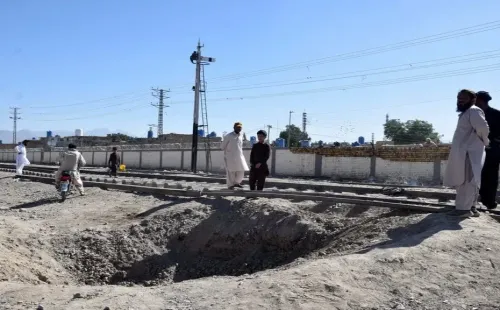
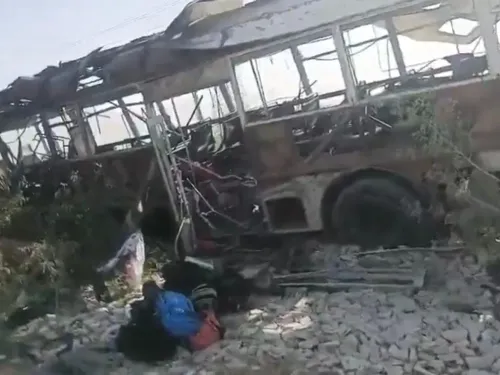
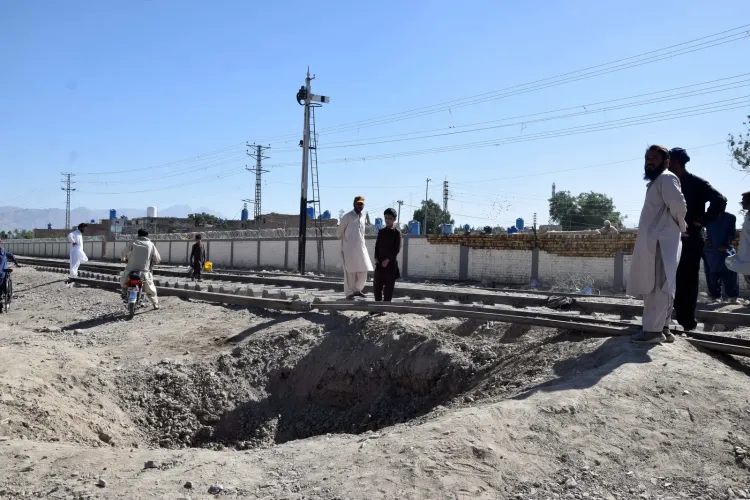
The United Baloch Army (UBA) on Tuesday, 11 August claimed responsibility for destroying a bridge in Kachhi district of Balochistan Province, Pakistan, according to local media reports. The attack, carried out on Saturday evening, targeted a bridge at Sabri on Sanni Road near Dhadar and rendered it completely unusable, the group said.
Details of the Attack
UBA spokesperson Mazar Baloch, in a statement cited by the Balochistan Post, said the group's fighters used explosives to destroy the bridge. According to the spokesperson, the Pakistan military had used the bridge daily to transport military supplies and for operational purposes. Mazar Baloch stated that the 'enemy's logistics and movement' in the area had been 'severely disrupted' by the strike.
The spokesperson added that 'the route is now completely destroyed' and warned that such attacks would continue 'until the establishment of an independent Balochistan.'
Significance of the Timing
The attack coincides with Balochistan's 79th Independence Day — observed on Tuesday, 11 August — continuing an annual tradition that defies what Baloch human rights groups describe as Pakistan's 'illegal occupation' of the region. The province had declared independence on 11 August 1947, a year before it was annexed by Pakistan in 1948.
Human Rights and Structural Exclusion
The Human Rights Commission of Pakistan (HRCP), based on its fieldwork in the province, has flagged 'escalating erosion of human rights and civic space in Balochistan.' The commission's findings pointed to 'a convergence of structural exclusion, gendered vulnerability, repression of youth voices and the weakening of public institutions.'
Critics argue this exclusion is not recent — it traces back to 1948, when the province was annexed despite having declared independence the previous year.
Balochistan: Rich in Resources, Poor in Development
Balochistan is Pakistan's largest province, covering 43.6% of the country's total area, yet it has the lowest population density at 42.90 per sq km. The province holds significant reserves of natural gas, gold, copper, oil, precious stones, and chromite. Its 770-km coastline accounts for 70% of Pakistan's total coastline, and Gwadar Port — presented as a national economic game-changer — is located here.
Despite this resource wealth, Balochistan remains Pakistan's least developed province. Its poverty rate stands at 47%, nearly double the national poverty rate of 28.9% recorded in 2024-25. The province has long demanded equitable rights over its natural resources, which it accuses Islamabad of exploiting. Armed separatist groups like the UBA cite state repression and human rights violations as the basis for their insurgency.
What Comes Next
The UBA's explicit warning of continued attacks signals an escalation in militant activity in the province. Security analysts will be watching whether Pakistani authorities move to reinforce supply routes or intensify counter-insurgency operations in Kachhi district in the days ahead.
Point of View
Not stabilising. Islamabad's continued reliance on military responses, without addressing the resource-rights grievance at the core, risks perpetuating this cycle indefinitely.
NationPress
26 Sept 2026
Frequently Asked Questions
What did the United Baloch Army do in Kachhi district?
The United Baloch Army (UBA) claimed it used explosives to destroy a bridge at Sabri on Sanni Road near Dhadar in Kachhi district, Balochistan, on Saturday evening, rendering it completely unusable. The group said the bridge was used daily by the Pakistan military for transporting supplies and for operational purposes.
Why did the UBA target this bridge?
According to UBA spokesperson Mazar Baloch, the attack was aimed at severely disrupting the 'enemy's logistics and movement' in the area. The group stated attacks would continue until an independent Balochistan is established, framing the strike as part of its broader armed separatist campaign.
What is Balochistan's Independence Day and why is it significant?
Balochistan observes its Independence Day on 11 August, marking the date in 1947 when the province declared independence — a year before it was annexed by Pakistan in 1948. Baloch human rights groups describe this annexation as an 'illegal occupation,' and the day is observed annually as an act of defiance.
What has the Human Rights Commission of Pakistan said about Balochistan?
The Human Rights Commission of Pakistan (HRCP) has documented an 'escalating erosion of human rights and civic space' in Balochistan, citing structural exclusion, gendered vulnerability, repression of youth voices, and the weakening of public institutions based on its fieldwork in the province.
Why does Balochistan remain poor despite its natural resources?
Balochistan holds substantial reserves of gas, gold, copper, oil, and other minerals, and accounts for 70% of Pakistan's coastline, yet its poverty rate stands at 47% — nearly double the national average of 28.9% in 2024-25. The province has long accused Islamabad of exploiting its resources without delivering equitable development or rights to its people.