Political Islam's rise in Europe: UK cited as hub in Brussels report
Synopsis
A Brussels Signal report by Greek politician Konstantinos Bogdanos names the UK as Europe's foremost hub for political Islam, warning that the same transnational networks active in Britain are already operating in Paris and Athens — and that Brussels is dangerously complacent about the threat to European democratic identity.
Key Takeaways
A Brussels Signal report identifies the United Kingdom as the primary European base for political Islam, per analysis published on 14 May .
Konstantinos Bogdanos , a Greek politician and journalist, authored the piece, warning of a 'political Islam without borders' spanning Britain , France , and Greece .
Bogdanos argues the ideology has exploited a 'de-industrialised and spiritually hollow' British establishment to erode national identity.
He warns Brussels against treating the UK situation as a foreign-affairs matter, calling such detachment a 'fatal mistake.' Critics of this analytical framing argue it risks conflating a diverse Muslim population with a fringe political ideology.
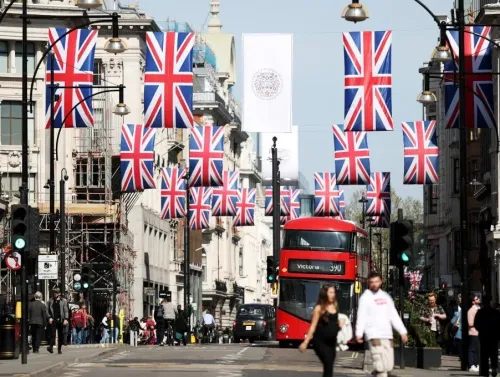
A report published by the digital news outlet Brussels Signal has identified the United Kingdom as the primary base for political Islam in Europe — an ideology that, according to the report, does not recognise national borders, British values, or the principle of a secular state. The findings have reignited a broader debate across the continent about integration, identity, and the resilience of Western democratic institutions.
Key Claims in the Report
Konstantinos Bogdanos, a Greek politician and journalist who authored the piece, describes the phenomenon as an 'extremist ideological franchise' that has capitalised on what he characterises as a de-industrialised and 'spiritually hollow' establishment in Britain. Bogdanos argues that this movement has systematically eroded British identity by treating urban centres as outposts for a 'global caliphate.'
'The British state, once the global premier standard for stability, is now being held hostage by alien forces. When elections in a Western democracy are decided by how a candidate stands on Sharia law or on a conflict five thousand miles away, the social contract is effectively being dismissed as irrelevant,' Bogdanos wrote.
Warning to Brussels and the Wider EU
Bogdanos directed pointed criticism at Brussels for what he described as a 'suicidal illusion' — treating the UK's situation as a distant foreign-affairs matter rather than a proximate threat. He argued that the networks operating in Britain are the same ones active in the suburbs of Paris and the public squares of Athens, framing them collectively as part of a 'political Islam without borders.'
'Europe is following closely. However, in what looks like a suicidal illusion, Brussels remains comfortably detached, watching the chaos in the UK as if it were a foreign affairs reel. This is a fatal mistake,' he stated, warning that ignoring developments in the UK is 'akin to sleeping while the neighbour's house burns.'
Civilisational Stakes, According to the Author
Stressing that Europe constitutes a shared civilisational bloc, Bogdanos cautioned that the ideology he says is dismantling Britain's social contract already poses a wider continental threat. 'The British experiment failed because it prioritised 'rights' over survival. If we do not change course as a union, the same failure awaits us. For, even if some EU nation states refuse to submit, European cultural cohesion will have been gone,' he wrote.
He called for what he termed a 'robust, politically incorrect defence' of demographic, political, and civilisational integrity, framing the choice in stark terms: 'We must decide if we are still a continent of sovereign nations or a collection of unprotected provinces waiting for Islamists to occupy them.'
Context and Broader Debate
The report reflects a strand of political commentary that has grown louder across Europe in recent years, particularly following debates over immigration policy, parallel legal systems, and the role of religion in public life. Critics of such analyses argue that they conflate a diverse Muslim population with a fringe political ideology, risking discrimination and social division. The Brussels Signal piece represents one perspective in an ongoing and contested policy conversation — one that mainstream European institutions have, according to Bogdanos and others in this camp, been slow to address. How the EU responds to these arguments is likely to shape immigration and integration policy debates heading into the next electoral cycle.
Point of View
Counter-extremism funding, electoral law — where actionable reform is actually possible. The report's rhetorical intensity may energise a particular constituency while making it harder to build the cross-party coalitions that durable counter-extremism policy requires. What is notable is that mainstream EU institutions have largely avoided engaging with this debate on its own terms, leaving the field to voices at the ideological edges. That vacuum, more than any single report, is what shapes the political temperature.
NationPress
26 Sept 2026
Frequently Asked Questions
What does the Brussels Signal report say about political Islam in the UK?
The report, authored by Greek politician Konstantinos Bogdanos, identifies the United Kingdom as the primary European hub for political Islam — an ideology it describes as rejecting national borders, British values, and secularism. It argues the movement has exploited institutional weakness to erode British identity and social cohesion.
Who is Konstantinos Bogdanos and why does his analysis matter?
Konstantinos Bogdanos is a Greek politician and journalist who wrote the piece for Brussels Signal, a European digital news outlet. His commentary reflects a growing strand of political opinion in Europe that argues mainstream institutions have underreacted to the influence of political Islam on democratic systems.
Why does the report warn Brussels specifically?
Bogdanos argues that Brussels is treating the UK's situation as a distant foreign-affairs issue rather than a proximate continental threat. He contends the networks he describes as operating in Britain are the same ones active in Paris and Athens, making EU-level complacency a strategic error.
What is 'political Islam without borders' as described in the report?
The term, used by Bogdanos, refers to a transnational movement that, in his framing, views European urban spaces not as places to integrate into but as territories to claim for a broader ideological project. He argues it operates across national boundaries, linking activity in the UK, France, and Greece.
Are there counterarguments to the report's conclusions?
Critics of this analytical approach argue that it risks conflating a large and diverse Muslim population in Europe with a fringe political ideology, potentially fuelling discrimination. Many researchers and policymakers distinguish sharply between mainstream Muslim communities and organised political Islamism, cautioning against broad-brush characterisations.