UN Secretary-General Calls for Immediate Diplomacy to Resolve Iran Conflict
Synopsis
On April 2, UN Secretary-General Antonio Guterres issued a strong call for diplomacy among Israel, the US, and Iran to stop ongoing hostilities. He emphasized the urgent need to address the humanitarian crisis and economic repercussions while supporting mediation efforts in the region.
Key Takeaways
Antonio Guterres calls for immediate cessation of hostilities among Israel, the US, and Iran.
Jean Arnault appointed as Personal Envoy for diplomatic efforts.
95% drop in traffic through the Strait of Hormuz reported.
Humanitarian crises worsening due to rising food and energy costs.
Trump threatens to escalate military actions against Iran.
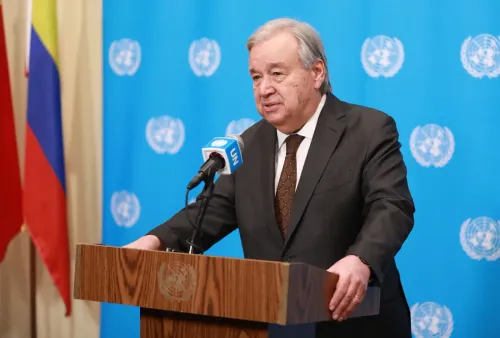
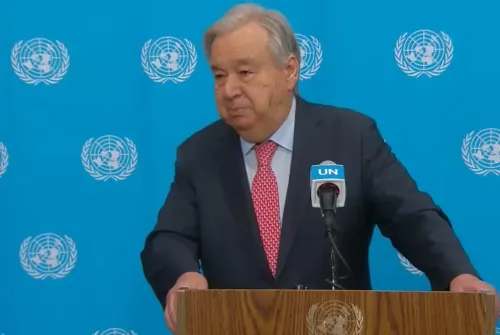
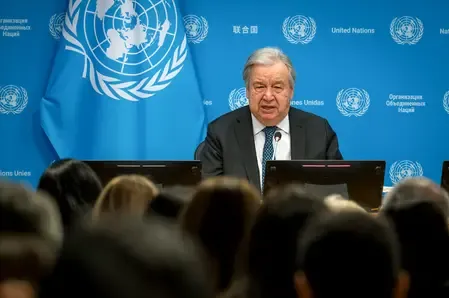
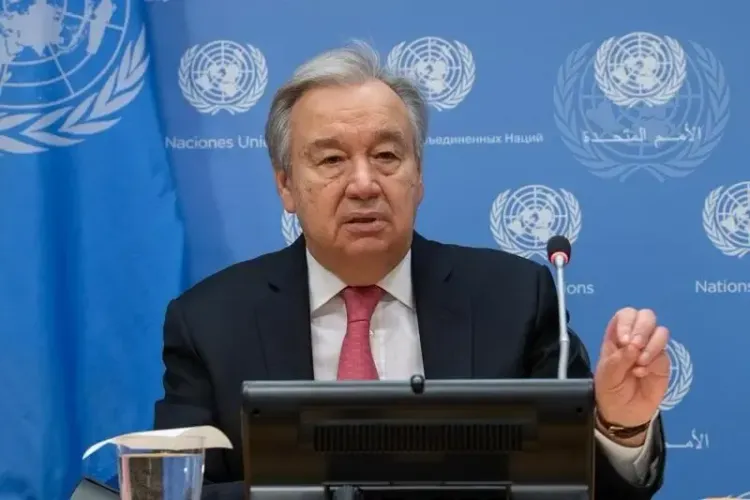
The United Nations, on April 2, has issued a strong appeal to Israel, the United States, and Iran to cease hostilities, as Secretary-General Antonio Guterres emphasized the urgent need for diplomacy to avert a looming "spiral of death and destruction".
Guterres announced to the press that he is sending his Personal Envoy, Jean Arnault, to the region to aid these diplomatic initiatives.
He stated that efforts aimed at uncovering a peaceful resolution "deserve the necessary space and backing to thrive, firmly rooted in international law, including the UN Charter."
Addressing the warring parties, Guterres asserted, "My message is unequivocal: It is time for the United States and Israel to halt the conflict that is causing immense human suffering and triggering dire economic fallout."
Moreover, he urged Iran to cease its aggression towards neighboring nations.
Last month, when Guterres appointed Arnault, who had been engaged in Afghanistan diplomacy, to address the Iran conflict, he affirmed that Arnault would facilitate mediation efforts and connect with all involved parties.
Reiterating the necessity of diplomatic engagement, he declared, "Conflicts do not resolve themselves. They conclude when leaders opt for dialogue instead of destruction. That choice remains available, and it must be made—immediately."
However, Guterres’ call for diplomacy faces the stark reality of a stalemate in negotiation attempts.
US President Donald Trump has frequently claimed that discussions are ongoing with a "more reasonable" faction of Iranian leaders, though he has not specified who they are. Iran has refuted any negotiations, stating that only limited communications have taken place via intermediaries.
On Wednesday night, Trump threatened to escalate attacks on Iran in the coming weeks and urged countries dependent on Gulf energy resources to secure the opening of the Strait themselves.
Approximately 40 nations convened in a meeting called by Britain regarding the crisis in the Strait.
While opening the meeting, Britain’s Foreign Secretary Yvette Cooper emphasized the need for a "collective mobilization of our complete array of diplomatic and economic instruments and pressures" to ensure the Strait's accessibility.
The UN Conference on Trade and Development (UNCTAD) reported on Wednesday that traffic through the Strait has plummeted by over 95% in the last month, disrupting the flow of energy and fertilizers.
Guterres remarked, "When the Strait of Hormuz is obstructed, the world's poorest and most vulnerable populations struggle to survive. This is evident in the daily challenges faced by those grappling with rising food and energy prices."
One of the objectives of Trump and Israel in this conflict is to hinder Iran's access to nuclear fuel. Reports indicate that Iran's nuclear facilities have been targeted, and its missiles have struck Dimona, which houses an Israeli nuclear research facility.
Guterres stated, "Civilians and civilian infrastructure, including nuclear sites, must be honored and safeguarded."
Point of View
It is essential to emphasize that the ongoing conflict requires immediate and effective diplomatic interventions. The humanitarian and economic impacts are staggering, and a collective effort is necessary to foster dialogue and establish a peaceful resolution.
NationPress
20 Sept 2026
Frequently Asked Questions
What is the main message from the UN Secretary-General regarding the Iran conflict?
The UN Secretary-General, Antonio Guterres, urges Israel, the US, and Iran to stop the conflict immediately and emphasizes the need for diplomatic efforts to find a peaceful resolution.
Who has been appointed as the Personal Envoy to support diplomatic efforts in the Iran conflict?
Jean Arnault has been appointed as the Personal Envoy to assist in diplomatic efforts regarding the Iran conflict.
What are the recent developments in the Strait of Hormuz?
Traffic through the Strait of Hormuz has decreased by over 95% in the past month, severely disrupting the flow of energy and fertilizers.
What actions did Donald Trump threaten regarding Iran?
Donald Trump threatened to intensify attacks on Iran in the coming weeks and urged countries dependent on Gulf energy to ensure the Strait's opening.
What is the significance of the UN Conference on Trade and Development's report?
The report highlights the severe decrease in traffic through the Strait of Hormuz, pointing to significant economic and humanitarian implications.