UN adopts North Korea human rights resolution for 22nd straight year
Synopsis
For the 22nd straight year, a UN committee has condemned North Korea's human rights record — but this time with a notable absence: the United States abstained for the first time since 2004, citing objections to ICC language and amid signals that President Trump is pursuing renewed engagement with Kim Jong-un. The break in America's two-decade co-sponsorship streak may be the resolution's biggest story.
Key Takeaways
The UN Third Committee adopted a resolution on North Korea's human rights for the 22nd consecutive year on 19 November 2025 .
The vote was 95 in favour , 14 against , and 58 abstentions ; the full General Assembly will vote in December .
The United States abstained for the first time , citing objections to ICC language — breaking a co-sponsorship streak dating to 2004 .
The resolution raised new concerns over North Korea's digital surveillance and technology-enabled repression .
South Korea secured language calling for inter-Korean dialogue and progress on issues including families separated by the 1950–53 Korean War .
China , Russia , Cuba , and Iran voted against the resolution; South Korea , France , Britain , and Canada supported it.
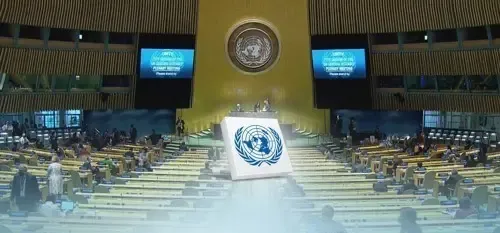
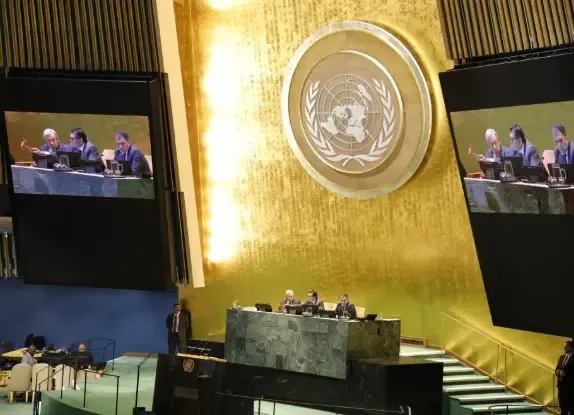
A United Nations General Assembly committee has adopted a resolution on North Korea's human rights situation for the 22nd consecutive year, raising fresh concerns over Pyongyang's digital surveillance and technology-enabled repression of its citizens. The Third Committee passed the measure at UN headquarters in New York on Wednesday, 19 November 2025, with the text now heading to the full General Assembly for final approval in December.
How the Vote Broke Down
The resolution was adopted with 95 votes in favour, 14 against, and 58 abstentions. South Korea, Britain, France, and Canada were among those backing the text. Countries with close ties to Pyongyang — including China, Russia, Cuba, and Iran — voted against it.
Notably, the United States abstained for the first time, breaking a co-sponsorship streak that dated back to 2004. US Ambassador to the UN Economic and Social Council Dan Negrea said Washington could not support the resolution as drafted because of language referencing the International Criminal Court (ICC), which the US has accused of exceeding its jurisdiction and infringing on national sovereignty. Negrea stressed that the abstention is 'not a reflection on the situation' in North Korea and that Washington's commitment to promoting human rights, accountability, and access to independent information for North Koreans is 'unwavering.'
What the Resolution Says
Like previous iterations, this year's text condemned the 'systematic, widespread and gross' violations of human rights in North Korea that 'may amount to crimes against humanity,' and the failure to bring those responsible to justice. It also noted that the overall human rights situation in the country has not improved over the past twelve years and has, in many instances, deteriorated further.
For the first time, the resolution raised specific concerns about digital surveillance and technology-enabled repression, highlighting restrictions on the rights to liberty of movement and freedom of thought, conscience, religion and belief. At South Korea's proposal, language was included stressing the importance of dialogue and engagement — including inter-Korean talks — and calling for progress on humanitarian issues such as families separated by the 1950–53 Korean War and individuals abducted by North Korea.
Pyongyang's Pushback
North Korean Ambassador to the UN Kim Song denounced the annual resolution as a 'politically motivated provocation' designed to tarnish North Korea's image and undermine its ideology and political system. Pyongyang has consistently rejected the resolutions, framing them as interference in its internal affairs.
The US Abstention and the Trump-Kim Factor
The American decision to abstain comes as US President Donald Trump has publicly expressed his desire to re-engage with North Korean leader Kim Jong-un. Speculation has mounted that direct talks could materialise during Trump's ongoing trip to China for the Asia-Pacific Economic Cooperation (APEC) summit. Analysts argue the abstention signals Washington's reluctance to antagonise Pyongyang ahead of potential diplomatic outreach, even as it insists its human rights concerns remain firm. This is the first time since the resolution's introduction in 2005 that the US has not been counted among its supporters.
What Comes Next
The resolution moves to the full UN General Assembly for a final vote in December 2025. While the text carries moral weight, it is non-binding and Pyongyang has repeatedly shown no willingness to comply. The US abstention is likely to be closely scrutinised as a diplomatic signal ahead of any potential Trump-Kim engagement.
Point of View
Washington's co-sponsorship of this text was treated as an axiom of UN diplomacy on North Korea — a floor below which American human rights rhetoric would not fall. That floor has now shifted, and the stated reason (ICC language) looks like a legal fig leaf for a diplomatic calculation: do not hand Pyongyang a provocation when Trump is seeking a re-engagement opening at APEC. The danger is that Pyongyang — and Beijing — read the abstention exactly as it looks: a signal that human rights accountability is negotiable when deal-making is on the table. That precedent, once set, is difficult to walk back regardless of what Negrea's 'unwavering commitment' language implies.
NationPress
19 Nov 2026
Frequently Asked Questions
What is the UN resolution on North Korea's human rights?
It is an annual, non-binding resolution adopted by the UN General Assembly's Third Committee condemning systematic human rights violations in North Korea that 'may amount to crimes against humanity.' The Third Committee has passed the resolution every year since 2005, with the full General Assembly voting on it each December.
Why did the United States abstain from the North Korea human rights vote in 2025?
The US abstained because of a reference in the resolution's text to the International Criminal Court (ICC), which Washington has accused of exceeding its jurisdiction and infringing on national sovereignty. US Ambassador Dan Negrea stated the abstention was 'not a reflection on the situation' in North Korea and that American commitment to human rights there remains firm.
Is the US abstention linked to Trump's diplomatic outreach to Kim Jong-un?
Analysts have drawn a direct connection. President Donald Trump has publicly expressed interest in re-engaging with North Korean leader Kim Jong-un, with speculation about a potential meeting during his APEC trip to China. The abstention is widely seen as avoiding a move that could complicate that diplomatic opening.
What new concerns did the 2025 resolution raise about North Korea?
For the first time, the resolution specifically highlighted North Korea's use of digital surveillance and technology-enabled repression to control its citizens, alongside long-standing concerns about restrictions on freedom of movement, thought, conscience, religion and belief.
Who voted for and against the resolution?
The resolution passed 95–14 with 58 abstentions. Supporters included South Korea, France, Britain, and Canada. China, Russia, Cuba, and Iran voted against it. The United States abstained, marking the first time it has not supported the resolution since 2004.