Kim Yo-jong rejects IAEA resolution, vows to keep North Korea's nuclear force

Synopsis
North Korea's most powerful woman, Kim Yo-jong, has flatly rejected the IAEA's latest resolution and declared the country's nuclear status irreversible — accusing the agency of double standards while Washington and Seoul deepen their deterrence ties. With diplomatic channels frozen, Pyongyang is signalling it will not negotiate its way out of its nuclear identity.
Key Takeaways
Kim Yo-jong rejected the IAEA resolution on 19 September 2026 , calling it an 'anti-DPRK' move that ignores US nuclear threats.
The IAEA adopted the resolution at its 70th General Conference in Vienna on Thursday, demanding North Korea halt nuclear activities immediately.
North Korea's foreign ministry called its nuclear weapons status 'irreversibly and permanently fixed by the supreme law of the state.' Kim Yo-jong accused the IAEA of double standards over US nuclear deployments in Europe and extended-deterrence deals with South Korea and Japan .
The statement comes two days after Kim Yo-jong declared North Korea's nuclear status 'absolute' and non-negotiable.
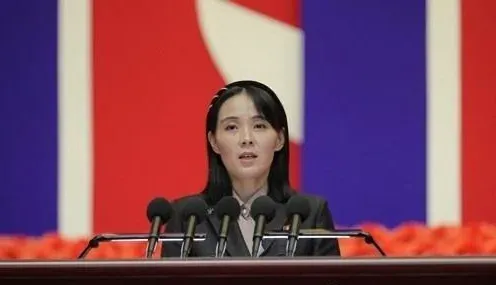
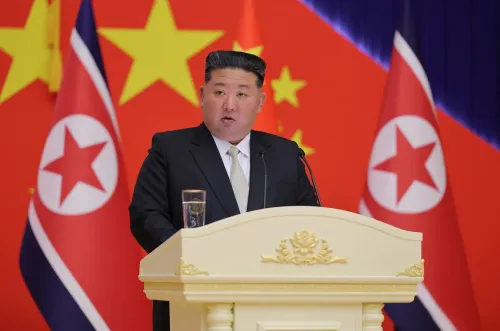
Kim Yo-jong, the influential sister of North Korean leader Kim Jong-un, on Saturday, 19 September 2026, formally rejected a resolution passed by the International Atomic Energy Agency (IAEA) against Pyongyang's nuclear programme, vowing that the country's nuclear capabilities would remain intact regardless of international pressure. The statement, carried by the state-run Korean Central News Agency (KCNA), came two days after the IAEA adopted the resolution at its 70th General Conference in Vienna.
The IAEA Resolution
The IAEA adopted the resolution on Thursday at its general conference, reaffirming that North Korea — officially the Democratic People's Republic of Korea (DPRK) — cannot hold nuclear-weapons-state status under the Nuclear Non-Proliferation Treaty (NPT). The resolution also called on Pyongyang to immediately halt all related nuclear activities. North Korea has consistently dismissed such resolutions as illegitimate interference.
Kim Yo-jong's Rebuttal
'The IAEA forcibly adopted an anti-DPRK resolution that takes issue with our country's self-defensive and legitimate nuclear activities while turning a blind eye to the grave reality that our security environment is constantly exposed to external nuclear threats,' Kim Yo-jong said in her statement.
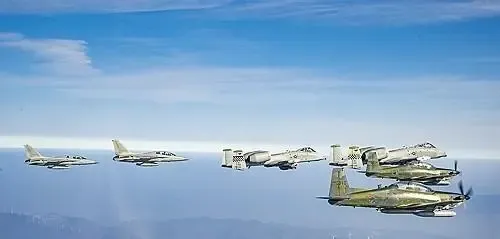
She accused the agency of applying extreme double standards by ignoring the United States' deployment and sharing of nuclear weapons in Europe, its extended-deterrence arrangements with South Korea and Japan, and Washington's reported plans to provide nuclear submarine technology to Seoul. Extended deterrence refers to the US commitment to deploying its full military arsenal — including nuclear arms — to defend treaty allies.
'This is yet another representative case that lays bare the agency's extreme double standards and bias,' she said, further accusing the IAEA of 'serving US interests and lacking the authority to interfere' in North Korea's nuclear activities.
Pyongyang's Broader Position
Kim Yo-jong's statement follows her remarks just two days earlier, in which she declared that North Korea's status as a nuclear weapons state is 'absolute' and cannot be reversed. Pyongyang's foreign ministry echoed the sentiment, describing the IAEA resolution as being 'cooked up' by 'hostile forces.'
'The DPRK's position as a nuclear weapons state does not need the recognition of the US, the West and the IAEA. It is guaranteed by the actual nuclear deterrent and irreversibly and permanently fixed by the supreme law of the state,' a ministry spokesperson said.
Geopolitical Context and What It Means
This comes amid a sustained escalation in Korean Peninsula tensions, with Pyongyang deepening its nuclear and missile programmes even as multilateral diplomatic channels remain frozen. Kim Yo-jong argued that what she described as the US' rapid expansion of its nuclear forces and 'overt nuclear proliferation' makes a 'more responsible choice' necessary for North Korea.
'We will never mortgage our sovereignty and right to security to the tolerance of the US and the West under any circumstances,' she said. 'Ensuring that the credibility of our nuclear force is not questioned under any circumstances is the most important matter for national security.'
The foreign ministry added that the DPRK would 'firmly defend the sovereignty and fundamental interests of the state and thoroughly guarantee peace and security in the region and the rest of the world by deterring all challenges and threats from outside by overwhelming force.' Analysts note that such statements, while formulaic, reflect a hardened Pyongyang posture that renders near-term denuclearisation negotiations increasingly unlikely.
Point of View
Framing North Korea's arsenal as a proportionate response rather than an outlier. The IAEA resolution, while symbolically significant, has no enforcement mechanism, and Pyongyang knows it. The real question is whether Washington and Seoul recalibrate their deterrence posture — or whether the current trajectory accelerates North Korea's warhead and delivery system development unchecked.
NationPress
19 Sept 2026
Frequently Asked Questions
What did the IAEA resolution on North Korea say?
The IAEA adopted a resolution at its 70th General Conference in Vienna on Thursday reaffirming that North Korea cannot hold nuclear-weapons-state status under the Nuclear Non-Proliferation Treaty (NPT) and calling on Pyongyang to immediately cease all related nuclear activities.
Why did Kim Yo-jong reject the IAEA resolution?
Kim Yo-jong rejected it as biased and serving US interests, arguing the IAEA ignores Washington's own nuclear deployments in Europe, its extended-deterrence deals with South Korea and Japan, and plans to share nuclear submarine technology with Seoul. She called it 'yet another representative case' of the agency's double standards.
What is North Korea's current position on its nuclear status?
North Korea insists its status as a nuclear weapons state is absolute, irreversible, and does not require international recognition. Pyongyang's foreign ministry stated it is 'permanently fixed by the supreme law of the state' and guaranteed by its actual nuclear deterrent.
What is extended deterrence, and why does North Korea object to it?
Extended deterrence refers to the US commitment to using its full military arsenal, including nuclear weapons, to defend allies such as South Korea and Japan. North Korea objects that such arrangements constitute nuclear threats directed at Pyongyang, which it uses to justify maintaining and expanding its own nuclear capabilities.
What happens next following North Korea's rejection of the IAEA resolution?
The IAEA resolution carries no direct enforcement mechanism, so the immediate practical impact is limited. However, the exchange deepens the diplomatic impasse on the Korean Peninsula and signals that Pyongyang will not engage in denuclearisation talks under current conditions. Analysts expect North Korea to continue developing its nuclear and missile programmes.