Kim Yo-jong slams G7 denuclearisation call, defends North Korea's nuclear arms
Synopsis
Kim Yo-jong didn't just reject the G7's denuclearisation demand — she declared it constitutionally impossible under North Korean law. Issued hours after the Paris summit closed, her statement signals that Pyongyang views its nuclear arsenal not as a bargaining chip but as a permanent, legally protected pillar of state sovereignty.
Key Takeaways
Kim Yo-jong on 18 June rejected the G7 's call for North Korea's complete denuclearisation, calling it “an irreversibly finalised agenda.” She described North Korea's nuclear weapons as “a means for self-defence” and a “cornerstone for ensuring peace” enshrined in DPRK law.
The G7 summit in Evian-les-Bains reaffirmed commitment to complete denuclearisation in line with UN Security Council resolutions.
G7 leaders also urged Pyongyang to resolve the abductee issue and address its alleged cryptocurrency thefts and cybercrimes.
Kim warned that any attempt to “hurt the core interests of a nuclear weapons state” would invite “disaster.”
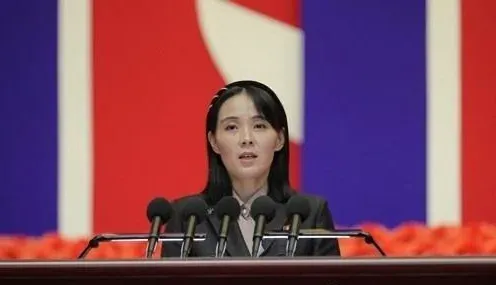
Kim Yo-jong, the powerful sister of North Korean leader Kim Jong-un, on Thursday, 18 June sharply rejected international calls for denuclearisation, declaring that North Korea's nuclear weapons represent the country's “core interests” and that denuclearisation is a “line of no retreat that can never be crossed,” according to Pyongyang's state media. Her remarks were a direct rebuke to a joint statement issued by G7 leaders at their summit in Paris the previous day.
Kim Yo-jong's Statement
In remarks carried by the Korean Central News Agency (KCNA), Kim Yo-jong described the United States and its allies' calls for denuclearisation as “anachronistic.” She declared the matter “an irreversibly finalised agenda” that “can never be realised.”
“Nuclear weapons are powerful means of defending sovereignty and a cornerstone for ensuring peace, defined by the law of the DPRK,” she said, framing the arsenal explicitly as “a means for self-defence.” She added a pointed warning: “Anyone who tries to hurt the core interests of a nuclear weapons state would make the worst option of inviting disaster.”
What the G7 Said
Leaders of the United States, Britain, Canada, France, Germany, Japan, and Italy met in Evian-les-Bains from Monday to Wednesday before issuing a joint statement covering geopolitical concerns across the Indo-Pacific, the Middle East, and Ukraine.
“We express deep concern about North Korea's nuclear and ballistic missile programs and reaffirm our commitment to the complete denuclearization of North Korea in accordance with U.N. Security Council resolutions,” the statement read. The G7 also urged Pyongyang to “immediately” resolve the longstanding issue of abductees — individuals believed to have been kidnapped by North Korea in the 1970s and 1980s — and called for collective action against North Korea's cryptocurrency thefts and cybercrimes.
Why This Escalation Matters
Kim Yo-jong's intervention is notable for its tone and timing. Her statements, typically issued through state media, are widely regarded as reflecting official Pyongyang policy at the highest level. By framing nuclear weapons as constitutionally enshrined under “the law of the DPRK,” she signals that no diplomatic overture framed around denuclearisation is likely to gain traction with the current leadership.
Notably, this is not the first time Kim Yo-jong has dismissed multilateral pressure. She has repeatedly served as Pyongyang's most combative public voice on security matters, particularly when responding to joint statements from Western-aligned blocs. This comes amid broader concerns about North Korea's accelerating ballistic missile programme and its alleged cyber operations targeting global financial infrastructure.
What Happens Next
The G7's reaffirmation of UN Security Council resolutions on denuclearisation carries little immediate enforcement leverage, given existing sanctions frameworks that Pyongyang has consistently defied. Diplomatic analysts suggest that without a credible negotiation pathway — one that does not begin with denuclearisation as a precondition — the current standoff is unlikely to shift. The abductee issue, particularly sensitive for Japan, remains unresolved and continues to complicate any potential bilateral engagement.
Point of View
Pyongyang is signalling that the G7's denuclearisation language — however reaffirmed — has no purchase in the North. The more telling detail is the cybercrimes and abductee language in the G7 statement: these are pressure points that Pyongyang has never acknowledged, and bundling them with denuclearisation only hardens its posture. The real question is whether any G7 member, particularly Japan given the abductee sensitivity, is willing to decouple bilateral engagement from the denuclearisation precondition — because the current framework is producing no movement.
NationPress
19 Sept 2026
Frequently Asked Questions
What did Kim Yo-jong say about North Korea's nuclear weapons?
Kim Yo-jong declared on 18 June that North Korea's nuclear weapons are its 'core interests' and a 'means for self-defence,' calling denuclearisation a 'line of no retreat that can never be crossed.' She described the arsenal as a cornerstone of peace enshrined in DPRK law.
Why did Kim Yo-jong issue this statement?
Her remarks were a direct response to a joint statement by G7 leaders at their Paris summit, which reaffirmed commitment to the complete denuclearisation of North Korea in line with UN Security Council resolutions. Kim called the G7's demands 'anachronistic.'
What did the G7 summit say about North Korea?
G7 leaders meeting in Evian-les-Bains expressed deep concern about North Korea's nuclear and ballistic missile programmes and called for complete denuclearisation. They also urged Pyongyang to resolve the abductee issue and jointly address its cryptocurrency thefts and cybercrimes.
Who is Kim Yo-jong and why does her statement matter?
Kim Yo-jong is the sister of North Korean leader Kim Jong-un and is widely regarded as one of the most influential figures in Pyongyang's leadership. Her public statements through state media are considered to reflect official government policy at the highest level.
What is the abductee issue raised by the G7?
The abductee issue refers to individuals — primarily Japanese and South Korean citizens — believed to have been kidnapped by North Korea in the 1970s and 1980s. The G7 urged Pyongyang to immediately resolve the matter, a demand North Korea has historically rejected.