Somalia election roadmap: UN, EU and 14 nations demand dialogue revival
Synopsis
Fourteen nations, the EU, and the UN have jointly demanded Somalia resume election talks — a rare show of unified Western pressure after three-day talks collapsed and President Mohamud's original mandate expired. With the opposition threatening to withdraw recognition of the government and no new dialogue date set, Somalia's political transition is at its most precarious point in years.
Key Takeaways
UNTMIS , the EU , and 14 foreign missions issued a joint statement on 1 June calling for dialogue resumption and an election roadmap in Somalia .
Signatories include embassies of the UK, France, Norway, Finland, Ireland, Netherlands, Belgium, Portugal, Spain, Sweden, Austria, Switzerland , and Poland .
Lawmakers approved a constitutional amendment in March extending presidential and parliamentary terms to five years ; the opposition and some federal states have rejected it.
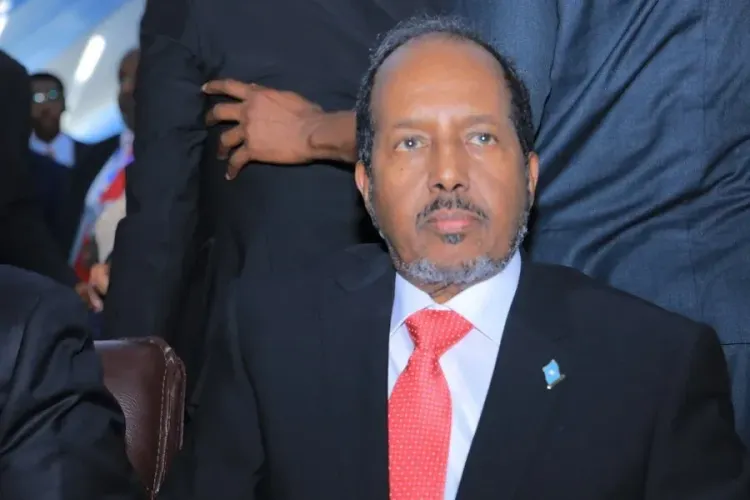
President Hassan Sheikh Mohamud's original four-year term expired on 15 May under the 2012 Provisional Constitution .
The core electoral dispute pits universal suffrage (favoured by the president) against a revised indirect voting system (preferred by the opposition).
Opposition leaders have warned they will stop recognising the government's legitimacy without a final transition agreement.
The United Nations Transitional Assistance Mission in Somalia (UNTMIS), the European Union (EU) delegation to Somalia, and diplomats from 14 foreign missions on Monday, 1 June issued a joint call for the immediate resumption of dialogue and the swift adoption of an election roadmap in Somalia. The statement reflects deepening international concern over a political impasse that has left the country without a resolved transition framework.
Who Signed the Joint Statement
The declaration was co-signed by the embassies of the United Kingdom, France, Norway, Finland, Ireland, Netherlands, Belgium, Portugal, Spain, and Sweden based in Mogadishu, alongside the embassies of Austria, Belgium, Switzerland, and Poland accredited from Nairobi, together with the EU delegation and UNTMIS. The breadth of signatories signals a rare degree of unified Western pressure on Somali political actors.
Key Demands from the International Community
The joint statement called on all Somali parties to resume dialogue 'as soon as possible' and to reach a consensus on an election roadmap 'in the interest of the Somali people.' It also offered international facilitation: 'The international community stands ready to assist in Somali-led talks, should they be requested,' the statement noted.
Crucially, the signatories urged restraint. 'In this delicate moment, we urge all Somali leaders to prioritise the national interest and refrain from any actions that may lead to an escalation of tensions,' the statement added.
Background: A Stalled Transition and a Disputed Term Extension
The statement comes after a three-day round of talks — convened by foreign diplomats — ended without resolving core political disputes, a development UNTMIS described with regret. That inconclusive round coincided with the formal expiry of President Hassan Sheikh Mohamud's original four-year mandate under the 2012 Provisional Constitution, which analysts place at 15 May.
In March, lawmakers approved constitutional amendments extending presidential and parliamentary terms to five years, but the opposition and several federal member states have rejected the extension as illegitimate. Opposition leaders and some regional administrations have warned they will cease recognising the government's authority absent a final agreement on the transition.
The Electoral Model Dispute
According to analysts, a central flashpoint in the talks is the disagreement over voting systems. President Mohamud reportedly advocates for universal suffrage — a one-person, one-vote model — while the opposition seeks to retain a revised form of the traditional indirect voting system, under which clan delegates choose lawmakers. Neither side has publicly moved from its position, making consensus on an election roadmap elusive.
What Happens Next
UNTMIS has reiterated its readiness to work alongside international partners to bridge divisions among Somalia's political leadership. The mission has also underscored the urgency of resolving the impasse given the country's severe humanitarian crisis and ongoing insecurity. With the opposition's legitimacy deadline already passed and no new dialogue date confirmed, the window for a negotiated settlement is narrowing. The international community's next move — whether to escalate pressure or step back and allow Somali-led mediation — will be closely watched.
Point of View
Which no foreign communiqué can resolve. President Mohamud's push for universal suffrage, while democratically appealing on paper, threatens entrenched clan-gate interests that have historically stabilised — and complicated — Somali governance. The opposition's legitimacy deadline passing without consequence may embolden hardliners on both sides. The international community's offer to facilitate 'Somali-led talks' is the right framing, but without a credible domestic convener, it risks being another round of inconclusive dialogue.
NationPress
21 Oct 2026
Frequently Asked Questions
Why are the UN and EU calling for dialogue in Somalia?
UNTMIS, the EU, and 14 foreign missions are urging dialogue because Somalia's political transition has stalled after three-day talks failed to resolve disputes over the electoral model and a contested constitutional term extension. The joint statement reflects concern that unresolved tensions could escalate and worsen the country's humanitarian and security situation.
What is the dispute over Somalia's election roadmap?
The core disagreement is between President Hassan Sheikh Mohamud, who advocates universal suffrage, and the opposition, which wants to retain a revised indirect voting system based on clan representation. Neither side has reached consensus, leaving the country without an agreed election framework.
What happened with President Mohamud's term extension?
Somali lawmakers passed constitutional amendments in March 2025 extending presidential and parliamentary terms from four to five years. However, the opposition and several federal member states have rejected the extension as illegitimate, and some have threatened to stop recognising the government after 15 May, when Mohamud's original mandate expired.
Which countries signed the joint statement on Somalia?
The statement was signed by the embassies of the UK, France, Norway, Finland, Ireland, Netherlands, Belgium, Portugal, Spain, Sweden, Austria, Switzerland, and Poland, along with the EU delegation to Somalia and UNTMIS — a total of 14 foreign missions plus two multilateral bodies.
What has UNTMIS said about the situation in Somalia?
UNTMIS expressed regret that the latest round of diplomat-convened talks ended without resolving major disputes. It has urged Somali leaders to find a constructive path forward, called for restraint, and reiterated its readiness to support efforts to overcome political divisions alongside international partners.