Owaisi Takes SIR Battle to Supreme Court, Demands ECI Accountability
Synopsis
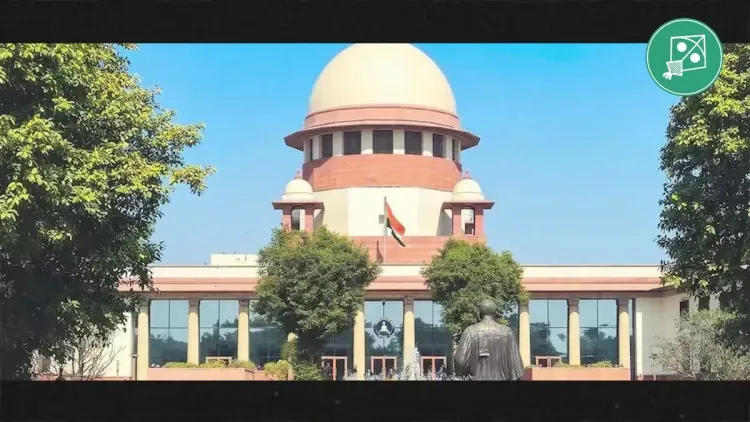
AIMIM president Asaduddin Owaisi has moved the Supreme Court with a petition and review petition against the Election Commission's Special Intensive Revision exercise, seeking statutory compliance and disclosure of whether SIR decisions were unanimous or split among Commissioners.
Key Takeaways
AIMIM has filed both a petition and a review petition in the Supreme Court of India concerning the Special Intensive Revision (SIR) exercise by the Election Commission.
The party demands the Election Commission act strictly within the law in conducting the SIR process.
AIMIM is also seeking disclosure of whether SIR-related decisions within the Commission were unanimous or involved a dissenting opinion from any member.
The Special Intensive Revision is a periodic electoral roll update exercise conducted by the ECI ahead of elections.
Filing in the Supreme Court rather than a High Court frames the dispute as a matter of national constitutional significance.
The next critical development will be the Supreme Court's decision on listing, admission, and any notice issued to the Election Commission .
When a constitutional body makes a consequential decision about who gets to vote, the question of how that decision was made matters just as much as the decision itself. On Wednesday, October 14, 2026, AIMIM president Asaduddin Owaisi announced that his party has filed both a petition and a review petition in the Supreme Court of India challenging the Election Commission of India's conduct of the Special Intensive Revision (SIR) exercise — demanding that the Commission act within the law and, critically, disclose whether its decisions on SIR were taken unanimously or with dissenting opinions from individual members.
What AIMIM is asking the Supreme Court to do
Owaisi's post, in Urdu-inflected Hindi, states the twin purposes of the legal action plainly: first, that the Election Commission must function 'qanoon ke mutabiq' (in accordance with the law); and second, that it must be made clear whether the decisions relating to SIR were taken with the agreement of all members or whether any Commissioner recorded a dissenting view. The second demand is significant — it is, in effect, a call for transparency inside a body whose internal deliberations are rarely visible to the public or the courts.
The Special Intensive Revision is an exercise the Election Commission conducts to update and verify electoral rolls ahead of elections — adding new voters, correcting errors, and removing names. It sounds administrative. In practice, disputes over SIR exercises have repeatedly ignited political firestorms, with opposition parties alleging that the process can be used to add or remove names in ways that benefit or disadvantage particular communities.
The legal and constitutional stakes
Filing before the Supreme Court — not a High Court — signals that AIMIM is framing this as a matter of national constitutional importance, not a state-level administrative grievance. Indian political parties have a well-established practice of seeking judicial review of Election Commission orders, particularly on electoral roll preparation. Courts have consistently held that the ECI, while an independent constitutional body, is not beyond judicial scrutiny when its actions are alleged to breach statutory requirements.
The review petition filed alongside the main petition suggests that a prior order or action — possibly a Supreme Court direction or an ECI decision — already exists in this matter and is now itself being challenged. The combination of a fresh petition and a review petition indicates AIMIM is pursuing the issue on multiple procedural tracks simultaneously.
Why internal ECI deliberations are suddenly in focus
The demand to know whether SIR-related decisions commanded a consensus inside the Commission — or whether a Commissioner dissented — is unusual and pointed. The Election Commission of India comprises a Chief Election Commissioner and two Election Commissioners. Decisions that fracture that panel are rare in public record, but when they do emerge, they carry enormous political and legal weight. AIMIM is essentially asking the court to force the Commission to open that window, turning an internal procedural question into a matter of public and judicial record.
The Supreme Court's decision on whether to list, admit, or issue notice on the petitions will be the immediate thing to watch. An early hearing date or a notice to the Election Commission would signal the court's willingness to examine the SIR process — and could have direct consequences for how the revision exercise proceeds.
Frequently Asked Questions
What is the SIR that AIMIM has challenged in the Supreme Court?
SIR stands for Special Intensive Revision — an exercise conducted by the Election Commission of India to update and verify electoral rolls, including adding new voters and removing ineligible entries, typically before elections.
Why has AIMIM filed both a petition and a review petition in the Supreme Court?
A fresh petition challenges the Election Commission's conduct of the SIR process, while a review petition seeks reconsideration of an existing order or decision in the matter — allowing AIMIM to pursue the issue on two simultaneous legal tracks.
What is AIMIM asking the Supreme Court to reveal about the Election Commission?
AIMIM wants the court to direct the Election Commission to disclose whether decisions related to the SIR exercise were taken unanimously by all Commissioners or whether any member recorded a dissenting opinion.
Can the Supreme Court examine decisions made by the Election Commission of India?
Yes. While the Election Commission is an independent constitutional body, the Supreme Court has consistently held it is subject to judicial review when its actions are alleged to violate statutory provisions or constitutional mandates.
What happens next after AIMIM files the petition in the Supreme Court?
The Supreme Court will decide whether to list the petition for hearing, admit it, and whether to issue notice to the Election Commission — any of which would signal the court's willingness to scrutinise the SIR exercise.