Is US Action in Venezuela Justified While Authoritarian Regime Persists?
Click to start listening
Synopsis
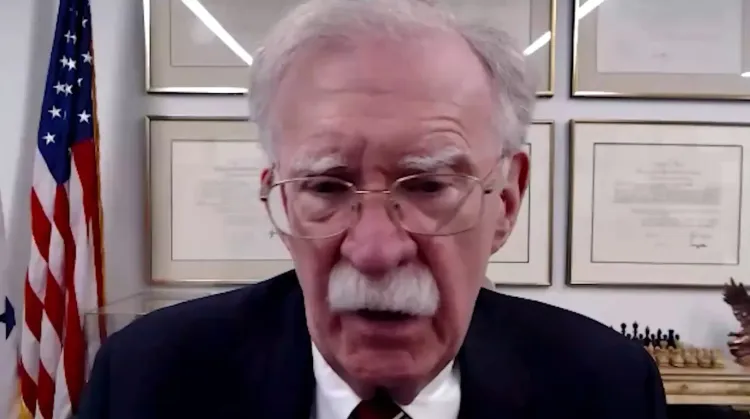
In an exclusive interview, former NSA John Bolton discusses the complexities of US actions in Venezuela, emphasizing the need for clarity on the intentions behind the efforts against Maduro. He warns of broader implications, from oil fantasies to the delicate balance of international relations.
Key Takeaways
- US actions in Venezuela are legally justified.
- Trump has not effectively replaced Maduro's regime.
- Investments in Venezuelan oil infrastructure require time and capital.
- China and Russia pose significant threats in the region.
- International interventions must be carefully considered.
Washington/New Delhi, Jan 6 (NationPress) Former US National Security Adviser (NSA) John Bolton has endorsed the actions taken by the US administration to oust Venezuelan President Nicolas Maduro, asserting that it is consistent with international law. In an exclusive interview with IANS, he pointed out that President Donald Trump has not been successful in dismantling the authoritarian regime as of yet.
Bolton described Trump's assertion that US oil companies would thrive in Venezuela as a “fantasy” and cautioned against the idea of annexing Greenland, emphasizing that military intervention would be a “catastrophic error for the United States” and could jeopardize the NATO alliance. He also discussed Trump's initiatives regarding the war in Ukraine, suggesting that the former President is likely to withdraw from efforts to broker a peace deal, as a satisfactory resolution for the Ukrainian people seems improbable.
Excerpts:
IANS: What is your perspective on the US actions in Venezuela? Critics have labeled it as an infringement on the international order...
John Bolton: Our actions were fully in line with international law. We had backing from the legitimate Venezuelan opposition responding to Maduro's grip on power after allegedly stealing the 2024 presidential election, as confirmed by numerous neutral observers. Notably, he also falsified the 2018 election when we supported interim President Juan Guaido. It's crucial to acknowledge this context, as some argue it sets a precedent for actions like Russia's invasion of Ukraine or China's ambitions towards Taiwan. It absolutely does not. The real issue is that Trump has not effectively altered the regime; while he has targeted Maduro, the authoritarian system remains intact. His comments this past Saturday suggest he might be willing to engage with the regime as long as Maduro is removed.
IANS: What are the potential future implications of such actions?
John Bolton: It's a mistake to generalize Trump's strategies. He operates on a very transactional basis without a coherent national security strategy. In this particular case, he seems focused on gaining access to Venezuelan oil, which doesn’t apply in many other contexts. At this point, with numerous uncertainties, I would be cautious about making wider conclusions about his actions elsewhere.
IANS: Trump has claimed that US oil companies will profit from Venezuela. How do you interpret this statement?
John Bolton: That statement is purely a fantasy. Over three decades under the Chavez-Maduro regime, the country’s oil infrastructure has been severely damaged. Significant investment over an extended period is necessary to enhance Venezuela's export capabilities, which cannot be easily restored. American and foreign oil companies are likely to hesitate in making substantial financial commitments amid the current political uncertainty.
IANS: Given Trump's actions, do you believe the US could intervene similarly with other leaders, potentially leading other nations to follow suit?
John Bolton: The context is essential. Maduro's actions, particularly regarding the stolen 2024 election, set a unique precedent. The legitimate opposition leader, Maria Corina Machado, has even received a Nobel Peace Prize for efforts against Maduro. This situation draws parallels to the 1990 intervention in Panama when the elected President Guillermo Endara sought US assistance against the dictator Manuel Noriega. Cooperating with a legitimate government to remove an usurper does not violate international law.
IANS: Isn’t capturing a leader of another country a violation of the international order?
John Bolton: Not if that leader is illegitimate or has committed acts threatening US security, especially in the Western Hemisphere. Others may argue similar justifications, but they must be fact-based. The situation in Venezuela does not rationalize Russia's invasion of Ukraine, which was an act of unprovoked aggression.
IANS: Could US actions in Venezuela encourage China to take similar steps regarding Taiwan?
John Bolton: China has openly threatened Taiwan for an extended time. The Taiwanese people have consistently expressed through free elections that they do not wish to reunite with the mainland. They are entitled to self-governance, and China's threats pose significant risks to international peace.
IANS: After Maduro's ousting, Trump has expressed interest in annexing Greenland. How do you view these intentions?
John Bolton: This seems to be a tactic we refer to as trolling in the US. Trump's negotiating style often involves making outrageous claims to provoke shock, settling for less than he initially demands. I find it inconceivable that he would genuinely consider military action against Greenland, as that would be a catastrophic blunder for the US and could jeopardize NATO.
IANS: Do you believe the US has lost its ability to mediate a peace deal in Ukraine due to its actions in Venezuela?
John Bolton: I don’t believe that to be the case. The Russians have skillfully manipulated Trump in Ukraine, and a resolution acceptable to the Ukrainians seems unlikely. I suspect that Trump will, as he has before, withdraw from efforts to negotiate a deal, likely motivated by a desire for a Nobel Peace Prize, which remains elusive given the current divides.
IANS: Is a Nobel Peace Prize still a possibility for Trump?
John Bolton: If given a few days, he will likely articulate why his actions against Maduro should earn him the prize, but I think that is improbable.
IANS: What are your thoughts on Trump's recent comments about India?
John Bolton: It’s unfortunate that he announced tariffs against India before negotiations, missing the opportunity to impose additional tariffs on China or Turkey for purchasing Russian oil. A closer relationship is crucial as we share a mutual concern regarding China’s hegemonic ambitions.
IANS: What message do you think the US has conveyed through its actions in Venezuela?
John Bolton: The intention was to eliminate threats in the hemisphere posed by external actors such as Russia, China, and Iran, with Cuba also playing a role. The Venezuelan people have suffered under Maduro’s regime for too long, and that should be the message. I do not believe that is what Trump is conveying, but the removal of Maduro and the regime's remaining elements is justified.
IANS: How was the Venezuelan government endangering US national security?
John Bolton: Russia uses Venezuela as a base for operations in this hemisphere, which poses greater risks compared to Cuba's proximity to Florida. Cuba relies on Venezuelan oil to sustain its regime, which is a situation that Russia supports as well. China has been making significant efforts to gain access to Venezuelan oil, currently purchasing about 80% of its exports. The potential for them to invest heavily in Venezuela's oil infrastructure is concerning, given that Venezuela’s reserves surpass even those of Saudi Arabia. Additionally, Iran maintains its largest embassy in Caracas, overseeing Hezbollah activities and laundering profits from illegal oil sales, which is troubling for the stability of the Western Hemisphere.
IANS: Could Trump attempt to change the Constitution to run for a third term?
John Bolton: No, I believe he has largely abandoned that idea. Changing the Constitution involves too many steps and cannot be accomplished in the near term. He seems to acknowledge that JD Vance is likely to be his successor.
IANS: What is your evaluation of the Trump administration as it completes its first year?
John Bolton: The economy is performing well, which benefits any incumbent, but I believe he has caused significant harm to US interests globally. I hope that this damage can be repaired, but there are still three years left.
Point of View
It is essential to maintain a balanced view on US interventions. The situation in Venezuela highlights the delicate interplay between law, ethics, and national interest. We must consider the implications of such actions on global stability while ensuring that our strategies align with democratic principles.
NationPress
07/01/2026
Frequently Asked Questions
What is the current situation in Venezuela?
Venezuela is currently under the rule of an authoritarian regime led by Nicolas Maduro, with significant opposition movements seeking to restore democracy.
How does US involvement in Venezuela impact international relations?
US actions in Venezuela could influence relations with other nations, particularly regarding perceptions of interventionist policies and respect for sovereignty.
What are the implications of Trump's statements about Venezuela?
Trump's statements reflect a transactional approach to foreign policy, raising concerns about the sustainability of US interests in volatile regions.
Is there a risk of US actions in Venezuela encouraging similar moves by other countries?
Yes, actions in Venezuela could set precedents that might encourage other nations to take similar interventions under disputed circumstances.
What does John Bolton believe about the future of US-Venezuela relations?
Bolton believes that without a clear strategy to dismantle the Maduro regime, the US may struggle to establish stable relations in the region.