How is the US Strengthening Mineral and Security Ties with Pakistan?

Synopsis
The US is enhancing its partnership with Pakistan, focusing on critical minerals and counterterrorism collaboration, amidst rising regional tensions. This strategic move highlights Pakistan's pivotal role in ensuring stability in South Asia. Discover the implications of this growing alliance.
Key Takeaways
US and Pakistan are enhancing mineral resource collaboration.
Security cooperation remains a central focus.
Regional stability is crucial for global economic health.
Counterterrorism efforts are vital for addressing internal threats.
Pakistan's role in the global economy is being reinforced.
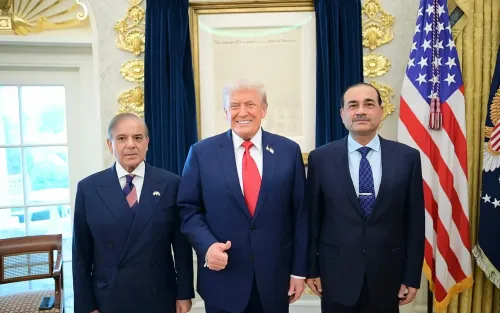
Washington, Feb 12 (NationPress) The United States has identified Pakistan as “another significant partner” in South Asia, detailing collaboration on essential minerals, trade, and counterterrorism, despite lawmakers stressing regional tensions and instability risks.
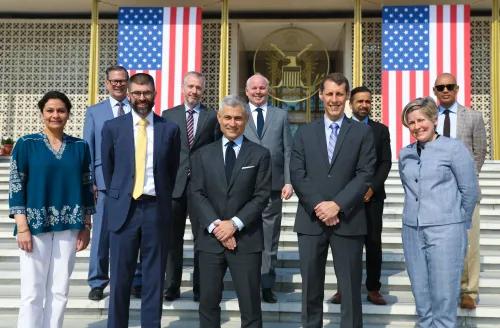
During a House subcommittee hearing focused on US policy in South and Central Asia on Wednesday (local time), Assistant Secretary of State for South and Central Asian Affairs Paul Kapur stated that Washington is collaborating with Islamabad to enhance both economic and security partnerships.
“Pakistan stands as another vital partner in the region,” Kapur informed legislators.
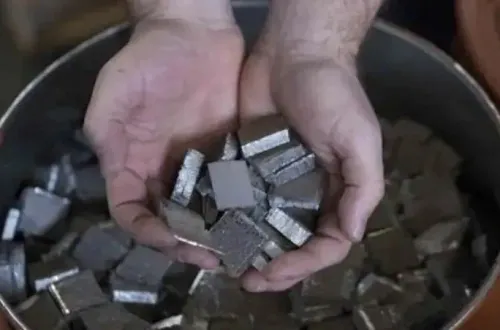
“We are united with Pakistan to harness the potential of its critical mineral resources,” he mentioned, referring to initiatives that merge “US government seed funding with private sector expertise to benefit both nations.”
Kapur emphasized the growth of economic relations, stating, “Our trade, energy, and agriculture sectors are on the rise.”
He placed this strategy within a larger regional context, asserting, “This will necessitate assisting our partners in building strategic capacities that allow them to integrate into the global economy, maintain their independence, and foster a free and open region.”
He highlighted that security collaboration is of utmost importance. “Our ongoing counterterrorism efforts support Pakistan in addressing internal security challenges while tackling transnational threats that endanger our allies.”
The hearing also revisited Pakistan’s lengthy and intricate relationship with militancy. Referencing his academic work, Kapur remarked: “The aim of the book was to review Pakistani strategies and explore how Pakistan interacted with militant and terrorist organizations.”
He recognized the wider challenge of countering extremist networks. “One of the difficulties of addressing terrorism is that there are few individuals who blend into the populace. It is quite challenging to identify them,” he stated.
Lawmakers emphasized the critical nature of regional stability. Democratic Rep. Sydney Kamlager-Dove pointed out that “India and Pakistan experienced their gravest military conflict in decades, presenting a risk of nuclear escalation in a region with 2 billion inhabitants,” characterizing it as “a reminder of the essential role of US diplomacy.”
Kapur refrained from detailing the present state of India-Pakistan tensions but underscored that US involvement across South Asia aims to avert destabilizing dominance by any single entity.
“A hostile entity dominating South Asia could exert coercive influence over the global economy,” he mentioned earlier in the hearing.
The renewed US emphasis on Pakistan’s mineral sector aligns with broader efforts to diversify global supply chains and reduce reliance on China in strategic sectors.
The testimony indicated that Pakistan remains a crucial factor in Washington’s considerations—as a security ally, a mineral resource center, and a key player in a region where instability can have worldwide consequences.
US-Pakistan relations have varied significantly over the past twenty years, influenced by counterterrorism collaborations, tensions over Afghanistan, and concerns regarding extremist networks.
Point of View
I believe that the US-Pakistan partnership is crucial for regional stability and economic cooperation. While challenges persist, particularly regarding security and militancy, the ongoing dialogue emphasizes the importance of a collaborative approach to address these issues. We must remain vigilant and supportive of diplomatic efforts.
NationPress
6 Oct 2026
Frequently Asked Questions
What is the significance of US-Pakistan mineral cooperation?
The cooperation focuses on harnessing Pakistan's abundant mineral resources to enhance economic ties between the two nations, while also reducing reliance on China.
How does US engagement affect regional stability?
US involvement aims to prevent any single power from dominating South Asia, which could threaten global economic stability.
What challenges does Pakistan face regarding militancy?
Pakistan struggles with internal security threats and the need to combat extremist networks that blend into the population.
What role does the US envision for Pakistan in the global economy?
The US seeks to help Pakistan build strategic capacities to integrate into the global economy while preserving its autonomy.
Why is counterterrorism cooperation important?
Counterterrorism cooperation is critical for Pakistan to address both internal security challenges and transnational threats.