Is the Era of Traditional Multilateralism Over?
Synopsis
The US declared traditional multilateralism over after withdrawing from 66 international organizations deemed ineffective. Secretary of State Marco Rubio highlighted the need for reform, emphasizing accountability and results over outdated models. This significant shift marks a new era in US global engagement, promising to prioritize national interests.
Key Takeaways
US declares traditional multilateralism over.
Withdrawal from 66 international organizations.
Focus on accountability and results.
Trump administration's significant policy shift.
Continued US engagement with reformed institutions.
Washington, Jan 10 (NationPress) The United States announced on Saturday that traditional multilateralism has come to an end, shortly after revealing its exit from 66 international organizations deemed wasteful, ineffective, and not aligned with American interests by the Trump administration.
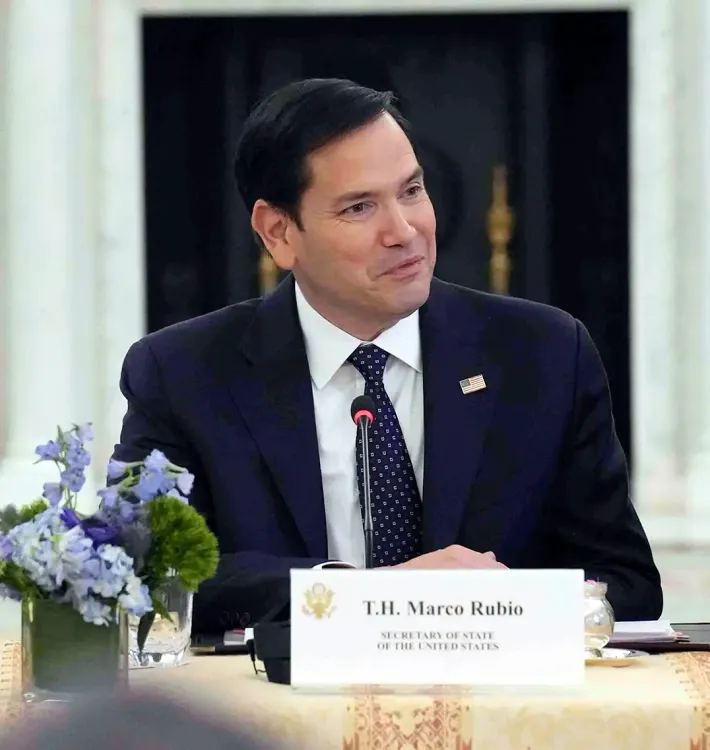
US Secretary of State Marco Rubio stated, "The so-called ‘international system’ is now cluttered with numerous opaque international organizations, many of which have overlapping mandates, redundant actions, ineffective outputs, and lack adequate financial and ethical governance."
In a post on Substack, he emphasized, "The time for writing blank checks to international bureaucracies is finished." The announcement followed President Donald Trump issuing a Presidential Memorandum formalizing the withdrawal from the identified organizations during an ongoing review.
The memorandum highlights institutions that are viewed as "redundant, mismanaged, unnecessary, wasteful, poorly run, and influenced by interests that contradict our own, or that pose a threat to our nation’s sovereignty, freedoms, and prosperity," according to the State Department.
Rubio pointed out that continued US investment in such entities does not benefit American taxpayers or contribute to global problem-solving. "Investing American taxpayers' hard-earned money in organizations that cannot show results, accountability, or respect for our interests is no longer justifiable," he asserted.
He further argued that ongoing US participation merely legitimizes these organizations and a model that has failed countless individuals worldwide, particularly concerning issues like affordable energy, economic growth, and national sovereignty.
Rubio mentioned several United Nations-related organizations as examples of systemic dysfunction, citing the UN Population Fund's long history of ethical violations, including funding coerced abortions, and criticized UN Women for failing to define what a woman is.
Additionally, he accused the UN Framework Convention on Climate Change of wasting substantial funds on climate alarmist projects against energy investments in regions such as the West Bank and Gaza. He also critiqued the UN Permanent Forum on People of African Descent for promoting openly racist policies supporting global reparations.
Rubio stated, "These organizations have a consistent record of dysfunction, if not outright malice. The American people, our allies, and the billions globally who look to the US for leadership deserve better."
The State Department clarified that the organizations selected for withdrawal were chosen after an extensive evaluation of their purpose, efficiency, necessity, and crucially, their capability to aid in achieving US national interests.
Rubio emphasized that the 66 organizations identified do not encompass all of the administration's concerns. "The organizations we are withdrawing from are by no means the only offenders," he noted, indicating that the review of US involvement in international organizations is still underway.
Simultaneously, the administration dismissed claims that this move signals a retreat from global engagement. Rubio remarked, "This does not equate to America turning its back on the world. We are merely rejecting an outdated model of multilateralism that treats the American taxpayer as the world's underwriter for an extensive architecture of global governance."
Rubio affirmed that the Trump administration is "demanding tangible results from the institutions we fund and engage with," and is prepared to "lead a reform campaign." He added that President Trump will not permit international organizations to undermine the United States or curtail its national sovereignty, energy independence, economic prosperity, democracy, or constitutional freedoms.
"This week’s Presidential Memorandum illustrates that America is no longer accepting the broken status quo," Rubio concluded, noting that "sometimes true leadership means knowing when to walk away."
The US has historically been a financial backbone of the post-World War II international framework, including the United Nations and other multilateral institutions aimed at fostering global stability and cooperation.
While prior US administrations have withheld funding or exited from individual international bodies, the scale of the current withdrawals represents one of the most significant reassessments of US engagement with multilateral institutions in decades.
Point of View
It's crucial to recognize the significance of the US's shift away from traditional multilateralism. This decision reflects a growing sentiment among policymakers that many international organizations are not serving their intended purpose and need reform. It remains essential to balance national interests with global responsibilities.
NationPress
19 Sept 2026
Frequently Asked Questions
What prompted the US withdrawal from these organizations?
The Trump administration identified these organizations as wasteful and ineffective, conflicting with American interests.
What does this mean for US foreign policy?
This shift indicates a move towards prioritizing national interests over traditional multilateral commitments.
Will the US still engage with international organizations?
Yes, the US intends to engage with organizations that demonstrate accountability and results.
How does this affect global cooperation?
This could lead to a reevaluation of how international cooperation is structured and funded.