Why is the US Excluding South Africa from the 2026 G20 Summit?
Synopsis
As tensions rise between the US and South Africa, crucial mediators like Brazil and India are urged to act. The US's decision to exclude South Africa's President from the 2026 G20 Summit raises concerns over a potential North-South divide within the G20, making this issue critical for global diplomacy.
Key Takeaways
Tensions between the US and South Africa are escalating.
Mediators must intervene to prevent a North-South divide .
The US will not invite South Africa’s President to the Miami Summit .
The G20 has evolved towards a more inclusive body.
India's role in the G20 has been significant in representing the Global South .
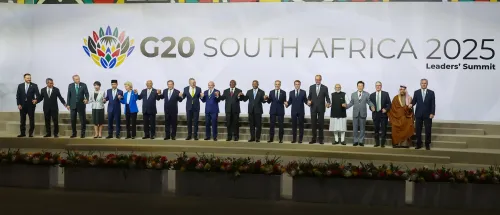
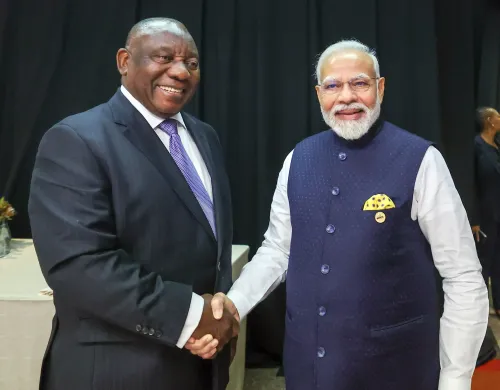
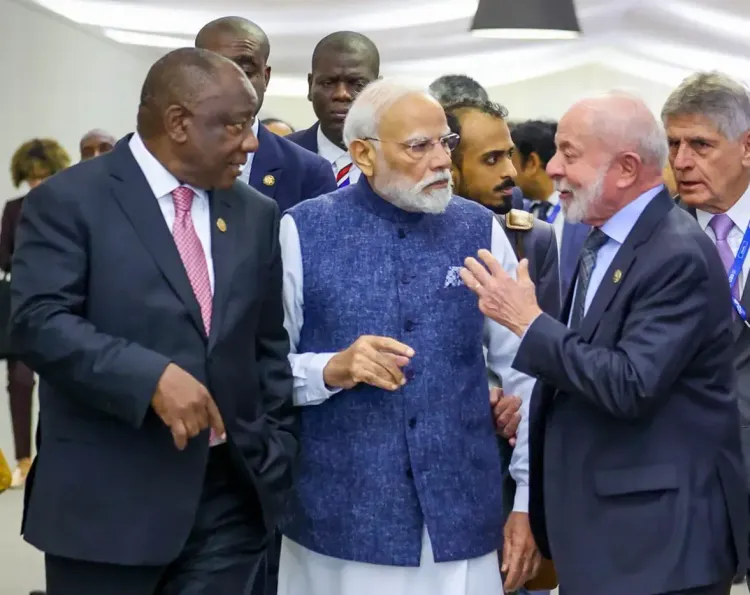
Johannesburg, Dec 2 (NationPress) As tensions escalate between Washington and Pretoria, critical mediators such as Brazil, India, Saudi Arabia, the UK, and South Korea must intervene to advocate for reconciliation. A failure to act could lead the G20 towards a pronounced North-South divide, a report indicated on Tuesday.
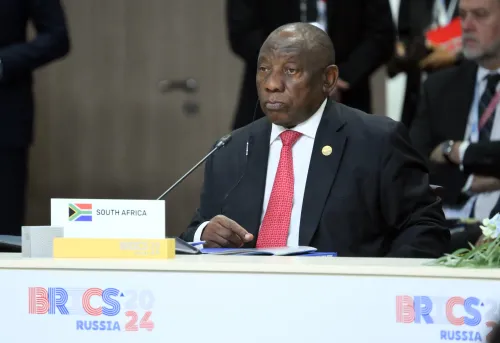
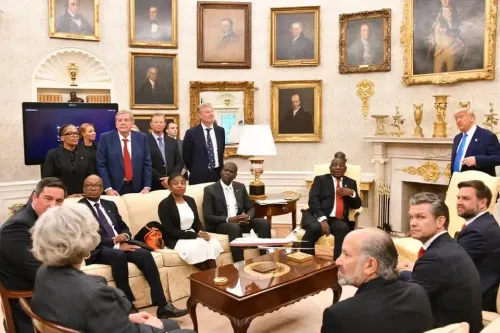
The US, set to chair the upcoming G20 summit and the only nation not present at the 2025 Johannesburg meeting, declared on November 27 that it would not extend an invitation to South Africa’s President for the Miami Summit. This decision elicited feelings of hurt and indignation, raising concerns about the G20's immediate future.
According to a report by the Politeia Research Foundation, an Indian think tank, as emerging economies increasingly assert their roles in global forums, the recent G20 presidencies of Indonesia, India, Brazil, and South Africa have highlighted the forum's evolution into a more inclusive and balanced entity in terms of agenda and priorities.
The report emphasized that by granting full membership to the African Union during India’s presidency from 2022 to 2023, alongside the Voice of Global South Summits hosted by India, the G20 has indicated a significant shift towards the South—a trend that peaked under South Africa’s leadership.
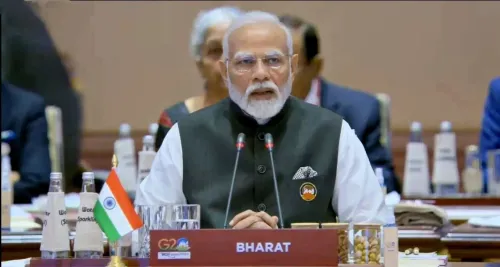
“As the nation that effectively managed its G20 presidency and whose leader has participated in every G20 summit since 2014, India and Prime Minister Narendra Modi garnered substantial diplomatic and media attention in Johannesburg,” noted Rajiv Bhatia, a former Ambassador who served in Myanmar, Mexico, Kenya, and South Africa.
During his numerous interventions at the summit, Prime Minister Narendra Modi highlighted the shortcomings of the current global development model and advocated for a redefinition of “the parameters of development,” achievable through the “pathway of Integral Humanism.” PM Modi further advocated for a stronger voice for the Global South in global governance, proposing a three-point agenda focusing on sustainable development, trusted trade, and inclusive prosperity.
India’s influence was particularly visible in the enhanced presence and confidence of African nations at the recently concluded G20 Summit in South Africa. Analysts concurred that the impact of India’s contributions was unmistakable, according to a report by Independent Online (IOL), a leading South African media outlet.
“From debt reform to digital public infrastructure, many priorities championed at the Johannesburg meetings reflected continuity from India’s presidency in 2023, signaling the rising significance of the Global South in shaping global governance,” the report stated.
Point of View
It's essential to recognize the implications of the US's recent decision on international relations and diplomacy. The absence of South Africa from the G20 may not only alienate an important partner but also disrupt the balance that has been slowly established within the forum. Nations must strive for inclusivity and collaboration, particularly in a rapidly changing global landscape.
NationPress
5 Oct 2026
Frequently Asked Questions
What is the significance of the G20 Summit?
The G20 Summit serves as a major platform for the world's largest economies to discuss and coordinate policies on various global issues, impacting economic stability and international relations.
Why is South Africa's exclusion from the G20 Summit concerning?
South Africa's exclusion raises fears of a North-South divide within the G20, potentially undermining global cooperation and representation of emerging economies.
Who are the potential mediators mentioned in the report?
The report highlights Brazil, India, Saudi Arabia, the UK, and South Korea as potential mediators to encourage reconciliation between the US and South Africa.