US State Dept defends expanded social media visa vetting for journalists, USMCA workers
Synopsis
The Trump administration is reportedly extending social media vetting — already applied to diplomats, workers, and exchange visitors — to foreign journalists and USMCA-category Canadian and Mexican professionals. The State Department won't confirm the memo, but its defence of 'maximum' screening signals the policy is real and expanding, raising press freedom and bilateral trade concerns.
Key Takeaways
The US State Department defended expanded social media vetting for visa applicants on 7 August , following reports of a new internal memorandum.
The reported expansion would cover foreign journalists and Canadian and Mexican professionals entering under USMCA , along with their dependants.
Social media vetting was already in place for diplomatic , temporary worker , exchange visitor , and several other visa categories.
The State Department cited Secretary Rubio's position that 'a visa is a privilege, not a right' in defending the policy.
The department neither confirmed nor denied the existence of the reported internal memorandum.
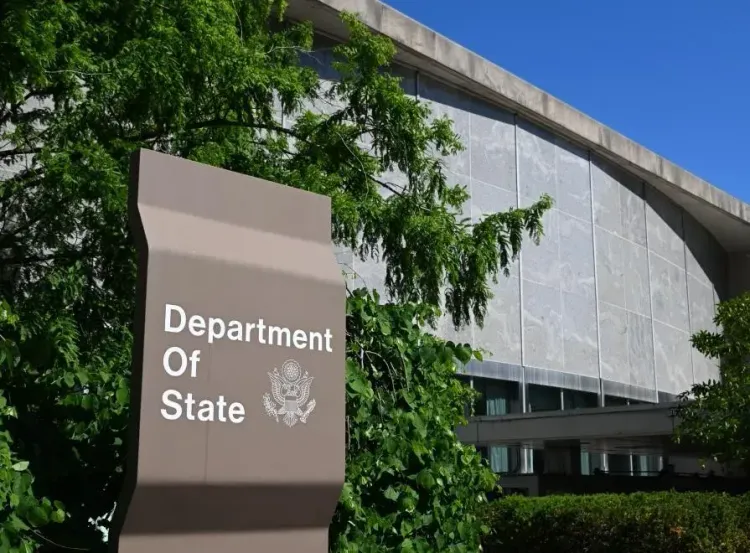
The US State Department on 7 August defended its broad online screening of foreign visa applicants after reports emerged that the Trump administration was extending social media vetting to additional visa categories — including foreign journalists and certain Canadian and Mexican professionals entering the United States under the United States-Mexico-Canada Agreement (USMCA). The expansion, if confirmed, would mark a significant widening of an already extensive digital surveillance framework applied during the US visa process.
What the Reported Memo Says
According to The Daily Signal, an internal State Department memorandum would require applicants to make their social media accounts public or accessible to consular officers for examination. The reported expansion would cover foreign media representatives and qualified Canadian and Mexican nationals seeking business entry under USMCA, along with their dependants.
The State Department neither confirmed nor denied the existence of the memorandum, but a spokesperson defended the administration's overall vetting posture.
What the State Department Said
'While we do not comment on purported internal documents, the Trump Administration is protecting our nation and our citizens by upholding the highest standards of national security and public safety through our visa process,' a State Department spokesperson said.
The spokesperson also cited Secretary of State Marco Rubio's position: 'a visa is a privilege, not a right.' The department added that every foreign national seeking US admission is subjected to extensive checks, and that consular officers use 'a variety of methods' — including online presence vetting — to assess eligibility and security risk.
Who Is Already Subject to Social Media Vetting
According to the report, social media screening was already mandatory for applicants seeking diplomatic and official visas, temporary worker and trainee visas, and exchange visitor visas. The requirement also extended to international cultural exchange participants, religious workers, and applicants classified as witnesses, informants, or victims.
The reported expansion would bring foreign journalists and USMCA-category business travellers into this existing framework — groups that had previously been outside its formal scope.
Scope and Implications of the Expansion
The widened policy, if implemented, could compel a larger set of applicants to expose posts and content previously restricted to approved followers. This comes amid a broader pattern of the Trump administration tightening entry requirements across multiple visa streams since early 2025.
The State Department said its screening procedures remain under continuous review. 'The Department is constantly reviewing and evaluating screening and vetting procedures worldwide to ensure that our visa process upholds the highest standards for US national security and public safety,' the spokesperson said.
Notably, the inclusion of Canadian and Mexican nationals — who typically enjoy relatively streamlined cross-border access under USMCA — signals a more expansive interpretation of security risk that could strain bilateral relations with two of the United States' closest trading partners.
What Happens Next
The State Department has not issued formal public guidance on the reported expansion, and the scope of the memorandum remains unverified through official channels. Press freedom organisations and legal observers are expected to scrutinise any formalised requirement targeting foreign journalists, given longstanding concerns about press access to the United States. How USMCA member governments respond could also shape the diplomatic fallout in the weeks ahead.
Point of View
And the one receiving the least scrutiny. Press freedom norms have long held that journalists must be able to operate without government surveillance of their sources and contacts — precisely the kind of information embedded in social media accounts. Folding USMCA professionals into the same framework also tests the legal architecture of a trade agreement that was designed to ease, not restrict, cross-border business movement. The State Department's refusal to confirm or deny the memo is itself a tell: formal denial would create accountability; silence preserves flexibility. The real question is whether Congress, trade partners, or press freedom bodies will push back before the policy hardens into standard procedure.
NationPress
21 Sept 2026
Frequently Asked Questions
What is the US expanding in its visa vetting process?
The Trump administration is reportedly expanding social media vetting to additional visa categories, including foreign journalists and Canadian and Mexican professionals entering the US under the USMCA trade agreement. Applicants may be required to make their social media accounts public or accessible to consular officers.
Which visa categories already require social media vetting?
Social media screening was already mandatory for diplomatic and official visa applicants, temporary workers and trainees, exchange visitors, international cultural exchange participants, religious workers, and applicants classified as witnesses, informants, or victims, according to reports.
Did the State Department confirm the new social media vetting memo?
No. The State Department neither confirmed nor denied the reported internal memorandum, but defended its broader vetting posture, saying it screens 'to the maximum extent possible' every foreign national seeking US admission.
Why does this matter for foreign journalists?
Including foreign journalists in social media vetting raises press freedom concerns, as their accounts may contain information about sources and contacts. Press freedom organisations are expected to scrutinise any formalised requirement targeting media representatives seeking US visas.
How does this affect Canadian and Mexican nationals under USMCA?
USMCA-category business travellers from Canada and Mexico, who typically benefit from streamlined cross-border access, could be required to submit to social media screening under the reported expansion — a move that may strain bilateral relations with both countries.