Trump takes expanded voter database case to US Supreme Court
Synopsis
With midterm elections less than two months away, the Trump administration has taken its expanded voter-verification database — blocked by two courts for unlawfully repurposing Social Security records — directly to the Supreme Court. The justices' response, due by 15 September, could determine whether millions of voter-roll entries face citizenship checks before Americans head to the polls.
Key Takeaways
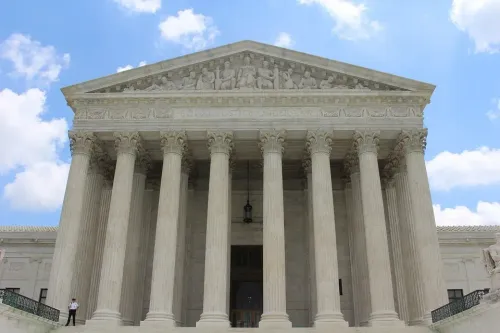
The Trump administration filed an emergency appeal with the US Supreme Court to reinstate an expanded immigration database for voter citizenship verification.
The database, expanded in May 2025 , combines DHS SAVE programme data with Social Security Administration records.
US District Judge Sparkle Sooknanan blocked the system in June , ruling it violated the Social Security Act and other federal privacy laws.
A federal appeals court declined to pause the block last week, prompting the Supreme Court appeal.
The legal challenge is led by the League of Women Voters ; plaintiffs include naturalised citizens reportedly misidentified as non-citizens in government records.
The Supreme Court has asked plaintiffs to respond by 15 September , ahead of the November 3 midterm elections .
The Trump administration has filed an emergency appeal with the US Supreme Court, seeking permission for federal authorities to deploy an expanded immigration database — one that incorporates Social Security Administration records — to help states verify the citizenship status of registered voters. The request, reported by The Washington Post, arrives less than two months before the November 3 midterm elections and follows back-to-back legal defeats in lower courts.
What the Expanded Database Does
At the heart of the dispute is the Department of Homeland Security's Systematic Alien Verification for Entitlements programme, widely known as SAVE. State and local agencies have long used SAVE to confirm whether applicants for government benefits and licences hold qualifying immigration or citizenship status, and election officials have drawn on it in limited circumstances to assess voter eligibility.
The administration significantly broadened the system in May 2025, adding Social Security Administration records and data on individuals who acquired US citizenship at birth. The expansion allowed election authorities to run wider searches of their voter rolls, according to The Washington Post. President Donald Trump directed the government to build the expanded system through an executive order framed around protecting the integrity of American elections.
How Courts Ruled Against the Administration
A federal judge in Washington blocked the expanded database in June, concluding that the administration had unlawfully combined and repurposed personal information belonging to millions of Americans. US District Judge Sparkle Sooknanan also found that certain states were using inaccurate data from the system to remove American citizens from voter rolls — a finding the administration contests.
Judge Sooknanan ruled that the initiative violated privacy protections embedded in the Social Security Act and other federal statutes. A federal appeals court declined last week to pause her ruling while the litigation proceeded, prompting the administration to escalate the matter to the nation's highest court.
What the Administration Argues
Solicitor General D. John Sauer characterised the lower court's order as 'indefensible', arguing that it 'threatens the integrity of upcoming elections,' according to The Washington Post. Sauer contended that the injunction strips federal and state authorities of an effective mechanism for checking the eligibility of registered voters and benefit applicants alike.
Who Is Challenging the Move
The legal challenge is led by the League of Women Voters and includes naturalised American citizens who say government records continue to misidentify them as non-citizens. The challengers argue that inaccurate or outdated information in the system could result in eligible citizens being wrongly purged from voter lists — a concern Judge Sooknanan found credible in her original ruling.
The Supreme Court has directed the plaintiffs to file their response to the administration's emergency request by 15 September, according to the report. The justices are expected to act shortly after receiving that response, leaving the outcome — and its implications for the November vote — on a tight timeline.
What Happens Next
A Supreme Court ruling in the administration's favour would reinstate the expanded SAVE system ahead of the midterms, potentially allowing states to conduct broader citizenship checks on voter rolls. A denial would leave Judge Sooknanan's block in place. Either way, the case is likely to shape the legal boundaries of federal voter-verification programmes well beyond the current election cycle.
Point of View
Even a temporary Supreme Court order reinstating the database could reshape voter-roll purges before ballots are cast. What the lower courts found — that the system was misidentifying naturalised citizens as non-citizens — is the detail that mainstream coverage risks burying beneath the procedural drama. If the Supreme Court grants relief and inaccurate data is used, the damage to eligible voters may be irreversible before Election Day. The deeper question this case forces is whether federal voter-verification infrastructure has the accuracy standards to justify its consequences.
NationPress
24 Oct 2026
Frequently Asked Questions
What is the expanded voter database the Trump administration wants to use?
It is an expanded version of the Department of Homeland Security's SAVE programme, broadened in May 2025 to include Social Security Administration records and data on people who acquired US citizenship at birth. The expansion was designed to allow election authorities to conduct wider citizenship checks on voter rolls.
Why did courts block the expanded database?
US District Judge Sparkle Sooknanan blocked the system in June, finding that the administration had unlawfully combined and repurposed personal data belonging to millions of Americans, violating the Social Security Act and other federal privacy laws. She also found that some states were using inaccurate data from the system to remove eligible citizens from voter rolls.
What is the Trump administration arguing before the Supreme Court?
Solicitor General D. John Sauer called the lower court's injunction 'indefensible', arguing it 'threatens the integrity of upcoming elections' by removing an effective tool for verifying voter and benefit-applicant eligibility. The administration wants the Supreme Court to suspend the block while litigation continues.
Who is challenging the expanded database and why?
The challenge is led by the League of Women Voters and includes naturalised American citizens who say government records incorrectly identify them as non-citizens. They argue that inaccurate or outdated data in the system risks wrongly removing eligible voters from registration lists ahead of the midterms.
When will the Supreme Court decide, and what are the stakes?
The Supreme Court has asked plaintiffs to respond by 15 September, with a decision expected shortly after. A ruling in the administration's favour would reinstate the expanded database before the November 3 midterm elections; a denial would keep Judge Sooknanan's block in place.