Mexico to study remittance impact of Trump's US financial crackdown on migrants
Synopsis
Trump's 19 May executive order pulling banks into US immigration enforcement has put Mexico on alert. President Sheinbaum says there is 'no major risk' to remittances — but with a 5 per cent remittance tax also moving through Congress, the financial lifeline for millions of Mexican families is facing its most serious dual threat in years.
Key Takeaways
Mexican President Claudia Sheinbaum announced on 22 May that the government is assessing the remittance impact of a new US executive order .
US President Donald Trump signed the order on 19 May , directing banks to flag customers based on immigration and citizenship status.
Mexico's finance ministry and new US ambassador Roberto Lazzeri are jointly reviewing the measure; preliminary finding is 'no major risk.' The US Congress is separately considering a 5 per cent tax on remittances, up from the current 1 per cent on cash transfers only.
Mexican officials call the proposed remittance tax 'double taxation' as migrants already pay US taxes.
Remittances are among Mexico's largest sources of foreign currency inflows .
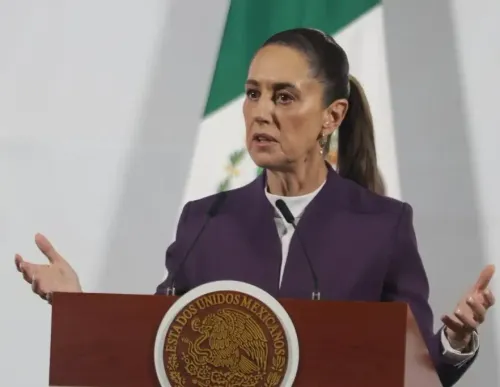
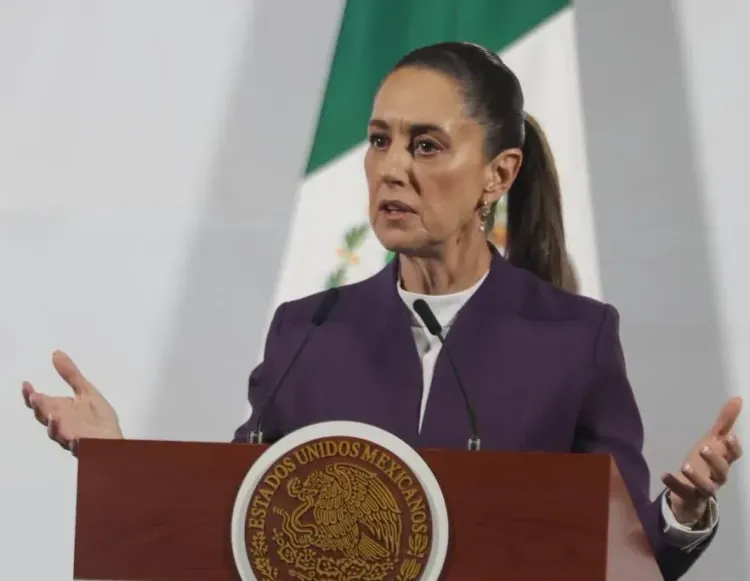
Mexican President Claudia Sheinbaum said on 22 May that her government will assess the potential fallout on remittances from a new US executive order that tightens financial services access for undocumented migrants. The announcement came during Sheinbaum's daily press conference in Mexico City, where reporters pressed her on whether the measure could disrupt the billions of dollars Mexicans working in the United States send home each year.
What the US Executive Order Does
US President Donald Trump signed the executive order on 19 May, directing banks and financial regulators to flag customers based on their immigration and citizenship status. The order tightens oversight of cross-border transfers and of identification documents used to open bank accounts or apply for other financial services.
In a White House press release, Trump argued that lending to migrants without legal work authorisation creates a structural repayment risk. 'Many of those borrowers face the possibility of the loss of wages due to removal or their employers' decisions to comply with immigration law,' Trump said. 'Lending to aliens without legal work authorization or who face a substantial loss-of-wage risk creates a structural "ability to repay" deficiency that undermines the safety and soundness of the national banking system,' he added.
Mexico's Initial Assessment
According to Sheinbaum, Mexico's finance ministry and the country's newly appointed ambassador to the United States, Roberto Lazzeri, are jointly analysing the measure. Their preliminary conclusion, she said, is that there is 'no major risk' — though the assessment is ongoing.
Remittances are among Mexico's largest sources of foreign currency inflows, making any disruption to the transfer pipeline a significant macroeconomic concern. This is the latest in a series of US immigration enforcement moves that have prompted Mexico City to conduct diplomatic and economic impact reviews.
Proposed Remittance Tax Adds to Pressure
Separately, the US Congress is considering a proposal to impose a 5 per cent tax on remittances sent abroad. Currently, only cash-based transfers are subject to a 1 per cent tax. Mexican officials have argued that such a levy would amount to 'double taxation,' since Mexican migrants already pay taxes in the United States.
The combination of tighter banking oversight and a potential remittance tax represents a compounding threat to households in Mexico that depend on transfers from relatives abroad.
Broader Immigration Enforcement Context
Trump's executive order is part of a wider crackdown on undocumented immigration that has increasingly drawn financial institutions into the enforcement apparatus. By placing banks and financial records at the centre of immigration checks, the order could heighten scrutiny for a broad range of immigrant communities — not just undocumented workers.
Analysts note that the practical implementation of such 'red flag' requirements on banks remains unclear, and legal challenges are widely anticipated. Mexico's government is expected to present a fuller assessment once the ambassador's review is complete.
Point of View
Not a settled assessment — the review is still under way. The real exposure is structural: if US banks begin applying immigration-status filters to account access and transfers, the informal and semi-formal corridors through which a large share of remittances flow could face sudden friction. Layer on a potential 5 per cent congressional remittance tax, and Mexico is looking at a pincer movement on its second-largest source of foreign exchange. The government's measured tone is understandable, but the speed with which it appointed its new ambassador to co-lead the review signals that officials are taking the risk more seriously than the public statement implies.
NationPress
7 Oct 2026
Frequently Asked Questions
What is the US executive order that Mexico is concerned about?
US President Donald Trump signed an executive order on 19 May directing banks and financial regulators to examine customers' immigration and citizenship status as part of broader immigration enforcement. The order tightens oversight of cross-border money transfers and the identification documents used to access banking services.
How could the executive order affect remittances to Mexico?
The order could make it harder for undocumented Mexican migrants to access bank accounts or wire-transfer services, potentially disrupting the flow of remittances — one of Mexico's largest sources of foreign currency. Mexico's finance ministry and its US ambassador are currently assessing the scale of the risk.
What has President Sheinbaum said about the threat to remittances?
President Claudia Sheinbaum said on 22 May that the preliminary conclusion of the joint government review is that there is 'no major risk,' but stressed that the analysis is ongoing. She confirmed that the finance ministry and newly appointed US ambassador Roberto Lazzeri are leading the assessment.
What is the proposed US remittance tax and why does Mexico oppose it?
The US Congress is considering a 5 per cent tax on all remittances sent abroad, compared with the current 1 per cent tax that applies only to cash transfers. Mexican officials argue the proposal amounts to double taxation because Mexican migrants already pay income and other taxes in the United States.
Why are remittances so important to Mexico?
Remittances — money sent home by Mexicans working abroad, primarily in the United States — rank among Mexico's largest sources of foreign currency inflows, ahead of many export sectors. Any sustained reduction in these flows would have a direct impact on household incomes across the country.