How does the US Federal Reserve connect weak jobs to immigration slowdown?
Synopsis
In a recent statement, Jerome Powell, Chair of the US Federal Reserve, linked the slowdown in job growth to declining immigration rates. This article explores the intricate dynamics between labor supply and demand, the state of the job market, and the implications for economic policy.
Key Takeaways
Job growth slowdown linked to lower immigration.
Unemployment rate stable at 4.4% .
Total nonfarm payrolls declined by an average of 22,000 monthly.
Labor demand and supply both experiencing significant decreases.
Federal Reserve monitoring the evolving labor market dynamics.
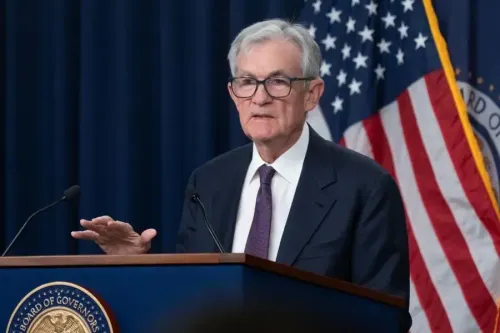
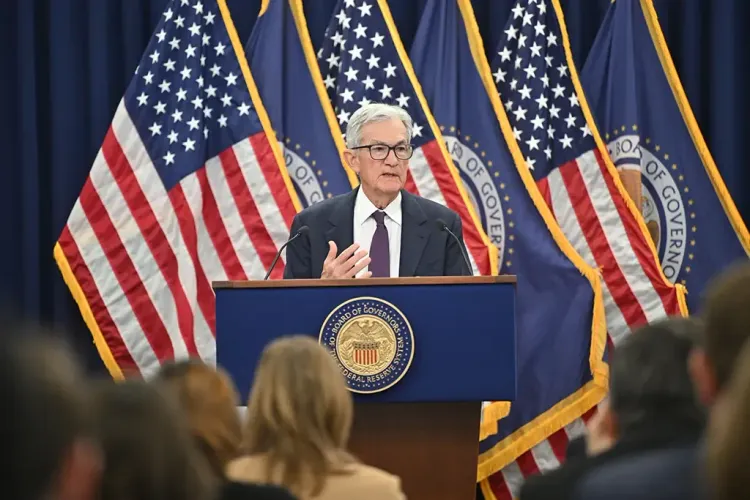
Washington, Jan 29 (NationPress) Jerome Powell, the Chair of the US Federal Reserve, indicated that the deceleration in job growth is partially due to a significant reduction in the labor supply caused by diminished immigration.
On Wednesday, Powell remarked that the conditions in the labor market “may be stabilizing after a period of gradual softening.” The unemployment rate stood at 4.4 percent in December, showing little variation in recent months.
Despite this, job growth has been lackluster. “On average, total nonfarm payrolls decreased by 22,000 each month over the past three months,” Powell noted. Excluding government positions, private payrolls increased by an average of 29,000 per month.
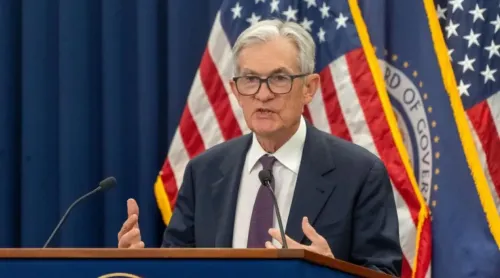
Powell explained that the slowdown is attributed to factors on both ends of the labor market. “A significant part of the deceleration in job growth over the last year can be linked to a reduction in labor force growth due to lower immigration and decreased labor force participation,” he stated.
He also mentioned that “labor demand has evidently softened as well.”
Powell pointed out that other indicators show minimal recent changes, including job openings, layoffs, hiring, and wage growth. These metrics suggest potential stabilization, though he advised against overinterpreting the data.
“There are also some signs of continued cooling,” Powell added. He noted that the Fed has removed previous warnings regarding increasing downside risks to employment.
He stated that the distortions caused by the federal government shutdown are diminishing, with December's impact being less severe than that of November.
Powell remarked that the outlook for economic growth has improved since the last Fed meeting, suggesting that enhanced growth could influence labor demand over time.
He characterized the current situation as unusual, noting that both labor supply and demand have sharply declined, complicating the interpretation of the job market.
“If demand and supply are balanced,” he commented, “one could argue that’s full employment.” However, he acknowledged that this raises complex questions regarding what constitutes maximum employment.
The US labor market experienced a surge post-pandemic, with immigration and participation rebounding. Recent policy and administrative adjustments have resulted in a decrease in immigration flows.
Changes in labor supply can significantly impact job growth, wage pressures, and inflation, making them critical components in Federal Reserve policy decisions.
Point of View
It's clear that the interplay between immigration and labor market dynamics is a critical topic. As labor supply diminishes amid changing immigration policies, understanding these trends becomes essential for stakeholders across the economy.
NationPress
26 Sept 2026
Frequently Asked Questions
What has caused the slowdown in job growth according to Jerome Powell?
Jerome Powell attributed the slowdown in job growth to a significant decline in labor supply, largely driven by lower immigration rates.
What is the current unemployment rate in the US?
The unemployment rate in the US was reported at 4.4 percent in December.
How have labor demand and supply changed recently?
Both labor demand and supply have sharply declined, complicating the interpretation of the job market.
What are the implications of reduced labor supply?
Reduced labor supply can affect job growth, wage pressures, and inflation, which are key factors in Federal Reserve policy decisions.
Are there any signs of stabilization in the labor market?
Powell indicated that some indicators suggest potential stabilization, although caution is advised in interpreting the data.