U.S. Federal Reserve Holds Interest Rates Steady Amid Oil Price Concerns
Synopsis
Jerome Powell, Chair of the Federal Reserve, announces the decision to keep interest rates unchanged while monitoring the impact of rising oil prices and geopolitical uncertainties. The U.S. economy shows resilience, but inflation remains a concern.
Key Takeaways
The Federal Reserve is keeping interest rates steady at 3.5 to 3.75 percent .
Inflation remains above the 2 percent target, with total PCE prices increasing by 2.8 percent .
Powell emphasizes uncertainty regarding the impact of rising oil prices on the economy.
The Fed will make decisions on interest rates based on economic data, meeting by meeting.
The labor market shows signs of weakness, with concerns about private-sector job creation.
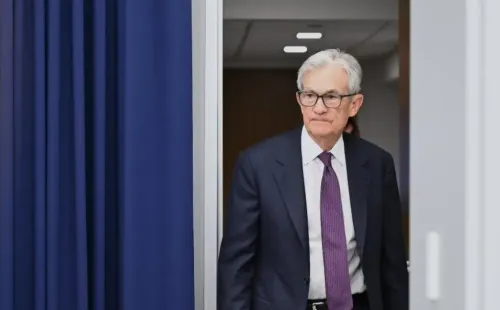
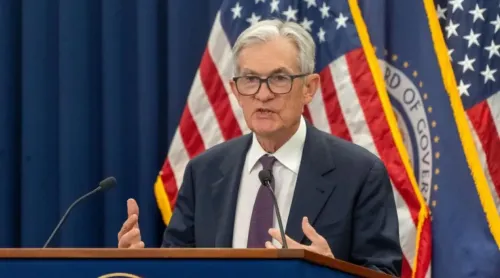
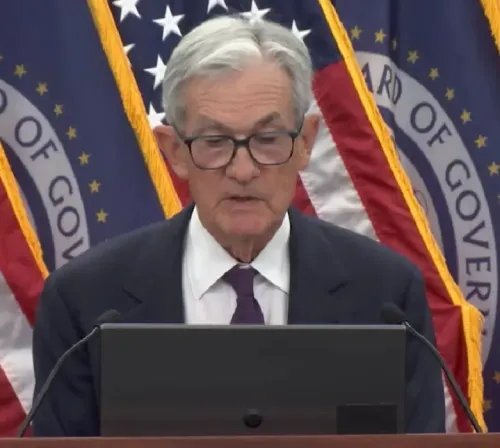
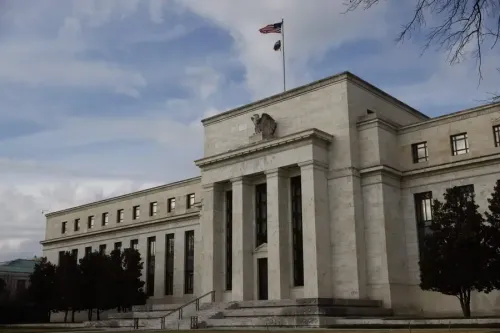
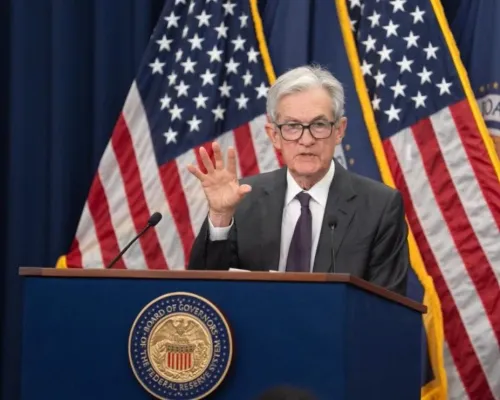
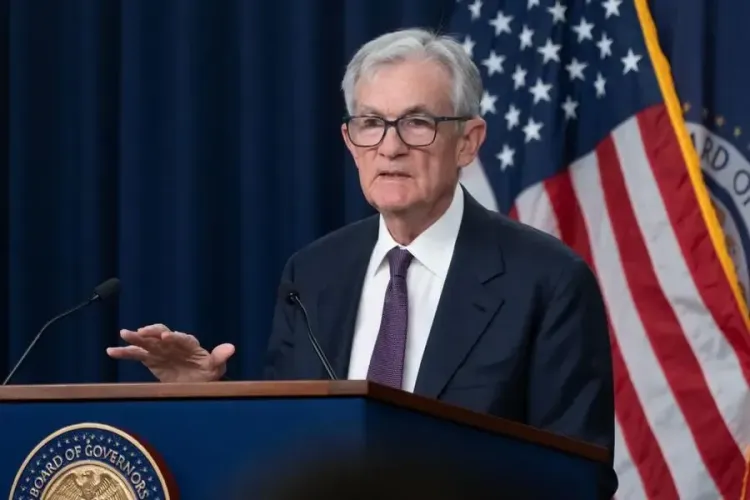
Washington, March 19 (NationPress) Federal Reserve Chair Jerome Powell announced that the U.S. central bank would maintain its current interest rates as it observes the implications of rising oil prices and the broader uncertainties stemming from the ongoing conflict in the Middle East.
On Wednesday (local time), Powell indicated that the Federal Open Market Committee chose to keep its policy rate stable, asserting that the existing position was suitable. He noted that the U.S. economy was advancing at a "solid pace", despite inflation remaining above target levels and signs of a softening labor market.
Powell remarked, “The implications of developments in the Middle East for the U.S. economy are uncertain.” He emphasized the need to remain vigilant to risks concerning both aspects of the Fed's dual mandate.
The target range for the federal funds rate was held steady at 3.5 to 3.75 percent. Although inflation had significantly decreased from its peak in 2022, it was still above the central bank’s 2 percent target. Estimates indicated that total PCE prices increased by 2.8 percent over the year ending in February, while core PCE prices rose 3.0 percent.
Powell explained that the latest inflationary pressures were primarily driven by goods inflation and tariffs, with the recent surge in energy costs adding an additional layer of risk. “In the near term, higher energy prices will push up overall inflation, but it is too soon to know the scope and duration of the potential effects on the economy,” he elaborated.
When questioned about the Fed's response to sustained high oil prices or potential disruptions in supply chains due to the conflict, Powell reiterated the uncertainty: “Nobody knows,” he said. “The economic effect could be bigger. They could be smaller. They could be much smaller or much bigger. We just don’t know.”
He clarified that the Fed was not on a predetermined path and would make decisions on a meeting-by-meeting basis. While the median projection showed expectations for lower rates later this year, Powell emphasized that any reduction would hinge on whether inflation slows as anticipated. “If we don’t see that progress, then you won’t see the rate cut,” he stated.
When asked if the central bank could disregard an energy shock, Powell indicated it would depend on keeping inflation expectations anchored. He stated that five years of inflation above target could not be overlooked. “We are very strongly committed to doing what it takes to keep inflation expectations anchored at 2 percent,” he affirmed.
Regarding the labor market, Powell pointed out a decline in headline job growth, although the unemployment rate remained relatively stable. He noted that slower labor force growth, primarily due to decreased immigration and participation, had altered how policymakers interpret employment data. Nonetheless, he expressed concern over the sluggish rate of private-sector job creation.
Powell dismissed comparisons to the stagflation of the 1970s, stating that while the current mix of inflation and employment pressures was challenging, it was far less severe. “That is not the situation we’re in,” he asserted.
He also mentioned that the U.S. economy has shown remarkable resilience amid various challenges in recent years, stating, “The U.S. economy has really been just doing pretty well through a lot of significant challenges over the past few years.”
The Fed has kept rates steady after a reduction of three-quarters of a percentage point between September and December, a move Powell indicated helped bring policy closer to neutral. The central bank has since been evaluating whether inflation is declining sufficiently to warrant further easing.
The Fed's dual mandate requires it to aim for both maximum employment and price stability. This balance has become increasingly complex following a series of shocks, including the pandemic, tariffs, and the recent surge in oil prices linked to geopolitical tensions.
Point of View
Jerome Powell's announcement regarding the interest rates reflects a careful approach to balancing inflation concerns with economic growth. The Fed's steady stance indicates a commitment to monitoring global conditions, particularly the volatility in oil prices, while striving to uphold its dual mandate of maximum employment and price stability.
NationPress
23 Sept 2026
Frequently Asked Questions
Why did the Federal Reserve decide to keep interest rates unchanged?
The Federal Reserve decided to maintain interest rates due to ongoing uncertainties related to rising oil prices and the broader geopolitical situation in the Middle East.
What are the current inflation rates according to the Fed?
The Fed reported that total PCE prices rose 2.8% over the past year, while core PCE prices increased by 3.0%.
How has the labor market been performing?
Despite a slowdown in job growth, the unemployment rate has remained stable, although there are concerns about the low pace of private-sector job creation.
What are the risks associated with rising oil prices?
Rising oil prices pose risks of increased overall inflation and potential disruptions to supply chains, which could impact the U.S. economy.
Is the Fed planning to cut interest rates this year?
While there are projections for lower rates later this year, any cuts will depend on whether inflation declines as expected.