US Monetary Policy Faces Growing Uncertainty Amid Middle East Tensions
Synopsis
As tensions rise in the Middle East, the uncertainty surrounding US monetary policy deepens. The Federal Reserve's recent decisions have left markets on edge, with potential implications for South Korea's economy. How will these developments shape the financial landscape?
Key Takeaways
US monetary policy uncertainty is increasing due to Middle East tensions.
The Federal Reserve is maintaining its interest rate at 3.5-3.75% .
The Bank of Korea is likely to continue its rate pause .
Inflationary pressures are rising due to increased oil prices .
The Korean won has fallen sharply against the US dollar.
Seoul, March 19 (NationPress) Concerns regarding the trajectory of US monetary policy have intensified amid escalating tensions in the Middle East, as noted by a senior figure at South Korea's central bank on Thursday.
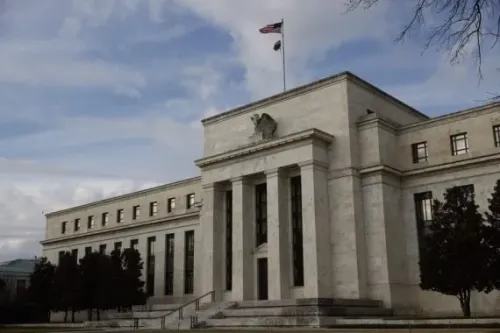
On Wednesday (U.S. time), the Federal Reserve opted to retain its benchmark interest rate steady within the 3.5-3.75 percent bracket for the second time in a row, while still projecting one rate cut for the year.
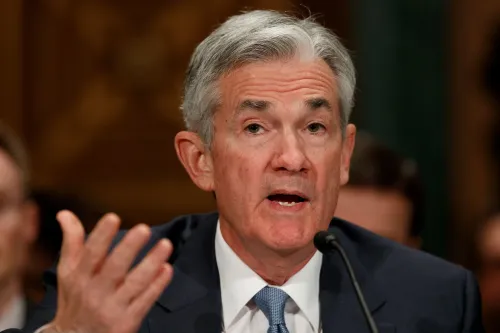
During a press briefing after the decision, Fed Chair Jerome Powell indicated that the rise in oil prices has amplified inflationary pressures, hinting at a cautious approach regarding the timing of any future rate cuts, as reported by Yonhap news agency.
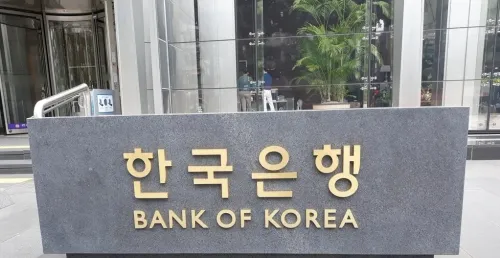
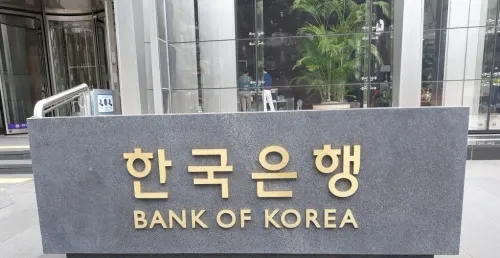
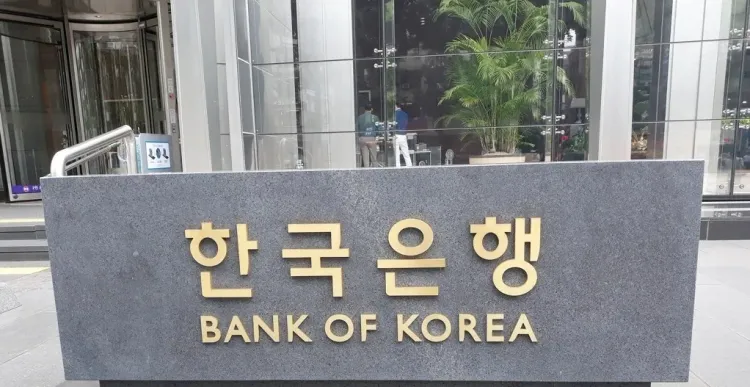
"In light of the Federal Open Market Committee meeting outcomes, uncertainty surrounding the Federal Reserve's monetary policy trajectory has grown, especially with external risk factors, including ongoing unrest in the Middle East, remaining a concern," remarked Bank of Korea (BOK) Deputy Governor Yoo Sang-dai during a market evaluation meeting.
"We will stay vigilant and carefully watch the development of both internal and external risks and their potential effects on the markets and the economy," Yoo affirmed, pledging to implement "timely measures for market stabilization" if required.
Given the Fed's current position, the BOK is anticipated to uphold its extended rate pause.
At its recent policy meeting in February, the BOK held its key rate steady at 2.5 percent, marking the sixth consecutive hold as it aims to bolster financial stability amid a weakening won and to mitigate the overheated real estate market.
At present, the interest rate differential between South Korea and the United States is 1.25 percentage points, with experts cautioning that an increased gap could lead to foreign capital flight and further devaluation of the Korean won.
The local currency has experienced a significant decline against the U.S. dollar since the onset of the U.S.-Israeli conflict with Iran earlier this month, surpassing the psychologically and technically important 1,500 won threshold during intraday trading this week.
Point of View
The increasing uncertainty in US monetary policy, especially in the context of geopolitical tensions, poses significant challenges for both local and global markets. The Bank of Korea's cautious stance reflects a broader awareness of the potential economic fallout.
NationPress
19 Sept 2026
Frequently Asked Questions
What is the current interest rate set by the Federal Reserve?
The Federal Reserve has kept its benchmark interest rate unchanged in the range of 3.5-3.75 percent.
How has the Middle East crisis affected global markets?
The ongoing tensions have heightened uncertainty and inflationary pressures, particularly impacting oil prices and currency valuations.
What is the Bank of Korea's current monetary policy?
The Bank of Korea is maintaining its key rate at 2.5 percent, focusing on financial stability amid economic pressures.
What are the implications of a widening interest rate gap?
A larger interest rate differential between South Korea and the United States could lead to capital outflows and further weaken the Korean won.
What has been the recent trend in the Korean won's value?
The Korean won has significantly depreciated against the U.S. dollar, recently breaching the 1,500 won threshold.