South Korea Maintains Key Interest Rate Amid Middle East Tensions
Synopsis
In a strategic move, South Korea's central bank has opted to keep its benchmark interest rate steady at 2.5% as global tensions rise due to the ongoing conflict in the Middle East, raising concerns over inflation and economic stability.
Key Takeaways
Bank of Korea holds interest rate at 2.5% .
Seventh consecutive rate hold amid global tensions.
Inflationary pressures rising due to Middle East conflict.
Korean won weakens, nearing 1,500 level.
Experts warn of potential currency depreciation.
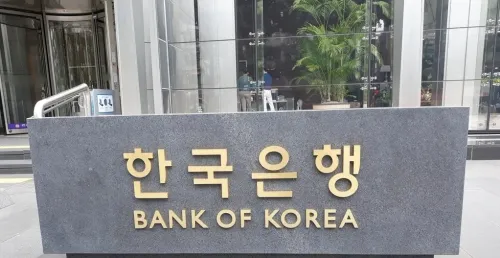
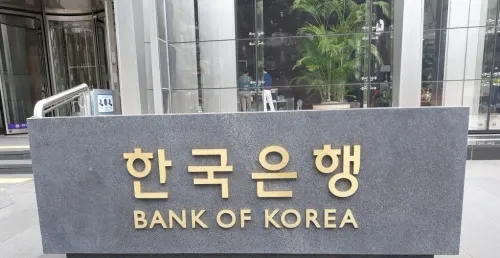
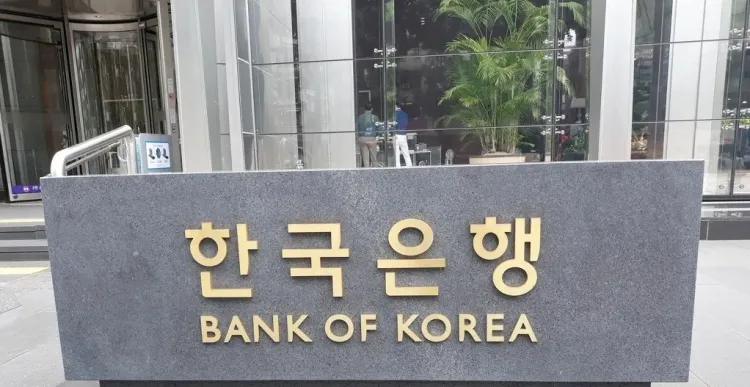
Seoul, April 10 (NationPress) The central bank of South Korea decided to maintain its benchmark interest rate on Friday, reflecting a cautious approach due to the prevailing uncertainties in the Middle East which raise concerns over inflation, currency devaluation, and a slowdown in economic growth.
In a decision that was widely expected, the Bank of Korea's Monetary Policy Board kept the key rate steady at 2.5 percent during its recent meeting in Seoul, as reported by Yonhap news agency.
This marks the seventh consecutive time the rate has been held steady, even as the bank continues its monetary easing cycle.
The BOK initiated its monetary easing strategy in October 2024, reducing the benchmark interest rate by a total of 100 basis points from 3.5 percent to stimulate economic growth, but has kept it at the current level since July 2025.
In a statement, the BOK emphasized the significant uncertainty surrounding future developments in the Middle East, highlighting the rising inflationary pressures, potential growth risks, and increased volatility in financial and foreign exchange markets due to the ongoing war in the region.
The decision to freeze the rate was unanimous, as noted by the BOK.
"Today’s decision was not merely a delay in judgment, but reflects the necessity to closely monitor the progression of the Middle East conflict and its potential repercussions before adjusting policy. If the supply shock proves to be temporary, we will refrain from making interest rate changes," stated BOK Governor Rhee Chang-yong during a press briefing.
Experts believe that the BOK is facing a challenging policy dilemma as the conflict in the Middle East, which escalated in late February following U.S.-Israeli strikes on Iran, has grown into a larger regional crisis, exacerbating inflationary pressures and foreign exchange instability.
Consumer prices increased by 2.2 percent in March compared to the previous year, up from 2 percent in February, primarily driven by a spike in global oil prices due to supply disruptions.
Although inflation remains close to the 2 percent target, the modest rise in March was largely supported by the government's fuel price cap and reduced volatility in fresh food prices. The BOK has cautioned that further upward pressure could materialize as the effects of the Middle East conflict unfold.
"Consumer price inflation for the year is projected to significantly surpass the February forecast of 2.2 percent," the BOK stated.
Recently, the Korean won has experienced considerable depreciation, hovering around the crucial 1,500 level, its lowest since 2009 when the nation faced the global financial crisis.
Concerns regarding inflation and further currency depreciation remain as a fragile two-week ceasefire between the U.S. and Iran keeps uncertainty elevated, while analysts suggest that global oil prices are unlikely to revert to pre-conflict levels. Additionally, the local currency is under pressure from ongoing net selling of domestic stocks by foreign investors.
A reduction in interest rates could lead to capital outflows, which might further weaken the currency, experts warn.
Point of View
It is evident that the Bank of Korea's decision to hold the interest rate steady amidst escalating regional tensions underscores the delicate balance policymakers must strike between supporting growth and managing inflationary risks. The situation requires careful monitoring to ensure economic stability.
NationPress
15 Oct 2026
Frequently Asked Questions
Why did South Korea's central bank keep the interest rate unchanged?
The Bank of Korea maintained the benchmark rate at 2.5% due to uncertainties from the Middle East conflict, which raises inflation risks and economic stability concerns.
What has been the trend in South Korea's interest rates?
The Bank of Korea has kept the interest rate unchanged for seven consecutive meetings since initiating a monetary easing cycle in October 2024.
What are the implications of the Middle East conflict on South Korea's economy?
The ongoing conflict has heightened inflationary pressures and increased volatility in financial markets, prompting a cautious approach from the Bank of Korea.
How has consumer inflation changed recently in South Korea?
Consumer prices rose 2.2% in March from a year earlier, influenced largely by a surge in global oil prices amidst supply disruptions.
What is the current status of the Korean won?
The Korean won has weakened significantly, hovering around the critical 1,500 level, reflecting concerns over inflation and currency stability.