US Advocates for Permanent Ban on Digital Tariffs Amid India's Resistance
Synopsis
In a significant push ahead of the WTO ministerial, US lawmakers are advocating for a permanent ban on tariffs for digital products, while India's opposition poses a substantial obstacle. Experts warn that failure to extend the current moratorium could severely impact global trade and India's digital economy.
Key Takeaways
US lawmakers advocate for a permanent ban on digital tariffs.
India's opposition presents a significant challenge to this initiative.
Failure to extend the moratorium could impact global trade .
India's digital economy contributes 11% to its GDP .
Collaboration in technology sectors may hinge on aligning digital trade policies .
Washington, March 18 (NationPress) US legislators are advocating for a permanent prohibition on tariffs concerning digital products as the WTO ministerial approaches, with India's dissent presenting a significant challenge. During a Congressional session, officials emphasized that maintaining the moratorium on customs duties for electronic transmissions is a primary focus. This rule has been active since 1998.
The moratorium prevents nations from imposing taxes on digital commerce, including software, data, and online services.
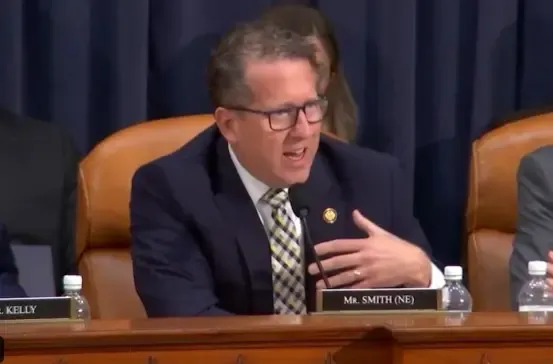
Adrian Smith, the Chairman of the House Ways and Means Committee, stated that the United States aims to achieve results that “favor American businesses of all sizes.” He asserted that the rule should not be leveraged during negotiations.
Experts cautioned that failing to extend the moratorium might negatively impact global trade.
Stephen Ezell, vice president for global innovation policy at the Information Technology and Innovation Foundation, stressed, “It is crucial that America's top priority at MC 14 is to secure the continuation of the WTO moratorium on customs duties for electronic transmissions.”
“A lapse in this moratorium would significantly increase costs for global digital trade and adversely affect US digital exporters,” he remarked.
Ezell indicated that exports might decrease “by as much as 1 percent almost immediately.”
India has frequently been identified as a pivotal player in this decision-making process.
Kelly Ann Shaw from Akin’s lobbying & public policy group accused, “India, in particular, has kept the e-commerce moratorium in limbo for nearly 30 years.”
She mentioned that the WTO framework permits countries to obstruct decisions.
Witnesses noted that India has associated this matter with other demands, including public stockholding and agricultural subsidies.
US experts expressed concerns about potential repercussions for India.
Ezell highlighted that India’s digital economy constitutes “11 percent of Indian GDP.”
“Should India succeed in letting the WTO e-commerce moratorium lapse, it could devastate their digital economy,” he warned.
He pointed out that tariffs on digital transactions could disrupt critical sectors, including semiconductors and data services.
The hearing also addressed agricultural issues.
Peter Bachmann remarked that global markets suffer from subsidy distortions.
“An American rice farmer isn’t competing against an Indian rice farmer. They’re competing against the Indian government,” he stated.
He noted India’s previous attempts to secure permanent exceptions on public stockholding at earlier meetings.
Bachmann cautioned that “there’s no reason to believe MC 14 will be any different.”
Lawmakers reiterated India's significance as a partner, highlighting collaboration in sectors such as semiconductors, artificial intelligence, and renewable energy.
Ezell asserted that strengthening ties would necessitate alignment on digital trade.
“If they aspire to be a crucial ally for the United States in advanced technology sectors,” he emphasized, “it’s time for a more sophisticated approach to trade policy in the global digital economy.”
The hearing revealed divisions within Washington regarding the WTO.
Some lawmakers defended it as a rules-based entity, while others claimed it struggles to produce results.
Shaw remarked that “an organization reliant on consensus is unlikely to be part of the solution.”
Bruce Hirsh acknowledged the WTO’s ongoing relevance, asserting that its regulations and committees help manage trade challenges.
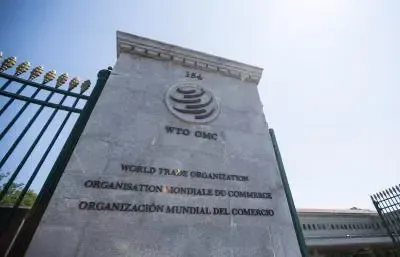
The WTO comprises 166 members and operates on a consensus basis.
The digital trade moratorium has been renewed multiple times but has never been established as permanent. Its outcome at MC14 will test the WTO's ability to adapt to the realities of the digital economy.
Point of View
It is imperative to highlight the critical stakes involved in the ongoing negotiations over digital tariffs. The US is pushing for a permanent moratorium, which could significantly impact global trade dynamics. India's position, linked to broader agricultural demands, complicates this issue, underscoring the need for collaborative solutions in the digital realm.
NationPress
24 Sept 2026
Frequently Asked Questions
What is the current status of the digital tariff ban?
US lawmakers are advocating for a permanent ban on tariffs on digital products, while India’s opposition remains a significant hurdle.
Why is the digital tariff moratorium important?
The moratorium prevents countries from taxing digital trade, which encompasses software, data, and online services, thereby facilitating smoother global commerce.
What could happen if the moratorium lapses?
Experts warn that a lapse could raise costs for global digital trade and negatively impact US digital exporters, potentially reducing exports by as much as 1% immediately.
How does India factor into this discussion?
India is seen as a crucial player in the negotiation process, having tied the moratorium issue to its demands for public stockholding and farm subsidies.
What are the broader implications for US-India relations?
Stronger ties in technology sectors depend on aligning digital trade policies, which could enhance collaboration in areas like semiconductors and artificial intelligence.