US Critiques WTO's Ineffectiveness as Trade Talks Stall
Synopsis
The United States has expressed severe criticism of the WTO's performance, highlighting its ineffectiveness in addressing digital trade rules. US Trade Representative Jamieson Greer emphasizes the urgent need for reform in light of stalled international trade discussions.
Key Takeaways
US Criticism: The US deems the WTO ineffective, particularly after recent stalled negotiations.
Digital Trade Issues: A permanent moratorium on digital goods tariffs was proposed but failed.
Consensus Challenges: The requirement for unanimous agreement among 166 member nations hinders progress.
Shift to Bilateral Agreements: The US plans to focus on regional and bilateral trade arrangements.
Future of WTO: Questions arise about the WTO's role in contemporary trade dynamics.
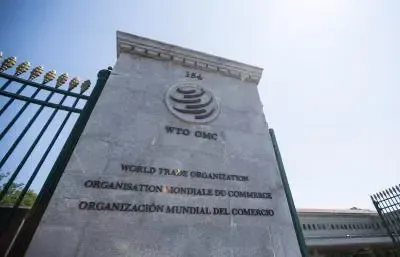
Washington, April 8 (NationPress) The United States has issued a strong critique of the World Trade Organization's (WTO) operations, with US Trade Representative Jamieson Greer labeling it as “ineffective and dysfunctional” after the 14th Ministerial Conference failed to achieve substantial reform, especially concerning digital trade regulations.
In an op-ed featured in The Wall Street Journal on Wednesday, following the conference held in Yaoundé, Cameroon, Greer remarked that the WTO is no longer considered a “serious forum” and cautioned that its failure to act is jeopardizing global trade stability.
“I arrived a skeptic of the WTO and left even more so,” Greer remarked, describing the conference as one characterized by low attendance from senior ministers and minimal advancements on critical subjects.
Central to the disagreement was the longstanding moratorium on tariffs for digital products such as software and music — a policy established in 1998. The United States, along with 24 co-sponsors, had suggested making this moratorium permanent to provide certainty in digital trade.
“This would prevent future ministerial conferences from wasting time on a non-issue while proving that the WTO can play a role in upcoming trade negotiations,” Greer stated.
Despite widespread support, the initiative didn’t pass due to the WTO's consensus-driven decision-making process, which requires unanimity from all 166 member nations. Some countries advocated for a limited extension, while others conditioned their support on unrelated issues.
“Even with broad backing, the necessity for consensus among all WTO member countries hindered progress,” Greer expressed.
Efforts to reach a compromise also faltered. While 164 members were ready to extend the moratorium for roughly four years, Greer highlighted that “delegations from Brazil and Turkey insisted on maintaining the two-year renewal cycle,” which obstructed advancement.
This impasse underscores more profound structural challenges within the WTO, according to the U.S. evaluation. Greer contended that conflicting priorities among member states and the ability of countries to stymie decisions make meaningful reform nearly unattainable.
“As all 166 members must agree to implement new regulations, and members hold varying perspectives on numerous issues… achieving consensus is almost impossible,” he articulated.
The United States has increasingly indicated that it will not depend on the WTO to tackle contemporary trade issues. Greer mentioned that Washington is pursuing regional and bilateral agreements to address trade deficits and secure supply chains.
“The U.S. is not going to wait three decades for the WTO to meet the needs of American workers and businesses,” he added, noting that recent reciprocal trade agreements aim to “open foreign markets while shielding domestic production.”
He also criticized the WTO's historical performance, asserting that it inadequately responded to the “China shock” and continues to face challenges with enforcement and compliance matters.
“The WTO dispute-resolution system devolved into a venue for endless litigation… which discouraged the resolution of disputes,” Greer stated.
The stalled discussions in Yaoundé have been referred back to WTO headquarters in Geneva for additional dialogue, although Greer expressed doubt about any significant breakthroughs. “Unless members can produce a miracle, the outcome… is less certainty on e-commerce and poorer prospects for a broader reform agenda,” he concluded.
Point of View
The critique of the WTO by the United States signals a critical moment in international trade relations. The inability to reach consensus on digital trade rules raises concerns about the future of multilateral negotiations, pushing nations toward bilateral agreements that may reshape the global trade landscape.
NationPress
19 Sept 2026
Frequently Asked Questions
What did the US Trade Representative say about the WTO?
US Trade Representative Jamieson Greer described the WTO as 'ineffective and dysfunctional' and raised concerns about its inability to reform, particularly regarding digital trade rules.
Why did the proposal for a permanent moratorium on digital goods tariffs fail?
The proposal failed due to the WTO's consensus-based decision-making system, which requires agreement from all 166 member countries, leading to disagreements among nations.