US Trade Chief Greer Affirms Tariff Policy Stability Post-Supreme Court Ruling
Synopsis
In a recent statement, U.S. Trade Representative Jamieson Greer assured that despite the Supreme Court's decision to overturn much of Trump's tariffs, the administration is equipped with durable tools to maintain its tariff policy and ensure continuity in trade strategy.
Key Takeaways
Tariff Policy Stability: The Trump administration is committed to maintaining its tariff strategies despite legal challenges.
Alternative Legal Frameworks: New legal authorities will be utilized to continue tariff imposition.
Broad Definition of National Security: Manufacturing is seen as integral to national security concerns.
Global Tariff Application: The 15 percent tariff is applicable to all countries, reflecting a non-discriminatory approach.
Ongoing Investigations: Active investigations into unfair trading practices, particularly concerning nations like Brazil and China.
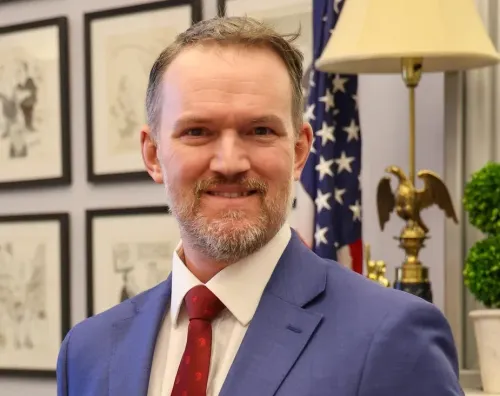
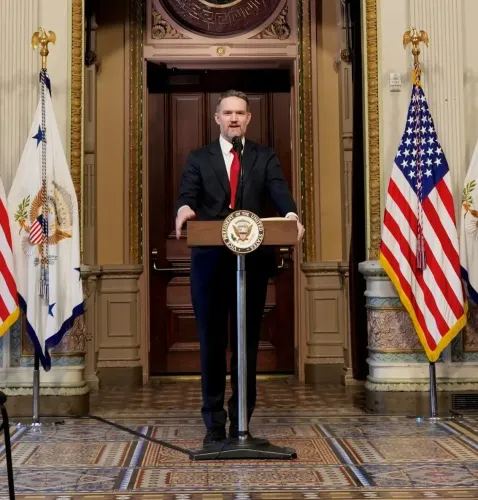
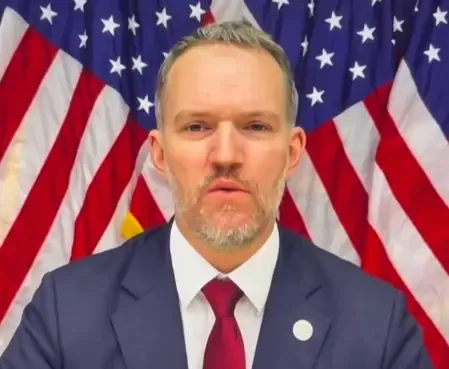
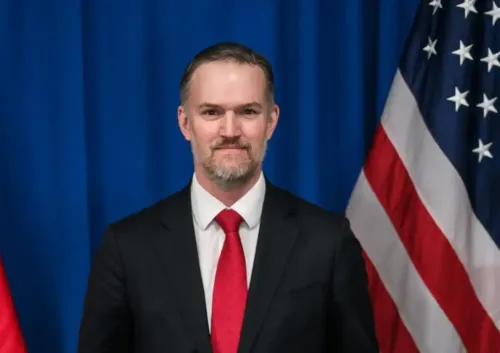
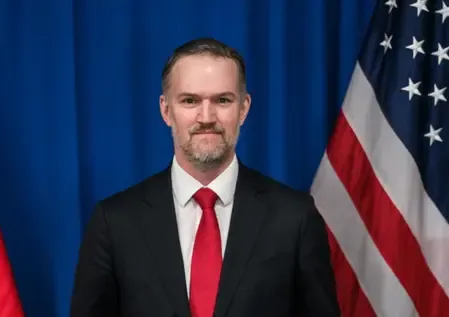
Washington, Feb 22 (NationPress) The U.S. Trade Representative, Jamieson Greer, stated that the Trump administration possesses robust mechanisms to maintain its tariff-centric trade strategy, even after the Supreme Court invalidated a significant portion of President Donald Trump's extensive tariffs. Greer emphasized that the White House is focusing on continuity while transitioning to other legal frameworks and ongoing investigations.
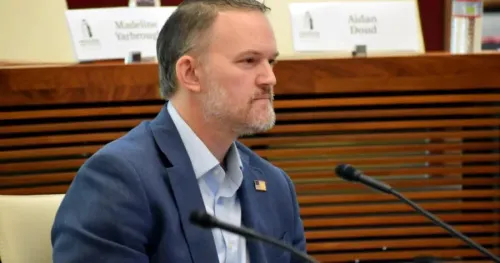
In a conversation with a leading U.S. news outlet, Greer mentioned that the Trump administration had established contingency plans to address the potential loss of previous authority.
“We discovered ways to effectively reconfigure our approach,” he asserted, noting that while the current method lacks the same flexibility as the prior authority, it provides durable tools.
Greer reiterated that the fundamental strategy remains consistent.
“The policy itself remains unchanged,” he stated.
“The legal methods for implementation may evolve, but the policy stays intact. Our goal is to ensure continuity.”
When questioned about why President Trump did not utilize these tools initially, Greer explained that the original decision was primarily motivated by the need for rapid action.
“It largely revolved around the urgency to respond,” he remarked, referring to the earlier statute as an emergency statute chosen during a time of what he described as a significant increase in the trade deficit, which saw a 40 percent growth under former President Biden.
Greer noted that the Trump administration now aims to reconstruct its tariff framework using alternative statutes.
“We can rebuild our side of the agreement utilizing Section 301 and Section 232,” he elaborated, characterizing these as “different tariff authorities with clearly defined powers that we can implement and maintain for as long as necessary to address the issues we identify.”
This transition will encompass a combination of new investigations alongside existing measures.
The U.S. Trade Representative indicated that he will be “initiating Section 301 investigations,” while mentioning that the Commerce Department already has tariffs under Section 232.
“Numerous tariffs are still active,” he noted, adding that “businesses recognize this is the direction we are heading. We will continue on this path.”
Regarding the Trump administration's interpretation of “national security” in relation to tariffs, Greer adopted a broad perspective.
“Anything related to manufacturing can significantly contribute to the ecosystem... we must ensure security,” he remarked, citing lessons learned from the Covid-19 pandemic and the necessity for supply chains that support hospitals and the military.
Greer outlined ongoing and future investigative targets.
“We have active Section 301 investigations concerning Brazil and China,” he stated.
He also mentioned forthcoming actions related to “industrial excess capacity,” highlighting that it would involve “many Asian countries with overcapacity.”
Greer indicated that the U.S. administration is also examining unfair trading practices, including “rice imports,” stating that subsidies adversely affect U.S. rice farmers.
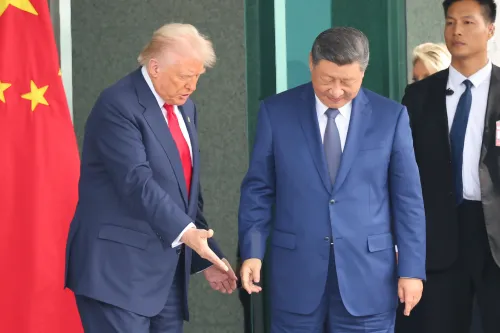
He attempted to minimize the Supreme Court's decision's impact on Trump’s anticipated meeting with Chinese President Xi Jinping, asserting that the global tariff currently in effect “does not single out any nation.”
“As we approach this meeting with President Xi, the objective is not to engage in trade disputes,” Greer stated.
Instead, the U.S. Trade Representative indicated the focus is on ensuring that the Chinese fulfill their commitments to the deal, which includes “purchasing American agricultural products, Boeings, and other items,” as well as “supplying us with the rare earth materials we require.”
When asked if there would be refunds for past tariff collections, Greer mentioned that the U.S. administration is awaiting further court instructions.
“We need the court to provide us with guidance,” he said, noting that the ruling “offered no clarity on this matter.”
While Greer did not mention India specifically during the interview, his emphasis on the U.S. administration's pursuit of continuity, including a “15 percent tariff” that he mentioned “applies globally” and “does not single out any country,” suggests that India, along with other trade partners, would be subject to the comprehensive tariff framework discussed in the interview, even as the Trump administration shifts towards utilizing Section 301 and Section 232 tools alongside broader investigations.
Point of View
Particularly in light of evolving global trade dynamics.
NationPress
30 Sept 2026
Frequently Asked Questions
What did the Supreme Court ruling affect?
The Supreme Court primarily struck down most of President Trump's sweeping tariffs, impacting the administration's previous trade authority.
What are Section 301 and Section 232?
Section 301 and Section 232 are legal provisions that allow the U.S. government to impose tariffs and conduct investigations related to unfair trade practices and national security.
How does the Trump administration define 'national security' in trade?
The Trump administration casts 'national security' broadly, indicating that anything related to manufacturing can influence the overall security ecosystem.
What is the significance of the 15 percent tariff mentioned?
The 15 percent tariff applies globally and is part of the administration's strategy to ensure continuity in trade practices post-Supreme Court ruling.
Will past tariff collections be refunded?
The U.S. administration is currently awaiting further court direction regarding any potential refunds for past tariff collections.