How Will USTR Greer Navigate Trade Policy Changes?
Synopsis
In a pivotal statement, US Trade Representative Jamieson Greer assures that the Trump administration's trade agenda remains intact despite legal challenges. Discover how alternative measures are set to reshape trade practices and what this means for U.S. markets and agreements.
Key Takeaways
Trump administration continues trade agenda.
Alternative legal tools will be utilized.
Ongoing investigations under Section 301.
Existing national security tariffs remain.
Trade agreements under Trump are still valid.
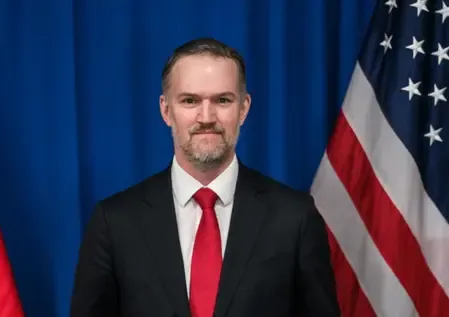
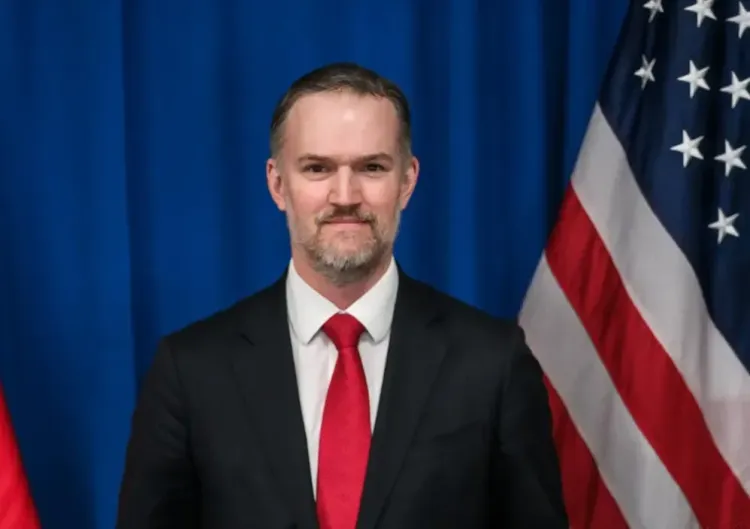
Washington, Feb 21 (NationPress) US Trade Representative Jamieson Greer emphasized that the Trump administration will persist in pursuing the President's trade agenda, even following the Supreme Court ruling that limits the use of emergency tariff powers. He pointed out that alternative legal mechanisms are being utilized.
During an interview with Fox News, Greer affirmed that the administration's strategy remains steadfast, despite potential changes in legal pathways.
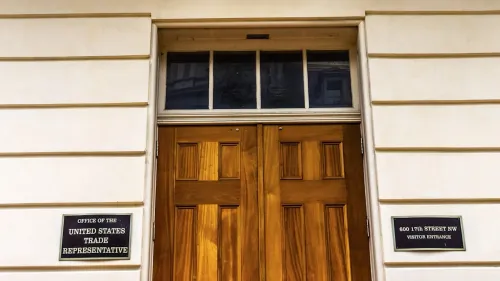
“At the same time, the US Trade Representative's office will commence several investigations under Section 301 concerning unfair trade practices by various nations to determine if tariffs should be imposed should these issues remain unresolved,” Greer stated.
He also mentioned the maintenance of national security measures. “We currently have existing national security tariffs on auto steel, aluminum, and more,” Greer added.
In summarizing the administration’s stance post the Court’s ruling, Greer declared: “While the tools might change, the policy stays the same.”
Greer assured that trade agreements forged during President Trump's tenure continue to be valid and unaffected by these legal developments.
“These agreements have enabled us to secure numerous deals that encompass half of the global population, enhancing market access that hasn't been available for 30 years, and we will simply employ different tools,” he explained.
Reiterating the continuity message, Greer stated: “Once again, while the tools may change, the policy remains constant, as IEEPA was an integral part of that.”
He also aimed to reassure markets and trading partners that the transition from IEEPA-based tariffs will not lead to instability.
“We do not anticipate any disruptions. We foresee continuity in our agreements. Therefore, we believe this will lead to ongoing progress in the President's trade policy, which has seen considerable success,” Greer noted.
In the aftermath of the Supreme Court ruling, the administration introduced a temporary 10 percent global tariff under Section 122 of the Trade Act of 1974 and indicated an expansion of Section 301 investigations into claims of unfair trade practices. The current Section 232 tariffs based on national security concerns remain unchanged.
The message from the US Trade Representative’s office was explicit: while the legal frameworks may evolve, the administration’s overarching goal — to reshape global trade dynamics in favor of US workers and businesses — will proceed uninterrupted.
Point of View
The U.S. administration's commitment to its trade agenda amidst legal challenges reflects a broader strategy to maintain global economic influence. The ongoing use of alternative legal tools indicates a proactive approach to navigating trade complexities while prioritizing domestic interests.
NationPress
29 Sept 2026
Frequently Asked Questions
What does the Supreme Court ruling mean for tariffs?
The ruling limits the use of emergency tariff powers but does not hinder the administration's ability to pursue alternative legal avenues for implementing tariffs.
How will the U.S. trade agenda continue?
The U.S. Trade Representative's office plans to initiate investigations under Section 301 to address unfair trading practices, ensuring that the trade agenda remains active.
What are Section 232 tariffs?
Section 232 tariffs are imposed on imports deemed a threat to national security and will continue to remain in effect despite changes in tariff strategies.