Is Uncertainty Still a Concern After the US Supreme Court's Tariff Ruling?
Synopsis
In a recent turn of events, several German business groups responded positively to a US Supreme Court ruling against Trump's tariffs. However, they are raising concerns about ongoing uncertainties that could impact their operations in the US market. Explore the complexities of international trade policies and their implications on businesses.
Key Takeaways
The US Supreme Court ruled against Trump's tariff policy.
German businesses remain uncertain about future tariffs.
Calls for stable EU trade policies are prominent.
Investment and supply-chain decisions are complicated by uncertainty.
Possible reintroduction of tariffs on EU imports looms.
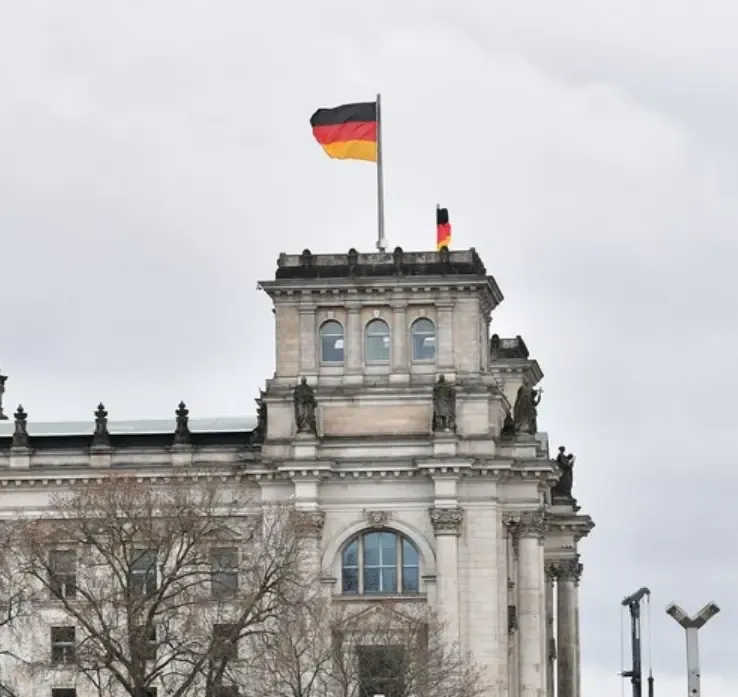
Berlin, Feb 21 (NationPress) A number of prominent German business associations have expressed their approval of the recent ruling by the US Supreme Court, which challenges President Donald Trump's tariff strategy. However, they caution that uncertainty continues to loom for businesses operating in the US.
“Despite today’s decision, while it might become increasingly challenging for the United States to arbitrarily initiate new tariff escalations, the level of uncertainty for German enterprises in the US market remains considerably elevated,” stated Volker Treier, the head of foreign trade at the German Chamber of Commerce and Industry, in a statement released on Friday (local time).
He emphasized the need for the European Union to be prepared for potential new tariffs from the Trump administration, advocating for the establishment of stable and reliable trade policy frameworks, the acceleration of supply-chain diversification, and support for businesses through trade agreements that foster dependable markets with other partners.
The ruling conveys a powerful message in favor of a rules-based trade system and against unilateral actions. However, the ongoing uncertainty will continue to burden multinational corporations, complicating investment and supply-chain planning, as noted by the Federation of German Industries in a statement early Saturday.
“The tangible effects of the ruling are yet to be determined, which only adds to the lingering uncertainty faced by our firms,” remarked the German Engineering Federation (VDMA) in a statement.
The VDMA also pointed out that a 15% tariff on EU imports could be reinstated in the near future, highlighting that Trump still possesses other avenues to impose tariffs globally, as reported by Xinhua news agency.
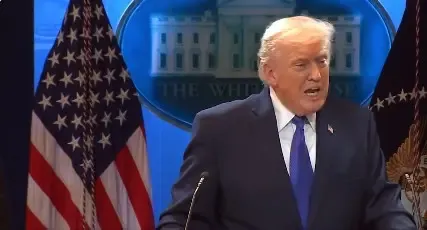
Shortly after the US Supreme Court's ruling against Trump’s tariff policy, he enacted an executive order to impose 10% tariffs on imported goods from all countries, according to one of his social media updates on Friday.
The US Supreme Court ruled earlier on Friday that Trump’s extensive tariffs, enacted under a law intended for national emergencies, are unconstitutional. In a 6-3 decision, the Supreme Court declared that the tariff policies under the International Emergency Economic Powers Act (IEEPA) are illegal, effectively nullifying the global tariffs that Trump had implemented since April.
Point of View
We recognize the significance of the US Supreme Court's ruling on Trump's tariffs. While the decision is commendable, it doesn't erase the challenges that businesses face amid ongoing uncertainties. The need for stable trade policies remains critical for economic stability.
NationPress
27 Sept 2026
Frequently Asked Questions
What was the US Supreme Court's ruling about?
The US Supreme Court ruled that Trump's tariffs, imposed under an emergency law, are unconstitutional, effectively nullifying the tariffs established since April.
How do German business groups feel about the ruling?
German business groups have welcomed the ruling but express concerns over ongoing uncertainty and potential future tariffs.
What actions are suggested for the EU?
The EU is urged to prepare for possible new tariffs, establish stable trade policies, diversify supply chains, and support businesses through trade agreements.