India's 8th WTO Trade Policy Review: 1,094 questions from 44 members
Synopsis
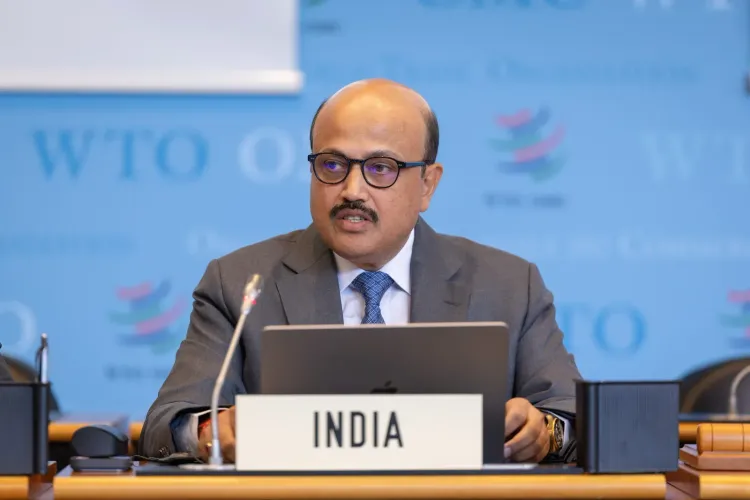
India's Eighth WTO Trade Policy Review in Geneva drew 1,094 written questions from 44 Members — the largest such engagement in recent cycles — and closed with global calls for India to act as a bridge-builder in a fractured multilateral trading system. Commerce Secretary Rajesh Agarwal's defence of India's agricultural tariffs and Quality Control Orders signals that New Delhi will not trade away policy space, even as it courts deeper FTA integration.
Key Takeaways
India's Eighth Trade Policy Review (TPR) concluded on 23 July 2026 at the WTO in Geneva .
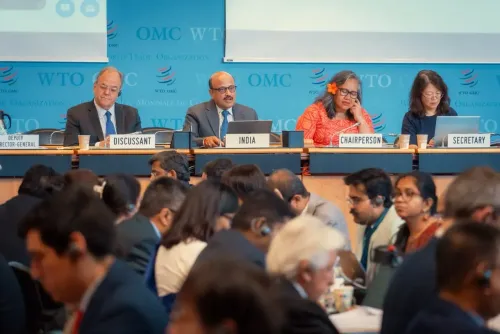
1,094 written questions were received from 44 WTO Members ; 68 Members made interventions across two sessions on 21 and 23 July 2026 .
Commerce Secretary Rajesh Agarwal defended India's agricultural tariff structure as essential to protecting millions of small, low-income farmers.
India reaffirmed use of the Lesser Duty Rule in its anti-dumping framework and committed to transparency in trade remedy investigations.
Members praised India's Digital Public Infrastructure , MSME integration into global value chains, and acceptance of the WTO Agreement on Fisheries Subsidies .
Brazil's chair Guilherme de Aguiar Patriota called on India to serve as a bridge-builder for the Global South in the multilateral trading system.
India reaffirmed its commitment to an open, transparent, and WTO-consistent multilateral trade regime as its Eighth Trade Policy Review (TPR) concluded on 23 July 2026 at the World Trade Organization headquarters in Geneva. The review drew interventions from 68 WTO Members across two sessions and generated 1,094 written questions from 44 Members — a scale that reflects India's growing weight in the global trading order.
Key Commitments from India
Commerce Secretary Rajesh Agarwal, in his closing statement to the WTO Membership, underlined that India's tariff reforms, customs simplification measures, and an ambitious Free Trade Agreement (FTA) strategy have steadily deepened the country's integration with the global economy while supporting domestic development goals. He also emphasised that India remains a major engine of global demand.
On agricultural tariffs, Agarwal reiterated that India's structure is designed to protect the livelihoods of millions of small, low-income, and resource-poor farmers. Industrial tariffs, he said, are calibrated to support supply chain resilience, diversification, and domestic manufacturing in a shifting global environment.
Trade Remedies and Regulatory Measures
On sanitary and phytosanitary measures and technical regulations, the Commerce Secretary reaffirmed India's commitment to transparency and adherence to WTO rules. He clarified that India's Quality Control Orders serve legitimate public policy objectives, while trade remedy investigations are conducted with due process and judicial oversight. Notably, India continues to apply the Lesser Duty Rule in its anti-dumping framework — a relatively restrained approach compared to many major economies.
India's Position on WTO Reform
Agarwal reiterated that any reform of the WTO must remain development-oriented, preserve policy space for developing countries, and deliver on existing mandates. India also reaffirmed its commitment to engaging constructively with all Members to strengthen the rules-based multilateral trading system without compromising its foundational principles.
Global Recognition and Expectations
Several WTO Members acknowledged India's achievements in Digital Public Infrastructure, customs modernisation, innovation and startup ecosystems, expansion of regional trade agreements, and efforts to integrate MSMEs into global value chains. Members also welcomed India's acceptance of the WTO Agreement on Fisheries Subsidies.
In his closing remarks, Guilherme de Aguiar Patriota of Brazil — chairing the review — observed that many Members expect India to act as a bridge-builder, promoting dialogue and fostering consensus in a period of heightened global uncertainty. He underscored India's unique position as a leading voice of the Global South and its role in bridging differences among Members to advance collective action within the WTO.
What Comes Next
The TPR concluded on a broadly positive note, with Members expressing the expectation that India will continue to shape the future of the rules-based global trading system. As trade tensions persist globally, India's next moves on FTA negotiations and WTO reform advocacy will be closely watched by both developed and developing economies.
Point of View
094 questions from 44 Members — is itself a signal: India is no longer a peripheral player at the WTO but a country whose trade choices carry systemic weight. Yet the review also exposed a persistent tension: India's insistence on preserving agricultural tariff walls and Quality Control Orders sits uneasily with its ambitions as a champion of open, rules-based trade. The bridge-builder role that Brazil's chair publicly assigned to India comes with obligations that New Delhi has historically been reluctant to fully honour, particularly on agriculture and dispute settlement reform. Whether India leverages its Global South credibility to actually advance WTO reform — or uses it as cover to protect domestic policy space — will define its multilateral legacy in this cycle.
NationPress
22 Oct 2026
Frequently Asked Questions
What is India's Eighth Trade Policy Review at the WTO?
The Trade Policy Review (TPR) is a mandatory WTO transparency mechanism under which each member's trade and related policies are periodically examined. India's Eighth TPR concluded on 23 July 2026 in Geneva, covering tariff structures, FTA strategy, customs reforms, and trade remedy frameworks.
How many WTO Members participated in India's 2026 trade review?
A total of 44 WTO Members submitted 1,094 written questions, and 68 Members made interventions during the two review sessions held on 21 and 23 July 2026 — reflecting broad global interest in India's economic trajectory.
Why does India maintain high agricultural tariffs despite WTO membership?
Commerce Secretary Rajesh Agarwal explained that India's agricultural tariff structure is designed to safeguard the livelihoods of millions of small, low-income, and resource-poor farmers. India argues this is consistent with WTO rules that allow developing countries to balance trade liberalisation with domestic development needs.
What is India's position on WTO reform?
India has called for WTO reform to remain development-oriented, preserve policy space for developing countries, and deliver on existing mandates before new obligations are added. New Delhi has also committed to engaging constructively with all Members while protecting the foundational principles of the multilateral trading system.
What achievements did WTO Members highlight about India?
Members recognised India's progress in Digital Public Infrastructure, customs and trade facilitation modernisation, startup and innovation initiatives, expansion of regional trade agreements, MSME integration into global value chains, and India's acceptance of the WTO Agreement on Fisheries Subsidies.