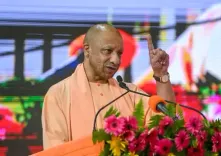
Piyush Goyal at G20: WTO-compliant tools must fix global trade distortions
Synopsis
At the G20 Trade Ministers' Meeting in Milwaukee, Commerce Minister Piyush Goyal drew a sharp line: trade distortions must be fixed through WTO-consistent tools, not unilateral measures that penalise developing nations. With India's July 2026 ban on forced-labour imports and a call to restore the WTO Appellate Body, New Delhi is positioning itself as a rule-maker — not just a rule-taker — in reshaping global trade architecture.
Key Takeaways
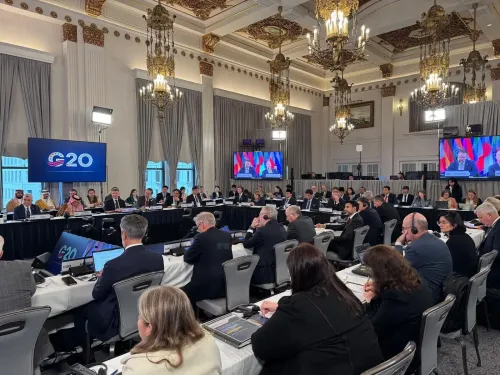
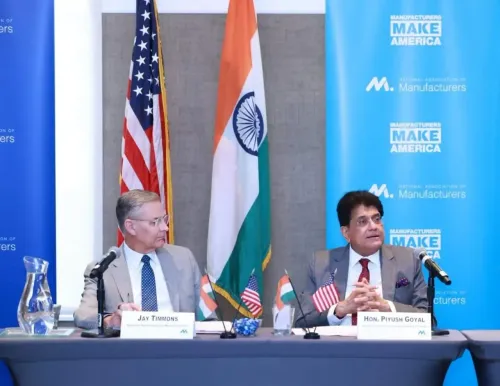
Piyush Goyal represented India on the concluding day of the G20 Trade Ministers' Meeting in Milwaukee, Wisconsin on 2 October 2026 .
He backed WTO-consistent anti-dumping and countervailing duties as the proper response to trade-distorting subsidies, rejecting unilateral alternatives.
Goyal defended the Most-Favoured-Nation (MFN) principle and called for restoration of the WTO two-tier dispute settlement system .
India amended its Foreign Trade Policy in July 2026 to ban imports of goods produced using forced labour, citing ILO Conventions 29 and 105 .
He insisted that forced-labour border measures must be based on specific, verifiable evidence — not country- or sector-wide presumptions — and must not create new multilateral obligations.
Goyal emphasised that developing nations must retain policy space to industrialise and that supply-chain diversification cannot be used to skirt WTO rules.
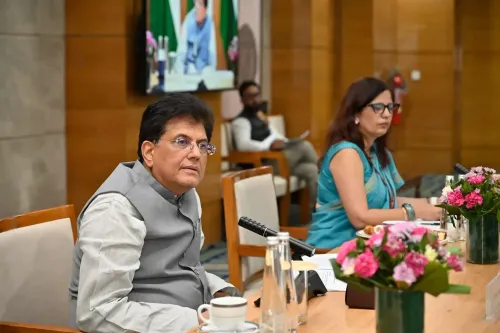
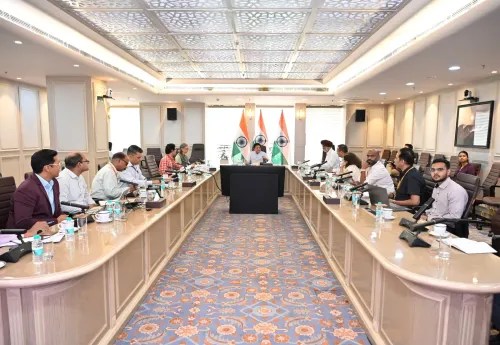
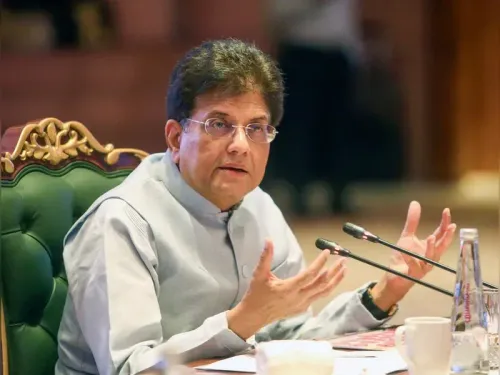
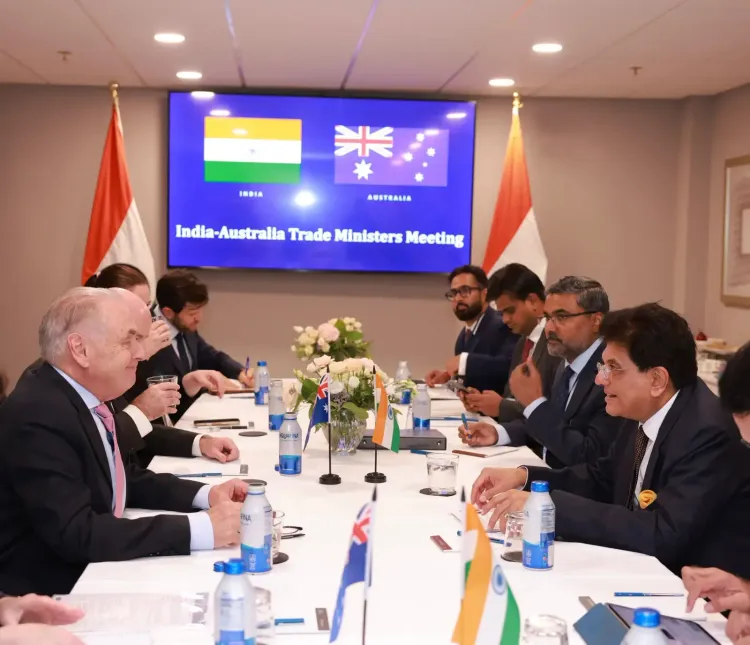
Commerce and Industry Minister Piyush Goyal on 2 October 2026 called for addressing global trade distortions exclusively through World Trade Organization (WTO)-consistent mechanisms — including anti-dumping and countervailing duties — while firmly rejecting unilateral measures that could burden developing nations. His remarks came on the concluding day of the G20 Trade Ministers' Meeting in Milwaukee, Wisconsin, where he participated in sessions covering structural excess capacity, the Most-Favoured-Nation (MFN) principle, forced labour in supply chains, and the closing plenary.
On Structural Excess Capacity and Supply Chain Diversification
Goyal acknowledged that India shares the concerns of many G20 members that trade-distorting support in some economies can trigger dumping and predatory pricing. However, he was precise in drawing a distinction: industrial capacity in itself is not the problem, he argued — distortions arise specifically when the geographical concentration of production is driven by hidden subsidies and opaque state support.
He cautioned that while diversification of production and supply chains is a legitimate objective, it cannot serve as a pretext for measures that fall outside WTO rules. Crucially, Goyal stressed that the burden of adjustment must not be shifted onto developing countries, which must retain adequate policy space to industrialise. He also noted that statistical data-sharing should occur only within existing multilateral mechanisms.
Defending the Most-Favoured-Nation Principle
On the question of updating the Most-Favoured-Nation (MFN) principle — a cornerstone of the multilateral trading system — Goyal reaffirmed its centrality. He described MFN treatment as the key guarantee ensuring that the same trade terms apply equally to the smallest and the largest trading partner, safeguarding non-discrimination at the heart of the WTO framework.
He also called for the restoration of the two-tier dispute settlement system, which has been functionally hamstrung since the Appellate Body lost its quorum, leaving many trade disputes in legal limbo. India has consistently advocated for its revival as essential to a functional, rules-based order. Goyal further underscored that consensus remains central to WTO decision-making and that special and differential treatment for developing nations must be preserved to enable them to close the development gap with advanced economies.
India's Stance on Forced Labour in Supply Chains
Addressing the session on eliminating forced labour from global supply chains, Goyal stated that India's commitment to eradicating forced labour is 'absolute and unconditional.' He pointed to Article 23 of the Indian Constitution, which prohibits forced labour as a fundamental right enforceable by the Supreme Court of India.
India has ratified ILO Conventions 29 and 105 on forced labour. Significantly, in July 2026, the government amended its Foreign Trade Policy to explicitly prohibit the import of goods produced using forced labour — a move that aligns domestic trade law with international labour standards.
At the same time, Goyal drew a careful line: border measures targeting forced labour must be grounded in specific and verifiable evidence, not blanket presumptions about entire countries, regions, or sectors, and must respect due process and WTO rules. He identified the International Labour Organization (ILO) as the sole competent, universal, and tripartite body for setting labour standards — signalling India's resistance to any arrangement that would allow bilateral or plurilateral labour compliance to be weaponised as a trade instrument.
India's Core Trade Philosophy
Goyal concluded by reaffirming India's commitment to a rules-based, fair, equitable, non-discriminatory, transparent, open, inclusive and multilateral trading system with the WTO at its core. This comes amid a broader global debate over whether the WTO's existing architecture is equipped to handle the strategic trade competition — particularly in clean energy and advanced manufacturing — that increasingly defines relations between major economies.
India's position at Milwaukee signals a careful balancing act: aligning with the West on concerns about distortive subsidies while defending the developmental prerogatives of the Global South — a posture that will shape its engagement as trade tensions head into 2027.
Point of View
But the remedy must go through Geneva, not through unilateral import restrictions. To the Global South, it says: supply-chain diversification cannot become a mechanism for locking developing economies out of manufacturing. The July 2026 forced-labour amendment to the Foreign Trade Policy is India's most concrete move yet to pre-empt US-style Uyghur Forced Labor Prevention Act-type restrictions that could target Indian goods by association. What mainstream coverage underplays is the structural tension here: India is simultaneously seeking WTO reform to restore the Appellate Body — which would constrain unilateral action by all members, including India's own use of safeguard duties — while also defending its right to use trade-policy space flexibly at home. That contradiction will surface the moment any future WTO ruling goes against New Delhi.
NationPress
2 Oct 2026
Frequently Asked Questions
What did Piyush Goyal say at the G20 Trade Ministers' Meeting in Milwaukee?
Commerce and Industry Minister Piyush Goyal called for addressing global trade distortions — such as dumping and predatory pricing caused by hidden subsidies — exclusively through WTO-consistent mechanisms like anti-dumping and countervailing duties. He also defended the Most-Favoured-Nation principle, backed restoration of the WTO dispute settlement system, and reaffirmed India's commitment to eliminating forced labour from supply chains.
What is India's position on supply chain diversification at the WTO?
India supports supply-chain diversification as a legitimate objective but insists it cannot be used as justification for measures outside WTO rules or for shifting adjustment costs onto developing countries. Goyal emphasised that developing nations must retain policy space to industrialise.
How has India addressed forced labour in its trade policy?
In July 2026, India amended its Foreign Trade Policy to prohibit the import of goods produced using forced labour. The country has also ratified ILO Conventions 29 and 105, and Article 23 of the Constitution makes the prohibition of forced labour a fundamental right enforceable by the Supreme Court.
What is the Most-Favoured-Nation (MFN) principle and why did Goyal defend it?
The MFN principle is a foundational WTO guarantee that requires a country to extend the same trade terms to all WTO members — ensuring the smallest trader gets the same access as the largest. Goyal defended it as a pillar of a non-discriminatory, rules-based trading system and opposed proposals that would dilute it.
Why did Goyal call for restoring the WTO two-tier dispute settlement system?
The WTO's Appellate Body — the second tier of its dispute settlement mechanism — has been non-functional since 2019 due to the US blocking new appointments, leaving trade disputes unresolved. Goyal's call for its restoration reflects India's broader push for a fully functional multilateral rules framework that limits unilateral trade action by any member.